Baked Potato in Oven: Crispy and Fluffy

- Time: Active 5 minutes, Passive 60 minutes, Total 1 hours 5 mins
- Flavor/Texture Hook: Shatter crisp salty skin with a velvety, fluffy center
- Perfect for: Easy weeknight comfort or plant based meal prepping
- The Science of Starchy Potatoes
- Essential Components for Success
- Minimalist Kitchen Tools for Results
- Step-by-Step Path to Crispness
- Fixing Common Potato Texture Issues
- Adjusting Servings for Your Crowd
- Effective Storage and Waste Management
- Wholesome Toppings and Side Ideas
- CRITICAL Sodium Alert!
- Recipe FAQs
- 📝 Recipe Card
Forget every single thing you've ever heard about wrapping your spuds in aluminum foil before sliding them into the heat. Seriously, let's just toss that idea out right now. If you wrap a potato in foil, you aren't actually baking it, you're steaming it in its own moisture.
That leads to a dull, papery skin and a heavy, gummy interior. We want the exact opposite.
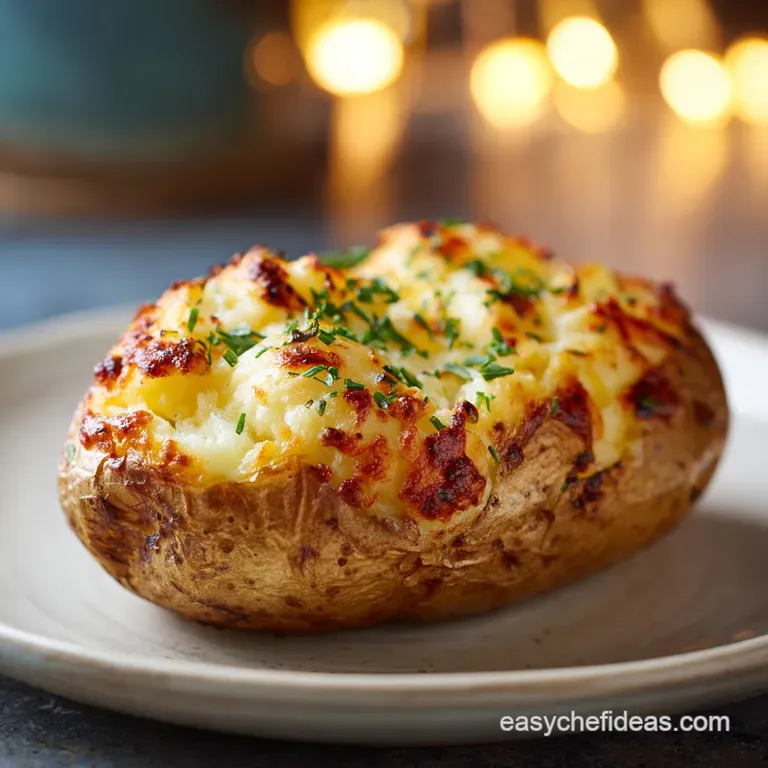
We are looking for a skin that has a distinct "crunch" and an interior that falls apart at the mere suggestion of a fork. The secret isn't some fancy gadget or a secret spice blend. It's actually about how you handle the moisture and when you decide to introduce the fat.
It's a simple process, but the order of operations is everything if you want to avoid a soggy mess.
I used to think that more oil at the beginning meant more crunch, but I was so wrong. Adding oil too early actually prevents the skin from drying out properly. By waiting until the final stretch of the bake, we get that incredible texture without the grease.
Let's get into the specifics of why this simple oven baked potato recipe works so well for those of us looking for wholesome, plant based comfort.
The Science of Starchy Potatoes
- Evaporative Cooling: Piercing the skin allows internal steam to escape, which prevents the potato from becoming dense and waxy.
- Starch Gelatinization: At 425°F (220°C), the starch granules inside the Russet potato swell and burst, creating that sought after fluffy texture.
- Maillard Reaction: Rubbing olive oil on the skin during the last 15 minutes causes the surface to brown and crisp rapidly without burning the oil.
- Osmotic Dehydration: Coarse sea salt draws lingering moisture from the surface cells, ensuring the skin remains brittle and light.
| Cook Method | Time | Texture | Best For |
|---|---|---|---|
| Stovetop Boiling | 25 minutes | Soft, wet, no crust | Potato salad or mash |
| Microwave Fast | 7 minutes | Soft skin, uneven interior | Absolute emergencies only |
| Oven (This Recipe) | 1 hours 5 mins | Shatter crisp skin, fluffy | The ultimate eating experience |
Using an oven is truly the best way to bake a potato because it allows for dry heat to circulate completely around the vegetable. Unlike the microwave, which vibrates water molecules and can leave "leathery" spots, the oven provides a consistent temperature that cooks from the outside in while slowly drying the skin. For another take on crispy textures, you might enjoy my baked sweet potato fries which use a similar over high heat logic.
Essential Components for Success
| Ingredient | Science Role | Pro Secret |
|---|---|---|
| Russet Potatoes | High amylose starch | Choose potatoes that feel heavy and firm for their size |
| Extra Virgin Olive Oil | Thermal conductor | Use oil with a high smoke point for better surface browning |
| Coarse Sea Salt | Moisture extractor | The jagged edges of sea salt provide a better "crunch" than table salt |
A simple oven baked potato recipe doesn't need a long list of ingredients. You need 4 large Russet potatoes (approx. 8-10oz each), 2 tablespoons extra virgin olive oil, and 1 tablespoon coarse sea salt. That is it.
The Russet is non negotiable here - its high starch content is what allows the inside to become so fluffy. Waxy potatoes like Yukon Gold are great for roasting in chunks, but for a classic baked potato in oven, they’ll just stay dense.
For the fat, I always reach for extra virgin olive oil for that light, peppery note that pairs so well with earthy tubers. If you have a flavored oil, like a garlic infused version, that works too, as long as it's plant based.
The coarse sea salt is the final touch that gives the skin its characteristic "shatter" and seasoned bite.
Minimalist Kitchen Tools for Results
You don't need a pantry full of gadgets for this. A rimmed baking sheet is the base, but the real MVP is a wire cooling rack. By placing the potatoes on a rack over the tray, you allow the hot air to hit the bottom of the potato as well as the top.
This eliminates the "flat spot" where the potato touches the pan and ensures the skin is crispy all the way around.
A stiff vegetable brush is also helpful. Since we are eating the skin (and we definitely should, it’s where all the minerals live), we need to get every bit of grit off under cold water. Finally, a simple fork for piercing and a kitchen towel for drying are all you need.
Never underestimate the importance of that towel - any water left on the skin will turn to steam in the oven, ruining our crispness goals.
step-by-step Path to Crispness
- Preheat your oven to 425°F (220°C). Scrub the Russet potatoes thoroughly under cold water using a stiff vegetable brush to remove all dirt.
- Pat the potatoes completely dry with a kitchen towel. Note: Any moisture left on the surface will steam the skin instead of crisping it.
- Using a fork, pierce each potato 6 to 8 times, approximately half an inch deep. This allows steam to escape so the potato doesn't burst.
- Place a wire cooling rack over a rimmed baking sheet. Position the potatoes on the rack to allow for maximum air circulation.
- Bake the potatoes for 45 minutes. The skin will look dry and slightly wrinkled.
- At this point, remove the tray from the oven. Rub the exterior of each potato with 2 tablespoons extra virgin olive oil and coat generously with 1 tablespoon coarse sea salt.
- Return the potatoes to the oven for an additional 10 to 15 minutes. Bake until the skin is shattering and the internal temperature reaches 205-210°F.
Chef Tip: To get that restaurant style "burst" when you open the potato, don't just slice it. Use a fork to poke a line of holes down the center, then squeeze the ends together toward the middle. This breaks the internal fibers and makes it look like a fluffy white cloud.
Fixing Common Potato Texture Issues
The Problem of Soggy Skins
If your potato skin comes out soft or leathery, it’s almost always due to trapped moisture. This happens if you used foil, didn't dry the potato well enough after washing, or applied the oil too early in the process. The oil creates a barrier that keeps moisture inside the skin during the first half of baking.
By waiting until the 45 minute mark, you've allowed the skin to dry out first, so the oil can then "fry" the surface in the final minutes.
| Problem | Root Cause | Solution |
|---|---|---|
| Hard center | Oven temp too low | Ensure oven is preheated to 425°F (220°C) |
| Bursting skin | No steam vents | Always pierce the skin 6-8 times with a fork |
| Greasy surface | Excess oil | Use only 2 tablespoons for all 4 potatoes |
Common Mistakes Checklist
- ✓ Skipping the wire rack (leads to a soggy bottom).
- ✓ Wrapping in foil (steams the potato instead of baking).
- ✓ Not reaching 205°F internal temp (causes a waxy interior).
- ✓ Using cold potatoes (take them out of the fridge 30 mins before baking).
- ✓ Peeling the skin (you lose the best texture and nutrients).
If you find yourself wanting a different kind of potato comfort, these homemade baked beans actually make an incredible topping for a classic baked potato. The mahogany glaze adds a sweetness that cuts through the salty, earthy potato skin perfectly.
Adjusting Servings for Your Crowd
Scaling this recipe is incredibly straightforward because potatoes are individual units. If you are cooking for two, simply use 2 potatoes and half the oil and salt. The cooking time remains the same since the potatoes aren't touching. For a larger crowd of 8 or 10, make sure you don't overcrowd the wire rack.
If the potatoes are touching, they will steam each other.
When scaling up, I recommend using two separate baking sheets if necessary. The goal is 2 to 3 inches of space between each potato. If you’re hosting a "baked potato bar," you can actually bake them all at once and then keep them warm in a low oven (around 200°F) for up to 30 minutes, though the skin will lose some of its initial "shatter" as it sits.
| Potato Size | Servings | Oil Amount | Salt Amount |
|---|---|---|---|
| 2 Russets | 2 People | 1 tablespoon | 0.5 tablespoon |
| 4 Russets | 4 People | 2 tablespoons | 1 tablespoon |
| 8 Russets | 8 People | 4 tablespoons | 2 tablespoons |
Effective Storage and Waste Management
If you have leftovers, let them cool completely before wrapping them. Store them in the fridge for up to 4 days. Whatever you do, do not reheat them in the microwave if you want that crispy skin back. The best way is to pop them back into a 400°F oven for about 10 to 15 minutes.
This will revive the oils in the skin and make them crunch again.
For zero waste cooking, don't ever throw away the skins! If you only want to eat the fluffy inside for another dish, you can fry the leftover skins in a pan with a little more olive oil and nutritional yeast to make "potato skin chips." They are a salty, crispy treat that usually disappears faster than the main meal.
You can also freeze the insides (mashed) for up to 3 months, though the whole baked potato doesn't freeze well as it can become grainy.
Wholesome Toppings and Side Ideas
Since we are keeping things plant based and wholesome, forget the heavy dairy. I love to top mine with a big dollop of cashew based sour cream and a massive handful of fresh chives. The sharpness of the chives against the earthy potato is classic for a reason.
Another great option is a scoop of spicy black beans and some smashed avocado for a "taco style" potato that feels like a full, rounded meal.
If you want a side dish that complements the starch, think about something bright and acidic. A crisp green salad with a lemon tahini dressing provides a lovely contrast to the hot, salty potato. For another classic pairing, try serving this with a side of steamed broccoli tossed in nutritional yeast.
The potato acts as a neutral base that lets the vibrant green veggies really shine.
If you want X, do Y: If you want a smoky flavor, mix a teaspoon of smoked paprika into your salt rub. If you want an even fluffier interior, look for the largest, oldest Russets you can find (lower moisture).
If you want a faster cook, you can microwave for 5 minutes first, then bake for 20, but you will lose some of that internal "cloud" texture.
There is something so grounding about a perfectly baked potato in oven. It’s a meal that requires almost no effort but gives so much in return. Once you hear that first "crack" of the salt crusted skin, you'll never go back to the foil wrapped version again. Trust me on this one.

CRITICAL Sodium Alert!
1745 mg 1745 mg (76% 76%)
The American Heart Association recommends no more than 2,300mg of sodium per day, aiming for an ideal limit of 1,500mg for most adults.
Tips to Reduce Sodium in Your Potato Recipe
-
Halve the Salt-30%
Reduce the 1 tablespoon of coarse sea salt to 1 teaspoon. This is the single biggest sodium contributor in your recipe.
-
Boost Flavor with Herbs and Spices
Incorporate fresh or dried herbs like rosemary, thyme, or chives, and spices like garlic powder, onion powder, or black pepper to compensate for the reduced salt.
-
Rinse Canned Goods (if applicable)-20%
While not in this specific recipe, if you were to add any canned ingredients like beans or vegetables in the future, rinsing them thoroughly under water can significantly reduce their sodium content.
-
Choose Low-Sodium Cheese (if adding later)-15%
If you plan to top your potatoes with cheese, opt for naturally lower sodium varieties or reduced sodium versions. Portion control is also key.
-
Measure Olive Oil Accurately
Ensure you're using exactly 2 tablespoons of extra virgin olive oil. While not a major sodium source, precise measurement helps maintain the intended flavor balance.
Recipe FAQs
How long does it take a potato to bake at 425°F in the oven?
It takes 60 minutes total. Bake the potatoes for 45 minutes first, then add the oil and salt before returning them to the oven for an additional 10 to 15 minutes.
Are baked potatoes good for diabetics?
This depends on your overall dietary management. Baked potatoes are a source of carbohydrates, so consider portion sizes and what you choose to serve alongside them.
Is it better to bake a potato at 350°F or 425°F?
425°F is significantly better for texture. High heat is required to shatter the skin and create a fluffy, light interior, whereas lower temperatures often result in a soggy or waxy finish.
Should you wrap a potato in foil when baking?
No, avoid foil entirely. Wrapping potatoes in foil traps moisture and steams the vegetable, which prevents the skin from becoming crispy.
Why is my potato skin not getting crispy?
Excess moisture or insufficient air circulation is likely the culprit. Ensure you pat the potatoes completely dry before they go into the oven and always use a wire rack so heat can reach the bottom of the potato.
How to ensure the inside is perfectly fluffy?
Pierce the potato 6 to 8 times with a fork before baking. This allows steam to escape during the cooking process; if you mastered the technique of controlling starch moisture in our potato chips, you will understand how this prevents a dense, heavy texture.
How to tell when a baked potato is finished?
Check that the internal temperature reaches 205-210°F. At this point, the center will be tender and the skin will be crisp and shattered.
Crispy Baked Potato
Ingredients:
Instructions:
Nutrition Facts:
| Calories | 272 kcal |
|---|---|
| Protein | 5.8 g |
| Fat | 7.2 g |
| Carbs | 48.9 g |
| Fiber | 3.8 g |
| Sugar | 1.6 g |
| Sodium | 1745 mg |
