Sunday Dinner Success the Truly Creamy Ricotta Lasagna
- Why This Ricotta Layer Steals the Show
- The Shortcut Secret: Skip the Scratch Pasta
- Stocking Your Pantry for Stellar Lasagna Flavor
- The Star Components: What Makes This Recipe Shine
- The Assembly Blueprint: Layering for Success
- Baking to Golden Perfection: Temperature & Time
- Elevating Your Lasagna Game: Pro Variations
- Storage Solutions and Making Ahead
- Frequently Asked Questions
- 📝 Recipe Card
Why This Ricotta Layer Steals the Show
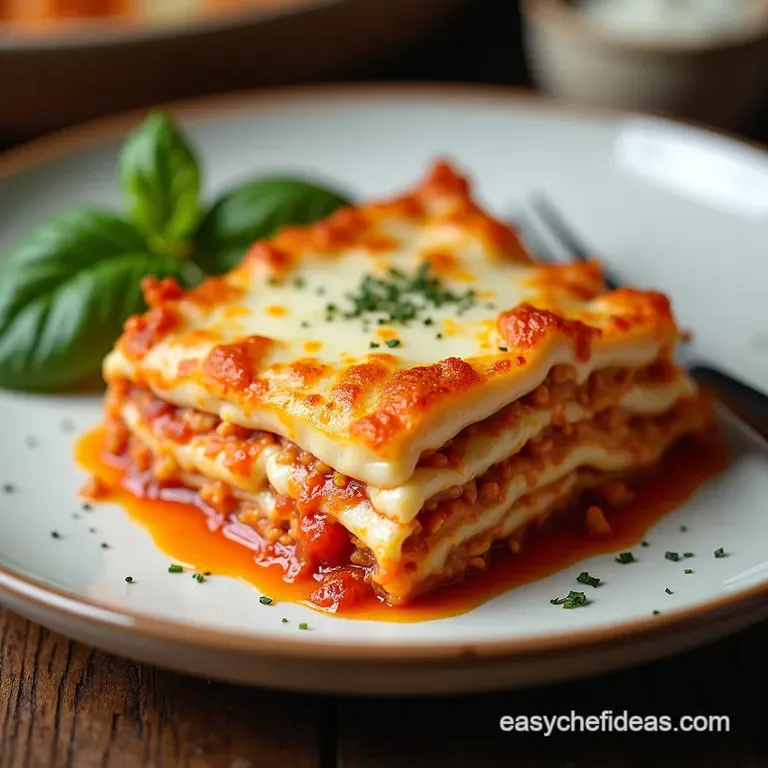
When you think about the perfect slice of lasagna, what’s the element that truly defines it? For me, it’s that glorious, creamy white layer that separates the rich ragu and melts against the tender pasta.
This Homemade Lasagna with Ricotta Cheese Recipe isn't just about assembling ingredients; it’s about celebrating that filling. We treat the ricotta mixture not as an afterthought, but as the star protein of the show.
By carefully binding it with egg and seasoning it with sharp Parmesan and fresh parsley, we create a sturdy, yet luxurious cushion that balances the acidity of the tomato sauce. This step ensures that every mouthful is balanced, avoiding the dryness that plagues lesser baked pasta dishes.
The Shortcut Secret: Skip the Scratch Pasta
As much as I adore the craft of traditional Italian cooking, there are days when we need that deep comfort food fix without spending an entire afternoon rolling dough. This is where we introduce smart efficiency. This recipe embraces the modern convenience of no-boil lasagna noodles.
This choice doesn't compromise the integrity of the final dish; instead, it streamlines the process significantly, making the Easy Lasagna with Ricotta concept genuinely achievable on a busy weekday.
It lets us focus our energy where it truly counts: building incredible flavour in the sauce and perfecting that signature creamy filling.
Embracing Comfort: A Warm Hug in Casserole Form
There’s an inherent warmth associated with a bubbling 9x13 pan emerging from the oven. Lasagna represents a milestone in home cooking a dish shared, served proudly, and deeply satisfying. It’s the culinary equivalent of wrapping yourself in a favourite blanket.
This recipe delivers on that promise of comfort, providing 8 generous servings designed to bring family or friends around the table. It's a substantial bake that rewards minimal effort with maximum flavour payoff.
Defining the Heart of Your Homemade Lasagna with Ricotta
The structural integrity and flavour profile hinge entirely on the cheese blend. We specify whole milk ricotta because the higher fat content contributes exponentially to the final creaminess, resisting that grainy texture that can sometimes creep in.
Coupled with the salty bite of Parmesan and the binding power of egg, this mixture becomes a cohesive component rather than just loose cheese curds floating in sauce. Mastering How to Make Lasagna with Ricotta Cheese successfully means respecting this interior layer above all else.
Accessibility First: Lasagna for Every Skill Level
One of the greatest joys of food blogging is showing that truly impressive dishes aren't reserved for professional kitchens. While making the sauce requires patience simmering builds depth the assembly is pure layering logic. If you can stack ingredients neatly, you can nail this recipe.
This focus on accessibility ensures that whether you are a beginner baker or a seasoned cook, this Easy Lasagna with Ricotta Cheese offers a reliable path to a stunning result, proving that homemade doesn't have to mean overly complicated.
Stocking Your Pantry for Stellar Lasagna Flavor
Before we dive into the mixing bowls, a quick inventory check is essential. Quality ingredients are the backbone of any great dish, and lasagna is no exception. For the ragu, always opt for high-quality crushed tomatoes; their natural sweetness will shine through after hours of simmering.
The ground meat blend using both beef and Italian sausage is crucial for textural contrast and a savoury baseline that defines a true Homemade Lasagna with Ricotta Cheese and Meat . Don't skimp on the spices; dried basil and oregano are your classic Italian foundations.
The Star Components: What Makes This Recipe Shine
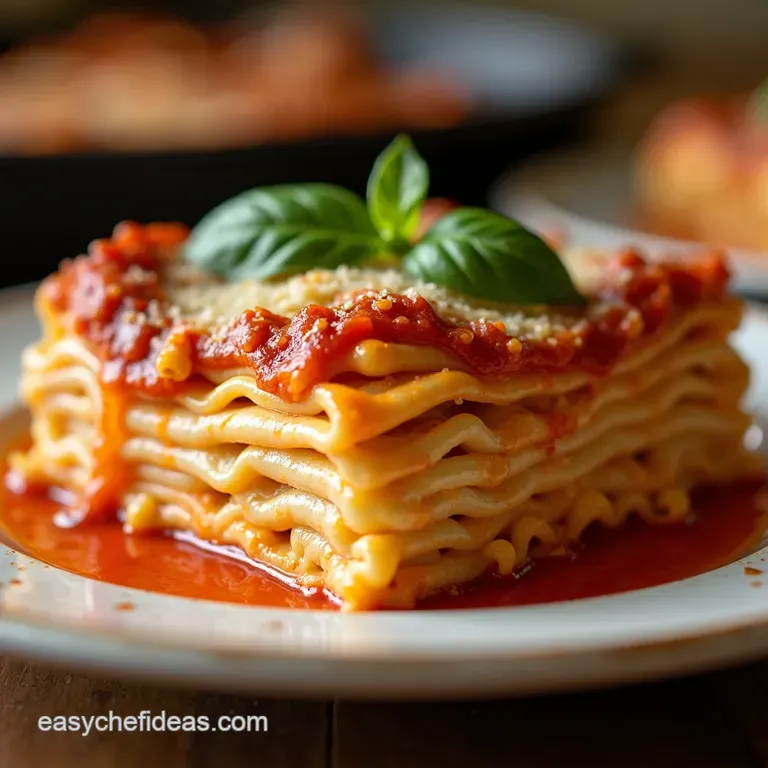
We are building this masterpiece in three parts: the dairy powerhouse, the flavourful sauce, and the noodle binder. Each element must be perfectly prepared before the final layering commences.
Dairy Essentials for Maximum Creaminess
When preparing the Homemade Lasagna with Ricotta and Mozzarella , the star is undoubtedly the ricotta. I always recommend draining any excess moisture if the container seems watery; nobody wants a sloppy bottom layer.
We fold in two lightly beaten eggs these are vital for structure, setting the ricotta firmly so it holds its shape when sliced. A generous half cup of grated Parmesan adds that necessary salty, nutty complexity, tying the entire dairy matrix together beautifully.
The Sauce Base: Building Depth of Flavor
While using jarred sauce is an option for speed, taking 30 minutes to build a quick ragu pays dividends. Starting with sautéed onion and garlic, browning the meat vigorously, and crucially, adding a splash of dry red wine to deglaze the pan infuses the sauce with umami and richness.
Simmering this mixture allows the flavours to marry, creating a vibrant, robust companion for our mild, creamy ricotta layer.
Selecting the Right Sheet: No-Boil vs. Traditional Noodles
For this version, designed for both great flavour and manageable timing, we rely on oven ready (no-boil) noodles. These are designed to absorb the moisture from the sauce and steam perfectly during baking.
If you choose to use traditional dried sheets, ensure they are cooked truly al dente slightly undercooked as they will continue to soften significantly in the oven, especially when nestled next to the wet ricotta.
Related Recipes Worth Trying
- Weeknight Wonder Easy Lasagna with Ricotta Cheese — Need comforting Cheese Lasagna fast This simple recipe uses noboil noodles for a rich creamy ricotta filling Perfect for a freezable meal Get the foolproof...
- The Ultimate HomeStyle Lasagna with Ricotta Cheese Recipe — Forget watery bakes This Layered Ricotta Lasagna recipe uses a quick ragu for incredible depth Get that comforting cheesy slice tonight
- Easy Mediterranean Baked Fish with Tomatoes and Olives — This easy Mediterranean baked fish recipe uses one sheet pan for minimal washing up Expect moist flaky fish swimming in bright tomatoes and capers Perfect...
The Assembly Blueprint: Layering for Success
This is where the magic happens. Success in layering relies on smart distribution and foundation work to prevent a scorched or stuck final product.
Preparing the Ricotta Filling: Mixing for Silkiness
In a large bowl, combine the ricotta, eggs, Parmesan, salt, pepper, and fresh parsley. Mix this until it’s just homogenous. Over mixing can sometimes develop the texture, so a quick, thorough blend is all that is needed to achieve that desired silkiness.
This entire batch must be ready to go when you start stacking.
The Crucial Foundation Layer: Preventing Sticking
The first layer applied to the baking dish is often overlooked but is arguably the most important for cleanup and structural integrity. Spread a thin, even coating of meat sauce about one cup’s worth across the bottom of your greased 9x13 pan.
This barrier ensures the bottom layer of pasta doesn't stick or burn.
Strategic Layering: Ensuring Even Cook Through
We aim for three full cycles of pasta, ricotta, and sauce, finishing with a final topping of cheese. A standard pattern goes: Sauce base, 3-4 noodles, half the ricotta mixture dolloped and spread, then a third of the mozzarella, and a third of the remaining sauce. Repeat this sequence once more.
The final layer consists of the last noodles, topped heavily with the remaining sauce, and finished with the remaining mozzarella cheese for that golden crown.
Baking to Golden Perfection: Temperature & Time
Getting the internal temperature right while achieving that beautifully browned top requires a two-stage baking approach.
Preheat your oven to 375° F ( 190° C). Cover the entire pan tightly with aluminum foil. This traps the steam, which is essential for cooking the pasta thoroughly especially if using the no-boil variety and heating the centre evenly.
Bake covered for 35 minutes.
After 35 minutes, carefully remove the foil. This allows the moisture to escape and the cheese on top to brown beautifully. Bake uncovered for an additional 20 to 25 minutes, until the cheese is bubbling vigorously and achieves a deep golden hue.
The Essential Rest Period After Baking Your Homemade Lasagna with Ricotta
I cannot stress this enough: patience after baking is paramount. Pulling a piping hot lasagna from the oven results in a delicious, but messy, cascade when sliced. Allow the Homemade Lasagna with Ricotta to rest undisturbed on the counter for a minimum of 15 minutes.
This crucial resting time allows the internal liquids to redistribute and the layers to firm up, ensuring you get those perfect, clean squares everyone dreams of.
Elevating Your Lasagna Game: Pro Variations
While the classic meat and-ricotta configuration is superb, this recipe acts as a perfect canvas for experimentation.
Incorporating Greens: Spinach or Zucchini Boosters
To add nutrition and a slight vegetable complexity, consider mixing wilted spinach into your ricotta filling. If you choose spinach, ensure it is squeezed completely dry before mixing; wet greens will thin out your mixture instantly.
Alternatively, finely diced and pre-sautéed zucchini can be layered directly under the ricotta layer for texture. This creates a wonderful Homemade Lasagna with Ricotta and Spinach variation.
Storage Solutions and Making Ahead
Lasagna is famously one of the best dishes for planning ahead, often tasting even better the next day once the flavours have fully settled.
Freezing Instructions for Future Comfort Meals
This dish freezes beautifully, making it an excellent candidate for batch cooking. After the lasagna has cooled completely (this is important to prevent ice crystal formation), cover the entire dish tightly in plastic wrap, followed by a layer of aluminum foil. Label clearly. Freeze for up to three months.
To bake from frozen, place the covered dish in a 375° F ( 190° C) oven for about 1 hour 15 minutes (covered), then uncover and bake for another 20 minutes until heated through and golden.
Making a Double Batch of the Ricotta Mixture
If you are doubling the meat sauce and noodles, you must double the ricotta filling as well to maintain the proper ratio. When doubling, use three eggs instead of four for a 1.5 batch, or five eggs for a full double batch; the eggs help bind massive quantities more effectively than simply doubling the original recipe suggests, ensuring the filling remains wonderfully creamy.
Frequently Asked Questions
Why is my Homemade Lasagna with Ricotta watery or sloppy after baking?
This is usually down to excess moisture in the dairy or sauce. Make sure you drain any liquid weeping from your ricotta before mixing it into the filling, and ensure your meat sauce has simmered long enough to reduce properly.
Crucially, always allow the lasagna to rest for at least 15 minutes after it comes out of the oven; this lets the structure set up nicely for proper slicing.
Can I make this lasagna ahead of time? If so, how do I store it?
Absolutely, lasagna is one of those brilliant dishes that tastes even better the next day! You can assemble the entire thing, cover it tightly with foil, and store it in the fridge for up to 24 hours before baking.
For reheating leftovers, cover tightly with foil and bake at 350°F (175°C) until heated through, or microwave individual slices if you’re in a rush.
What’s the trick to making the ricotta filling taste really flavourful?
The key is balancing the richness of the ricotta with fresh, bright flavours. Don't skimp on the Parmesan use the good stuff if you can and fresh parsley adds a necessary lift against the heavy sauce.
Seasoning the ricotta mix separately with salt and pepper ensures that every layer sings, rather than tasting bland in comparison to the ragu.
Do I have to use oven ready noodles, or should I boil traditional pasta sheets for this Homemade Lasagna with Ricotta?
Oven ready (no-boil) noodles are brilliant time savers and work perfectly, provided your sauce is reasonably moist, as they absorb liquid during baking. If you opt for traditional dry noodles, boil them only until they are very al dente softened but still firm as they will continue to cook in the oven, preventing them from turning mushy.
Can I make a vegetarian version of this recipe without losing that satisfying texture?
Yes, you certainly can! To replace the meat in the sauce, sauté a hearty mix of mushrooms (like portobello or cremini), finely chopped carrots, and celery until well browned before adding your tomatoes.
This creates a deep, umami rich base that pairs beautifully with the creamy ricotta layer, offering similar depth of flavour.
Creamy Ricotta Lasagna 2
Ingredients:
Instructions:
Nutrition Facts:
| Calories | 1503 kcal |
|---|---|
| Protein | 24.2 g |
| Fat | 29.1 g |
| Carbs | 57.2 g |
| Fiber | 22.3 g |
| Sodium | 579 mg |
