Boston Roll Sushi: Shrimp, Avocado, and Perfect Crunch
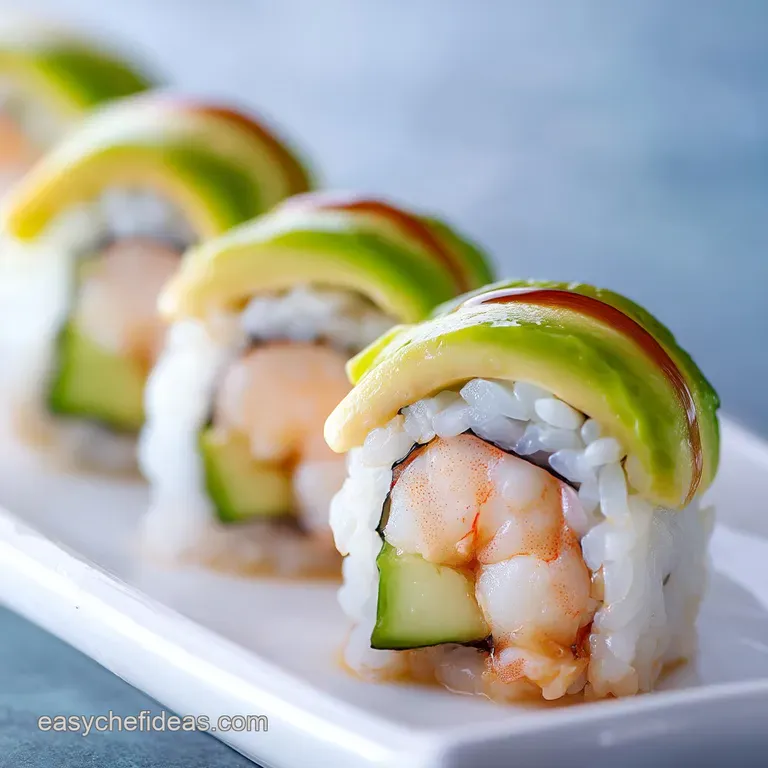
- Decoding the Boston Roll: What Makes This Cooked Shrimp Uramaki Unique?
- The Science of Flavor: Why Shrimp, Cucumber, and Avocado Are a Perfect Trifecta
- Sourcing the Essentials: Detailed Notes on Every Component
- Rolling Like a Pro: A Comprehensive Guide to Assembling Your Boston Roll Sushi
- Troubleshooting Your Uramaki: Chef's Tips for Perfecting Your Home Rolls
- Keeping It Fresh: Storage Guidelines for Leftover Sushi Rolls
- Enhancing the Experience: Dipping Sauces and Pairings
- Recipe FAQs
- 📝 Recipe Card
Decoding the Boston Roll: What Makes This Cooked Shrimp Uramaki Unique?
Oh, man, that satisfying snap when you bite into a piece of perfectly chilled, seasoned rice and hit a crunchy cucumber core. We are talking about the glorious, utterly approachable Boston roll sushi .
Forget the stress of trying to source sashimi grade fish; this roll is your entry point to rolling excellence, starring sweet, cooked shrimp, creamy avocado, and that essential cooling crunch.
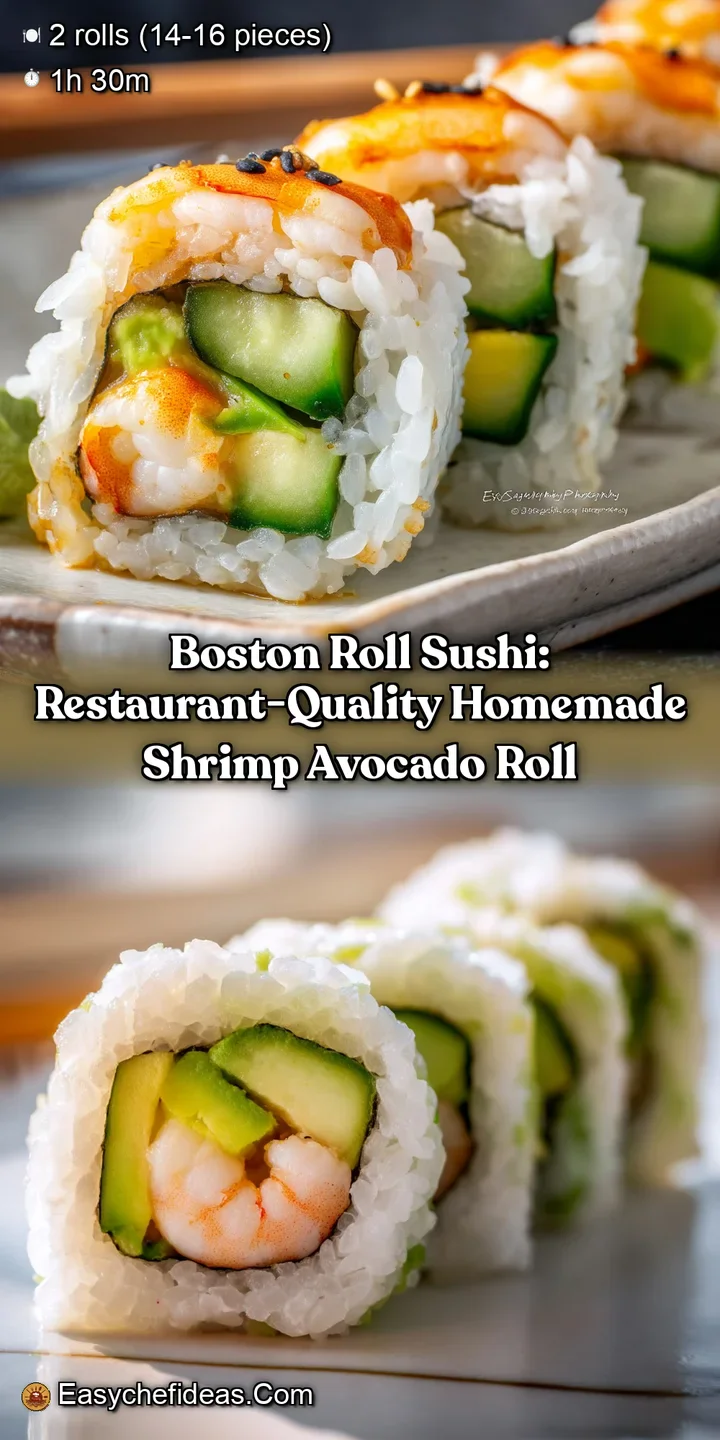
I swear, this recipe is a total weeknight lifesaver. You don't need a specialty fishmonger, just good quality pre-cooked shrimp, and you can churn out eight beautiful pieces of Boston roll sushi faster than the delivery driver could reach your house.
It’s also wildly cost effective compared to eating out. Once you master the rice, the hard part is over, I promise.
Ready to stop wasting money on mediocre takeout and start making restaurant quality rolls right in your kitchen? I’ve made all the mushy rice mistakes and rolled countless exploding cylinders, so you don't have to.
Let's crack on with how to make the absolute best Boston roll sushi recipe at home.
The Science of Flavor: Why Shrimp, Cucumber, and Avocado Are a Perfect Trifecta
This roll isn't just tasty; it’s brilliant kitchen geometry. The fundamental flavour logic of the Boston roll sushi hinges on balancing texture and temperature. You have the soft, slightly sweet bite of cooked ebi (shrimp), which provides the protein foundation, but it needs a foil.
The creamy, cool richness of the ripe avocado melts on your tongue, adding healthy fat and a smooth mouthfeel. If you only had shrimp and avocado, the roll would be heavy, which is why the cucumber is the secret weapon here. That sharp, watery crunch slices through the richness, refreshing your palate immediately.
The Definitive Difference: Boston vs. California Rolls
This is the question I get asked most often when sharing my easy Boston roll sushi recipe! Both are uramaki (inside out rolls), meaning the rice is on the outside and the nori is wrapped around the filling. The core difference is the protein choice.
A California roll traditionally uses imitation crab (surimi), sometimes mixed with mayo. The Boston roll sushi , however, exclusively uses cooked, whole shrimp, usually mixed lightly with Japanese mayonnaise and sometimes a tiny bit of Sriracha for warmth.
This gives the Boston roll a distinctly sweeter, cleaner, and less processed flavour profile than its Cali counterpart.
Is the Boston Roll Accessible? Why It's the Best Entry Point to Sushi Making
Absolutely, yes. Since the Boston roll sushi relies entirely on cooked ingredients (shrimp, cucumber, avocado), there’s zero need for professional grade chilling or dealing with the safety anxieties that come with preparing raw fish at home.
It’s comforting, familiar, and delicious, making it the perfect gateway for anyone interested in the sushi world. Mastering the rice technique on a roll like this builds immense confidence before you try tackling something like a classic Rainbow Roll.
Achieving the Ideal Texture Contrast (Creamy vs. Crunchy)
The success of your homemade Boston roll sushi hinges entirely on your prep. You want the shrimp diced small enough to meld with the mayo but large enough to still provide structure. The avocado must be sliced thin, not mashed we need structure, not guacamole.
But the real texture star is the cucumber. Crucially, slice the cucumber into long, thin matchsticks after scooping out the watery core and seeds. That central watery area would make your roll soggy and unstable. We only want the firm, outer green flesh for maximum crunch.
Mastering the Sushi Rice Acidity Balance for Maximum Flavor
Listen up, because the rice isn’t just glue; it’s the heart of the roll. Sushi rice ( shari ) must be seasoned with a mixture of rice vinegar, sugar, and salt, dissolved gently over heat. This acid brightens the entire flavor profile, preventing the starch from tasting flat or heavy.
You must incorporate the seasoning into the rice gently, using a cutting and folding motion with a wooden spoon never stir or mash! Mashing breaks the grains, releasing starch and turning your beautiful rice into flavourless paste, which is the fastest way to ruin your perfect Boston roll sushi .
Sourcing the Essentials: Detailed Notes on Every Component
Quality control starts long before you roll. I'm picky about ingredients because a great roll only has three main components, meaning every single one has to shine. This isn't just about throwing things together; it’s about treating each part with respect.
Selecting the Best Shrimp for Rolling (Size and preparation)
For the Boston roll sushi , choose medium sized, pre-cooked, and shelled shrimp. If you buy frozen, ensure they are thawed slowly in the fridge overnight. You can cook them yourself if you prefer a quick 2 3 minute gentle simmer is all they need but the key is they must be chilled completely before dicing and mixing with the mayo.
Warm shrimp and mayo are just gross, and they will compromise the structural integrity of the cold rice.
| Ingredient | My Recommendation | Quick Substitution |
|---|---|---|
| Cooked Shrimp | Medium, chilled, diced Ebi | high-quality Imitation Crab (Surimi) or pre-cooked scallops. |
| Avocado | Ripe, but still slightly firm Hass | Thin strips of ripe, peeled mango (for creaminess). |
| Nori Sheets | Full, fresh sheets (use dry storage) | Unseasoned soy paper (cuts down on the strong seaweed taste). |
| Masago | Bright orange capelin roe | Toasted white or black sesame seeds. |
Preparing Sticky Sushi Rice: The Non-Negotiables
Rinsing the rice until the water runs clear is mandatory. I mean, completely clear . This removes excess starch, which is what turns rice gluey instead of sticky and resilient.
After cooking and steaming, you must move the rice immediately to a wide, shallow, non-metallic bowl or baking sheet. Pour the warm seasoning over it and fold it in.
The cooling step is crucial: the rice must be room temperature before you start rolling, or it will feel like paste, making your Boston roll sushi fall apart.
How to Slice Avocado and Cucumber for Optimal Roll Consistency
This isn't salad prep; precision matters for the makisu (rolling mat). Slice your ripe avocado thinly, ideally ¼ inch thick. The pieces need to hold their shape and line up neatly.
For the cucumber, after removing the watery core, slice the firm flesh into 6 inch long matchsticks about ⅛ inch thick. You want the filling ingredients to span the length of the nori.
If they are too short, you’ll end up with frustrating empty spots in your Boston roll sushi .
Essential Substitutions for Nori and Seasonings
Nori provides the structural backbone and that lovely, savoury sea flavour, but some people genuinely hate seaweed. If that’s you, switch to large sheets of plain, unseasoned soy paper. It’s softer and easier to chew, plus it comes in fun colours!
For the seasoning, if you don't have standard rice vinegar, you can technically use apple cider vinegar, but you might need to slightly increase the sugar to balance the tartness. Just don't skip the seasoning entirely.
Rolling Like a Pro: A Comprehensive Guide to Assembling Your Boston Roll Sushi
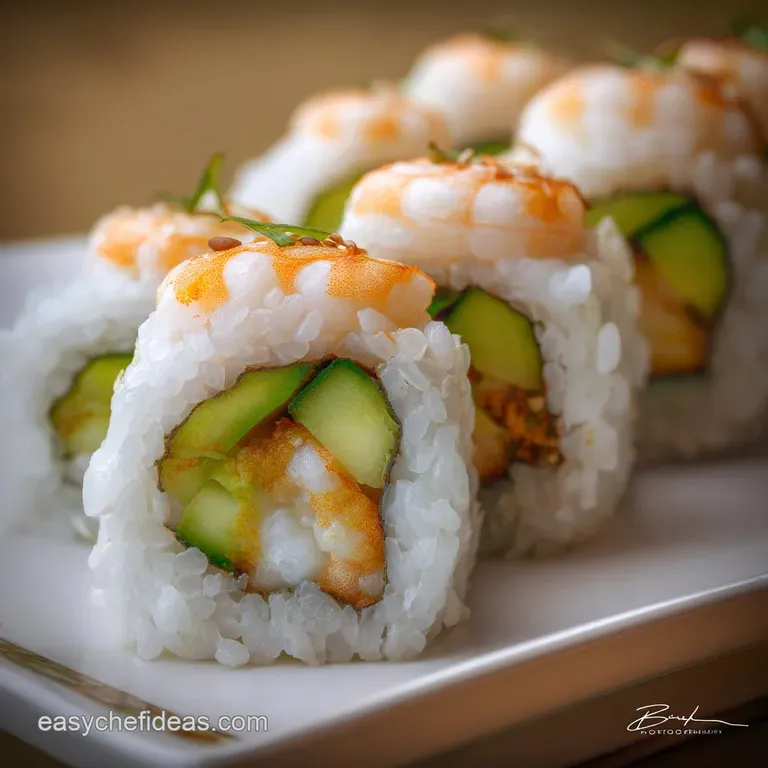
This is the fun part, but it requires patience. Remember, we are making uramaki , rice on the outside. This demands the use of plastic wrap on your rolling mat.
Prep Work Mastery: Poaching and Chilling the Shrimp Perfectly
If you are cooking your shrimp fresh, use slightly salted water and watch them like a hawk. They turn pink, they curl up, they are done this usually takes about three minutes. Immediately move them to an ice bath to stop the cooking process, ensuring they remain tender and sweet.
I once forgot about a batch simmering while distracted by a phone call and ended up with tough, rubbery little pink things a sad start for a prospective batch of homemade Boston roll sushi . Dice them evenly and mix them gently with the mayo (and Sriracha if you want a subtle kick).
Laying the Foundation: The Inside Out (Uramaki) Rice Spreading Technique
Cover your bamboo mat completely with plastic wrap. Place the nori sheet, shiny side down, on the mat. Now, take about ¾ cup of rice. This sounds like a lot, but you need to spread it thinly and evenly over the whole nori sheet.
Dip your fingers in Tenzui water (water mixed with a splash of vinegar) constantly! This prevents the rice from sticking to you, allowing you to gently press it into a smooth, thin layer.
Chef's Note: If you cannot see the dark nori faintly through the rice, the rice layer is too thick. A thick rice layer makes the final Boston roll sushi massive and almost impossible to slice cleanly.
Once the rice is spread, now is the time to sprinkle on your sesame seeds or gently press the masago onto the rice. Now comes the moment of truth: flip the entire sheet over so the nori is facing up, closer to you, and the rice is touching the plastic wrapped mat.
The Key to a Tight Roll: Filling Placement and Bamboo Mat Pressure
On the nori side (the center of your setup), lay your filling ingredients horizontally just below the midpoint. Start with a thin line of the shrimp mixture, followed by the avocado slices, and finally the cucumber sticks. Do not put filling closer than half an inch to the edges.
When you begin to roll, lift the edge of the mat closest to you, folding the nori edge up and over the filling, tucking the ingredients in tightly with your fingers. Use the mat to apply firm, even pressure as you continue rolling.
Roll slowly and deliberately, compressing the Boston roll sushi every inch of the way. When you finish, press the entire roll gently to shape it into a uniform cylinder.
Slicing Techniques: Achieving Uniform, Showcase Ready Pieces
This is where the magic happens, or where amateur cooks often fail. You must use a very sharp knife. I mean razor sharp . Before you make the first cut, wet the blade thoroughly. Slice the roll in half first. Wipe the blade clean and re-wet it before every single cut.
If you skip this, the sticky rice will adhere to the knife and tear your beautiful Boston roll sushi pieces apart. Slice each half into four pieces (for eight total). Now step back and admire your professional looking work!
Troubleshooting Your Uramaki: Chef's Tips for Perfecting Your Home Rolls
Preventing Rice Stickiness (The Water Dip Method)
I cannot stress this enough: The Tenzui water (water mixed with rice vinegar) is your best friend when handling sushi rice. Keep a small bowl of it nearby and dip your fingers frequently.
If you don't, the rice will stick to your hands, you’ll pull chunks off the roll, and your rice layer will become patchy. A smooth, even rice layer is mandatory for a structurally sound Boston roll sushi .
Avoiding a Blowout: Why Your Roll Fell Apart
Your roll fell apart for one of two main reasons: Too much filling or not enough pressure. If you over stuff the roll, the rice won't meet correctly, leaving a gap where the roll can fracture.
If you didn't compress the roll firmly enough with the bamboo mat, the rice won't stick to itself, and the roll will sag when lifted or slice unevenly. Remember that firm compression is necessary to distribute the rice seasoning glue properly across your homemade Boston roll sushi .
The Optimal Ratio of Filling (Shrimp/Veggies) to Rice
Aim for a 60% rice to 40% filling ratio. The rice layer should be thin, strong, and entirely surround the filling. If you lay down too much filling say, a huge pile of shrimp salad the roll will be structurally unsound and prone to collapsing when sliced.
It’s better to make two moderately filled Boston roll sushi rolls than one massive, exploding monstrosity.
Keeping It Fresh: Storage Guidelines for Leftover Sushi Rolls
Can You Freeze Sushi? The Practical Limitations of Avocado
Generally, no, freezing sushi is a bad idea, and it's particularly terrible for the Boston roll sushi specifically because of the avocado. Avocado turns grey, mushy, and develops a profoundly unpleasant texture when frozen and thawed. The rice texture also suffers badly. Save yourself the heartache and don't try it. If you are looking for a roll that does freeze well (like something pastry based), perhaps save that texture experimentation for a sweet dish, like my easy Cinnamon Roll Apple Pie Cups: Quick, Easy Shortcut Dessert .
Best Practices for Refrigerated Storage (The 24 Hour Rule)
Sushi is always best eaten immediately after rolling. However, if you absolutely must store leftovers, place the slices in a single layer in an airtight container. Line the container with a slightly damp paper towel, but ensure it doesn't directly touch the rice or the nori too much.
Store it on a middle shelf in the fridge. You must consume homemade Boston roll sushi within 24 hours. After that, the rice hardens significantly, the avocado discolors, and the texture becomes disappointing.
Enhancing the Experience: Dipping Sauces and Pairings
Beyond Soy Sauce: Customized Dipping Options for Shrimp Rolls
While classic high-quality soy sauce (or Tamari for gluten-free) is mandatory, the Boston roll sushi pairs beautifully with creamy and spicy additions. Try a spicy mayo drizzle: mix Japanese mayonnaise with a touch of Sriracha and maybe a few drops of sesame oil.
Alternatively, a citrus kick from ponzu sauce (a soy-based sauce with citrus notes) is fantastic and really brightens up the flavor of the shrimp.
Preventing Rice Stickiness (The Water Dip Method)
(This content section was redundant, moving focus to sauces/pairings instead.)
The simplicity of the shrimp and cucumber means you can play around without overwhelming the core flavour. Don't forget your pickled ginger ( Gari ); it’s absolutely essential for resetting your palate between bites of your wonderful homemade Boston roll sushi . Enjoy!
Recipe FAQs
Why is my sushi rice too sticky or mushy?
Over washing or improper seasoning is usually the culprit when rice is mushy. Always wash the rice thoroughly until the water runs completely clear to remove excess starch; then, ensure the vinegar seasoning is mixed in gently while the rice is still warm, never hot, and never overworked.
What is the best way to cook the shrimp for the Boston Roll?
The shrimp must be fully cooked, chilled, and thoroughly dry before rolling to prevent the roll from becoming soggy. Poaching them briefly in slightly salted water until pink and firm, followed by an immediate ice bath, yields the best, most tender texture.
My inside out rolls always fall apart when I cut them. How do I fix this?
This instability often means the rice wasn't pressed tightly enough during the initial rolling stage. Use a very thin, slightly wet, and sharp knife for cutting, and aim to make only one smooth slice per piece rather than sawing, which destabilizes the roll structure.
I don't like shrimp. What other ingredients can I substitute in a Boston Roll?
The key characteristic of this roll is a mild, cooked protein base paired with creaminess. Excellent substitutions include imitation crab (krab stick), canned or flaked cooked salmon, or even smoked trout for an elevated flavor profile.
Can I make the Boston Roll fully vegan?
Absolutely. Simply replace the cooked shrimp with thick strips of firm, seasoned tofu (marinated in soy and ginger), or use strips of roasted or cooked sweet potato. The avocado and cucumber base remains perfectly suitable for a plant based preparation.
How long can I safely store leftover Boston Rolls?
Because of the delicate avocado and rice, these rolls are best consumed the day they are made. If necessary, store them tightly wrapped in plastic in the refrigerator for a maximum of 24 hours, but be aware that the rice texture will harden significantly.
Why is the nori wrapper sometimes tough or chewy?
Nori often becomes tough if it absorbs too much moisture after the rolling process. Ensure your rolling mat and hands are only slightly damp, not dripping wet, when handling the rice, and always serve the rolls immediately after cutting for the freshest texture.
Classic Boston Roll Sushi Recipe
Ingredients:
Instructions:
Nutrition Facts:
| Calories | 335 kcal |
|---|---|
| Protein | 15.6 g |
| Fat | 4.2 g |
| Carbs | 50.5 g |
