Chicken Thighs with Artichoke Hearts and Feta Chee Skillet
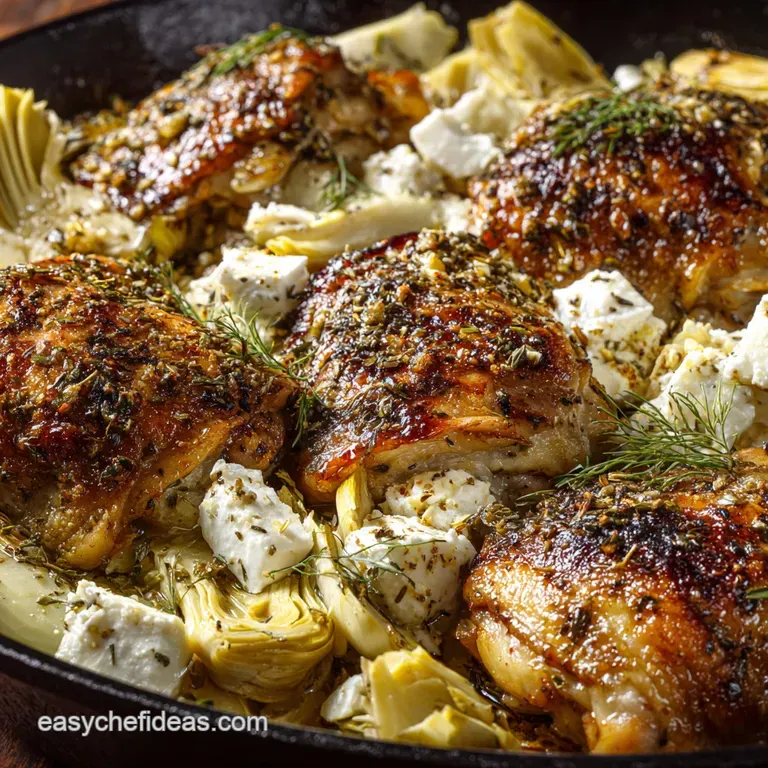
- Sun-Drenched Skillet Chicken: Artichoke, Lemon, and Feta Thighs
- The Science of Sizzle: Achieving Crispy Skin and Complex Sauce
- Essential Provisions for Chicken Thighs with Artichoke Hearts and Feta Chee
- Mastering the Technique: Step-by-Step Guide to Sun-Drenched Skillet Chicken
- Expert Tips for Perfect Chicken Thighs with Artichoke Hearts and Feta Chee
- Completing the Feast: What to Serve Alongside Mediterranean Thighs
- Storage, Freezing, and Reheating
- Recipe FAQs
- 📝 Recipe Card
Sun-Drenched Skillet Chicken: Artichoke, Lemon, and Feta Thighs
That smell. It hits you right away when those bright, briny artichokes meet the garlic and the wine reduction in the hot pan. The sharp tang of lemon and the salty aroma of melting feta cheese mixing with sizzling, crispy chicken skin is just... magic.
You won't believe how complex this tastes for so little effort, honestly.
This "Chicken Thighs with Artichoke Hearts and Feta Chee" recipe is my emergency weeknight hero. We're talking 40 minutes, minimal cleanup, and just a handful of Mediterranean pantry staples that make you look like a culinary genius.
It’s cheap, incredibly satisfying, and seriously fast, making it the perfect choice when you’re tired but still want a proper meal.
Forget those bland, dry chicken recipes you’ve tried before. This one is different because we focus entirely on technique, ensuring maximum crispness and building flavor directly in the pan.
Let's dive into how we get that perfect, sun-drenched flavor bomb onto your table, making every Tuesday feel like a Greek holiday.
The Science of Sizzle: Achieving Crispy Skin and Complex Sauce
The Essence of Sun-Drenched Skillet Cooking
This is all about the fond , that dark brown, caramelized residue left at the bottom of the pan after searing. We build flavor in layers starting here. That fond is pure gold, and the subsequent liquid (the white wine and stock) grabs all of it, intensifying the final sauce.
Quick Weeknight Flair: Ready in Under 40 Minutes
Thighs cook fast and, crucially, they stay beautifully moist. Unlike finicky chicken breasts, they forgive a small timing error, making them ideal for over high heat cooking. We sear them hard, build the sauce quickly, and finish the whole thing in one skillet.
Defining the Flavor Profile: Briny, Bright, and Rich
We need to nail the balance here. The richness comes from the bone-in thighs and the olive oil, providing a satisfying, mouth coating base. The feta provides the necessary salt and briny depth, while the lemon and artichoke hearts deliver a needed, vibrant punch of acidity that keeps the whole dish feeling lively.
Why Bone-In, Skin-On Thighs Are Best for Pan-Searing
The bone helps conduct heat slowly and evenly, which prevents the meat from tightening up and drying out prematurely. Even better, the skin renders delicious fat directly into the pan, creating the essential base for our sauce. Never skip the skin if you want maximum flavor and textural contrast.
Balancing the Acidity: Lemon and White Wine Dynamics
Acidity is what cuts through the richness of the dark meat, making the whole dish feel lighter and brighter. The white wine deglazes the pan, giving us a deep, complex foundation. The fresh lemon juice, however, must be added right at the very end to give that necessary sharp, clean lift.
How Feta Transforms into a Creamy Pan Sauce
This is the genius finishing move. When you use good quality feta, it doesn't dissolve completely like a hard cheese. When it hits the hot sauce base (after the heat is off!), it melts slightly, emulsifying the liquid beautifully.
It creates salty, tangy pockets of near creaminess that stick right to the chicken and artichokes.
Essential Provisions for Chicken Thighs with Artichoke Hearts and Feta Chee
We need quality ingredients here, especially since the list is so short. Don’t skimp on good olive oil, and if you can, grab the block of feta in brine it makes a difference.
Choosing the Perfect Artichoke Hearts (Marinated vs. Water Packed)
Marinated is the winner, hands down, for this recipe. They are already packed with herbs, olive oil, and acidity, instantly boosting your pan sauce. Use a good jar and, most importantly, save that excess oil to use instead of new olive oil when sautéing the shallots!
Feta Selection Guide: Brine, Crumbles, or Block?
Always buy the block stored in brine if you have the option. It’s significantly creamier, saltier, and has a much better texture when warmed. The pre-crumbled stuff often contains anti caking starches that prevent it from softening properly in the sauce.
Detailed Notes on Fresh Herbs and Aromatics
Fresh parsley and dill are non-negotiable for this Mediterranean vibe. You must chop them coarsely right before serving for maximum fragrance and color pop. If you don't have dill, use a little extra fresh oregano, but don't use dried oregano as a garnish it’s too tough.
Ingredient Swaps and Dietary Considerations
If you’re out of something, don't panic! Here are the swaps that actually work without ruining the overall flavor profile.
| Ingredient | Viable Substitute |
|---|---|
| Chicken Thighs | Boneless, skinless breasts (reduce sear time to 3 min per side) |
| Feta Cheese | Crumbled goat cheese (tangy) or mild farmer's cheese |
| Dry White Wine | Equal parts Chicken Stock + 1 tsp Lemon Juice or sherry vinegar |
| Artichoke Hearts | Roasted red peppers (drained well and chopped) for sweetness |
Mastering the Technique: step-by-step Guide to Sun-Drenched Skillet Chicken
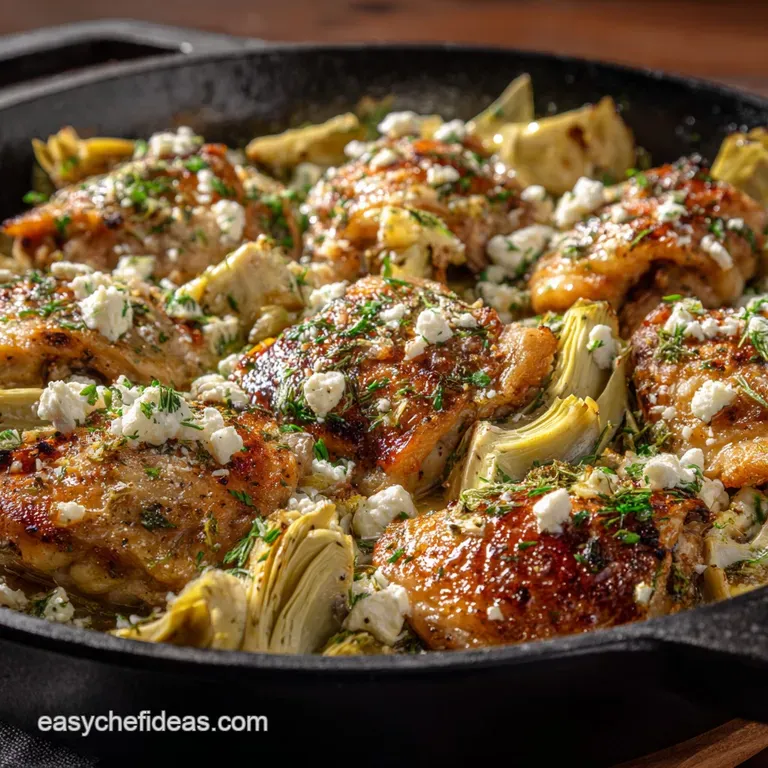
Preparation Workflow: Mise en Place for Speed
You must chop everything before you start searing, seriously. Get your shallots, garlic, and artichokes ready and right next to the stove. Speed is absolutely crucial once that oil is shimmering hot.
Phase 1: Securing the Crisp The Art of Searing Thighs
- Prep and Pat: Pat the chicken thighs completely dry using paper towels, then season aggressively with salt, pepper, and oregano.
- Heat: Place your heavy bottomed skillet over medium high heat. Add the olive oil (or reserved artichoke oil).
- Sear: Place the thighs skin side down in the hot pan. Do not move them. Cook undisturbed for 8– 10 minutes until the skin is deep golden brown and releases easily from the pan. The sizzle should be loud and intense.
- Rest: Flip the thighs, cook for 2 minutes on the flesh side, then remove them and set them aside. Leave the rendered fat behind.
Phase 2: Building the Bright Pan Sauce Base
- Aromatics: Reduce the heat to medium. Add the diced shallots and sauté for 3– 4 minutes until they smell sweet and look soft.
- Garlic: Stir in the minced garlic. Cook for just 1 minute until fragrant do not let it brown or it will taste bitter.
- Deglaze: Pour in the white wine (or stock substitute). Bring to a fierce simmer, scraping up all those dark, delicious bits (the fond) from the bottom of the pan with a wooden spoon. Reduce the liquid by about half to concentrate the flavor.
- Simmer Base: Pour in the stock and add the chopped artichoke hearts. Bring the sauce back to a gentle simmer.
Phase 3: Finishing the Dish and Melting the Feta
- Return Chicken: Place the partially cooked chicken thighs (skin side up) back into the skillet, nesting them into the sauce. Ensure the skin stays above the liquid to maintain crispness.
- Cook Through: Continue to simmer gently on the stovetop, covered loosely, or transfer the skillet to a preheated 375°F (190°C) oven for 10– 15 minutes.
- Finish: Cook until the internal temperature reaches 165°F (74°C) at the thickest part. Remove the pan from the heat immediately.
- Final Touches: Stir the lemon zest and juice into the hot sauce. Scatter the crumbled feta cheese and fresh parsley (and dill) over the top. Let the residual heat warm the feta slightly before serving immediately.
Chef's Note: If you want truly melt-in-your mouth tender thighs, aim for 175°F (80°C) instead of 165°F (74°C). The connective tissues in the dark meat break down beautifully at that slightly higher temperature.
Expert Tips for Perfect Chicken Thighs with Artichoke Hearts and Feta Chee
Troubleshooting: Why is My Chicken Skin Not Crispy?
You almost certainly skipped the paper towel step, or your pan wasn't hot enough initially. Moisture is the enemy of crispiness! Also, never overcrowd the pan; if you do, the chicken steams itself instead of searing. If you need to, cook the thighs in two batches to ensure space between them.
The Garlic Burn Hazard: Timing is Everything
Garlic takes mere seconds to burn, and burnt garlic will ruin your entire pan sauce with a harsh, bitter flavor. Add it after the shallots are already soft and translucent, and commit to cooking it for less than 60 seconds before you hit the pan with the wine or stock.
Optimal Internal Temperature for Thighs
As I mentioned, I prefer dark meat cooked higher. While 165°F (74°C) is technically safe for all poultry, pulling your thighs around 175°F (80°C) allows the collagen to fully break down. This gives you that classic, tender texture we crave.
Invest in an instant read thermometer, please; it’s the only way to guarantee a perfect cook.
Completing the Feast: What to Serve Alongside Mediterranean Thighs
This dish is robust and flavourful, so it needs simple, absorbent side dishes.
Starch Pairings to Soak Up the Sauce
Orzo or simple pearl couscous are ideal because they soak up that incredible, bright lemon and feta pan sauce like a sponge. However, if I want something really easy and crunchy, sometimes I make a quick batch of my Baked Seasoned Fries with Skinny Garlic Aioli: Crispy Healthy Oven Frites . Those fries are incredible for dipping!
Simple Green Salads for Contrast
You need something sharp and cool to contrast the rich chicken. A simple Greek salad with crunchy cucumbers, tomatoes, and red onion, dressed lightly with good olive oil and red wine vinegar, is perfection. No need for complex dressings here.
Suggested Wine Pairings for Bright Sauces
Go for something high in acid that complements the lemon and cuts the richness of the feta. A crisp, dry white wine like a Greek Assyrtiko or a chilled, bone dry Sauvignon Blanc works wonders.
Storage, Freezing, and Reheating
Storage is easy, but you have to be careful with reheating if you want to keep any semblance of crispy skin.
Storage: Keep leftovers in an airtight container in the fridge for up to 3 days. The artichoke and feta flavors actually deepen beautifully overnight, so it makes for excellent lunch prep.
Reheating: Avoid the microwave if possible. Reheat the dish in a skillet on the stovetop over medium low heat. Add a tablespoon of extra stock or water to loosen the sauce and prevent the chicken from drying out.
The skin won't be as crisp as day one, but the flavors remain fantastic.
Freezing: This dish can be frozen, but here’s my warning: the feta texture changes drastically when thawed. It gets crumbly and dry. If you are freezing this for later, I recommend freezing the chicken and sauce base without the feta.
Thaw it, reheat it, and then add fresh feta crumbles right before serving. Trust me on this.
Recipe FAQs
Why is my chicken skin not getting crispy?
Ensure the chicken skin is patted bone dry with paper towels before seasoning and searing; moisture is the primary enemy of crispness. You must also start the thighs skin side down in a sufficiently hot pan and resist moving them for the first 6-8 minutes until a deep golden crust forms.
Finally, avoid overcrowding the skillet, as this traps steam and prevents proper searing.
Can I use chicken breasts instead of thighs in this recipe?
Yes, but the cooking time must be significantly reduced to prevent the leaner breasts from drying out. Sear the breasts briefly, then finish them nestled in the sauce until they reach an internal temperature of 165°F (74°C).
Note that breasts will yield a slightly less rich flavour and a less inherently tender result than the high fat thighs.
What if I don't have white wine for the sauce?
The white wine is primarily used to deglaze the pan and add crucial acidity and complexity to the sauce base. You can easily substitute it with an equal amount of good quality chicken broth mixed with one teaspoon of white wine vinegar or fresh lemon juice.
This combination mimics the necessary tang and helps scrape up the flavourful fond from the pan.
How should I store leftovers, and how long do they last?
Allow the finished dish to cool completely before transferring it to a clean, airtight container. Refrigerate the leftovers promptly and consume them within 3 to 4 days for optimal quality and food safety.
When reheating, gently warm the dish in a skillet or microwave, adding a splash of water or broth if the sauce has thickened too much.
Can I use frozen artichoke hearts instead of jarred ones?
Yes, frozen artichoke hearts are an excellent option, but they must be thoroughly thawed and patted dry before adding them to the skillet. If using jarred hearts, make sure to drain and rinse them well to remove excess brine, which can otherwise make the final sauce overly salty or sour.
Can I freeze this dish for later consumption?
Freezing is generally not recommended, as the delicate texture of the artichoke hearts and the creamy nature of the feta cheese can degrade upon thawing. Both ingredients often become mushy or grainy once the dish is frozen and reheated.
If you must freeze, omit the feta entirely during cooking and crumble fresh cheese over the dish just before serving.
What is a good substitute for Feta cheese if I want a different flavour profile?
For a milder, creamier texture, you can substitute fresh goat cheese (chevre) or crumbled soft mozzarella. If you want a sharper, saltier kick that still retains a sturdy texture, try cubed Halloumi or even sprinkle some finely grated Pecorino Romano over the finished skillet.
Chicken Thighs Artichoke Feta Skillet

Ingredients:
Instructions:
Nutrition Facts:
| Calories | 114 kcal |
|---|---|
| Protein | 14.5 g |
| Fat | 5.0 g |
| Carbs | 2.0 g |
