Chicken and Mushrooms in White Wine Sauce the Perfect Creamy Sunday Dinner

- Mastering the Classic French Bistro Flavor Profile
- Why This Poulet au Vin Blanc Recipe Outperforms Other Creamy Chicken Dishes
- Sourcing the Core Components for Perfect Chicken and Mushrooms in White Wine Sauce
- Key Aromatics and Dairy: Building the Depth of the Sauce Base
- Phase One: Achieving a Deep Golden Sear on the Chicken
- Phase Two: Crafting the Luxurious Creamy White Wine Sauce
- Maximizing Flavor: Expert Notes for Your White Wine Sauce
- Serving Suggestions and Recipe Variations for Creamy Chicken and Mushrooms in White Wine Sauce
- Recipe FAQs
- 📝 Recipe Card
Mastering the Classic French Bistro Flavor Profile
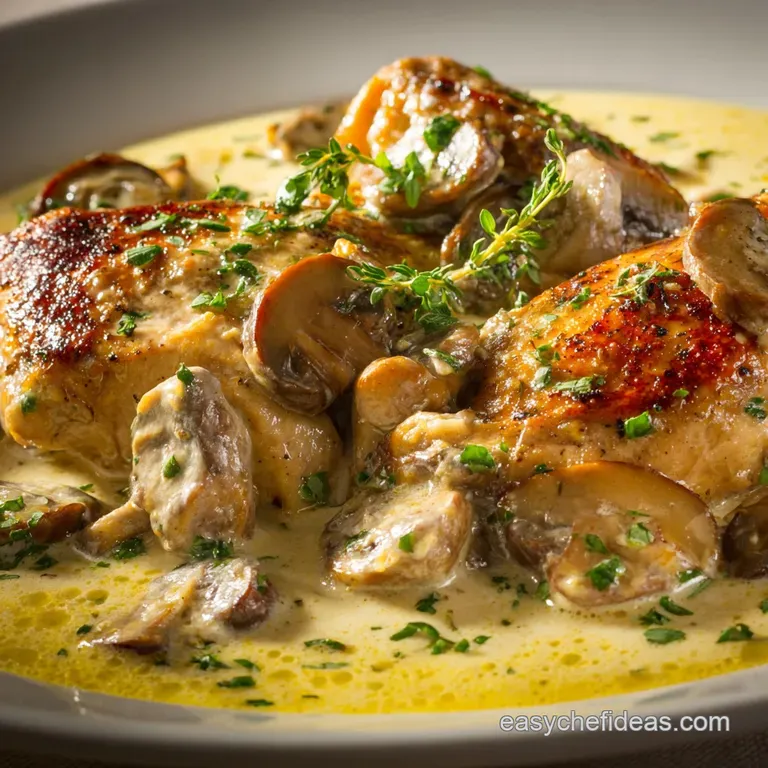
Right then, let’s talk about the dish that makes people think you secretly trained at a proper French cooking school: Chicken and Mushrooms in White Wine Sauce. Or, if we’re feeling fancy, Poulet au Vin Blanc . Forget those thin, watery attempts you’ve seen. This is the real deal.
It’s rich, savory, and the sauce is so silky you’ll want to drink it with a straw.
I used to be intimidated by anything labeled "French." I thought it meant hours of prep and obscure techniques. Turns out, it often just means smart, deliberate cooking that builds flavor layer by agonizing layer.
This recipe is the perfect example of taking super simple ingredients (chicken, mushrooms, wine) and treating them with respect. The secret? We are hunting for browning . Deep, beautiful gold and brown coloring on everything.
Why This Poulet au Vin Blanc Recipe Outperforms Other Creamy Chicken Dishes
The difference between a bland, cream and heavy chicken dish and this one is the foundation. Many "creamy chicken" recipes start with butter and immediately drop the heat, which is fine, but you lose out on the deep, caramelized notes.
This recipe uses the spirit of a classic French fricassee, which means the meat is sautéed or browned first, then gently simmered in a liquid (the wine and stock) to finish cooking.
This technique is a game and changer. It means your chicken is both tender and has a crispy exterior layer that locks in all the seasoning. The result isn't just "creamy," it’s complex. It hits salty, umami, slightly acidic from the wine, and unbelievably aromatic from the herbs.
Trust me, it’s worth the extra five minutes of searing time.
The Art of Layering Flavor: Why Searing Matters
Searing is not just about looks, though that golden and brown crust is gorgeous. It’s about creating fond . Fond is that sticky, brown residue left on the bottom of the pan after you cook protein or vegetables.
That stuff is pure flavor gold, and if you leave it there, you’re basically tossing out the best part of the dish.
We sear the floured chicken first. Why bother with the dredging? It protects the chicken from drying out, gives you a beautiful crust, and, most importantly, the residual flour helps thicken your sauce beautifully when you add the liquid. It's a triple win!
A Quick History of Traditional French Fricassee
Fricassee is a lovely, old and school term. It basically means "to fry and then to stew." Historically, it was a way to make tougher cuts of meat tender by browning them and then poaching them gently in a simple sauce, often with a liaison of cream or egg yolk to finish it off.
Our version uses the easily sourced chicken breast or thigh, but the principle remains the same: texture (sear) plus tenderness (poach) equals perfection. This method has stood the test of time because it works.
Essential Equipment for a Silky Sauce Finish
You really only need a good skillet for this recipe. My non and negotiable choice is a heavy and bottomed, 12 inch stainless steel pan. If you have cast iron, that works, too. The heavy bottom is critical because it holds heat evenly.
If you use a thin pan, you’ll get hot spots that burn the fond while the rest of the chicken just steams.
You also need a good wire whisk for incorporating the cream later. Don't underestimate this. If you just stir in the cream with a wooden spoon, you risk separation or a clumpy finish. A quick whisk off the heat makes the sauce glossy and professional.
Elevating Simple Ingredients to Restaurant Quality
This is where your personal standards matter. You can't make a $40 dish with $2 ingredients. That's just math. We aren't talking about fancy imported mushrooms (unless you want to!), but we are talking about using fresh thyme or tarragon instead of dried, buying a half and decent bottle of white wine, and investing in real heavy cream (the stuff that’s 35%+ fat).
Skipping the cheap substitutes is the only way to get that deep, luxurious texture and flavor profile we're aiming for.
Sourcing the Core Components for Perfect Chicken and Mushrooms in White Wine Sauce
The simplicity of this chicken and mushrooms in white wine sauce recipe means that every single ingredient pulls its weight. You can’t hide a stale herb or a watery stock.
Key Aromatics and Dairy: Building the Depth of the Sauce Base
I highly recommend using shallots instead of onions here. Shallots are milder, sweeter, and melt into the background, providing depth without overpowering the delicate mushroom and wine flavor. If you only have onions, use half a small yellow one, minced very finely.
For the dairy, we use butter for sautéing (because flavor!) and heavy cream for finishing. The amount of heavy cream (or double cream, as we call it in the UK) is just enough to thicken and add richness, but not so much that it turns the dish into a cloyingly rich mess.
It provides that essential velvety mouthfeel.
Choosing the Best Chicken Cut for This Fricassee Style
While the traditional French dish often uses whole chicken parts on the bone, we’re aiming for weeknight efficiency. Boneless, skinless chicken breasts are the classic choice here because they cook quickly.
However, if you are nervous about drying out the meat, boneless, skinless chicken thighs are much more forgiving. They take about 5– 8 minutes longer to simmer, but they stay juicy no matter what. If you choose thighs, make sure you trim off any excessive fat first.
Mushroom Prep Secrets: Cleaning vs. Rinsing
This is one of my favorite, most opinionated tips. Do not rinse your mushrooms under water. Mushrooms are sponges, and if you rinse them, they will absorb the liquid. When you throw wet mushrooms into a hot pan, they steam instead of sear.
You end up with flabby, sad mushrooms instead of nutty, browned ones.
Instead, wipe them vigorously with a damp cloth or a paper towel. Cremini (Baby Bella) are my favorite for this chicken and mushrooms in white wine sauce recipe because of their earthy flavour, but white button mushrooms work just fine, too. Slice them nice and thick.
Selecting the Ideal Dry White Wine (The Chef’s Pour)
If you see a recipe that calls for "cooking wine," close the browser tab. Seriously.
Crucial Wine Warning: Always use a dry white wine that you would genuinely enjoy drinking. The alcohol cooks off, but the flavour components concentrate, so if your wine tastes harsh or cheap, your sauce will, too.
A classic choice is an Unoaked Chardonnay, a crisp Sauvignon Blanc, or a clean Pinot Grigio. Aim for something that isn't too fruity or sweet. We need that acidity to cut through the richness of the cream and the chicken stock.
The Critical Role of Tarragon or Thyme in French Cooking
You’ll see different French recipes calling for one or the other. I list thyme in the recipe (as it's a bit more widely accepted and easier to source), but if you want that true, deep French bistro flavor? Go for fresh tarragon.
It has a slight anise or licorice flavour that works magical wonders with chicken, cream, and mushrooms. If you use dried herbs, remember to use half the amount they are far more potent.
Pantry Staples Checklist Before You Begin
It’s just easier to have everything ready, right? This is my pre and cooking checklist before I even touch the frying pan:
- Aromatics: Shallots finely diced, garlic minced.
- Dairy: Butter sliced, heavy cream measured.
- Liquids: Wine and stock measured out and sitting at room temperature.
- Herbs: Thyme/tarragon leaves stripped.
- Flour: Ready on a plate with salt and pepper.
Related Recipes Worth Trying
- Chicken and White Bean Enchiladas with Creamy Sals Zesty Salsa Bake — Chicken and White Bean Enchiladas with Creamy Sals are unbelievably creamy and satisfying This hearty Main Dish Recipe uses cannellini beans and vibrant...
- Baked Spaghetti Squash and Cheese Skinny Taste Mac and Cheese Alternative — Baked Spaghetti Squash and Cheese is the ultimate comfort cure This creamy lowcarb mac and cheese alternative uses a three cheese gratin recipe for maximum...
- Blackened Chicken Fiesta Salad Healthy Zesty 35Minute Meal — Our Blackened Chicken Fiesta Salad delivers smoky heat and a vibrant zesty finish This SkinnyTaste Blackened Chicken Fiesta Salad inspiration is quick...
Phase One: Achieving a Deep Golden Sear on the Chicken
This is where the magic starts. Remember that rule: Pat the chicken dry! We want a crisp crust.
Phase Two: Crafting the Luxurious Creamy White Wine Sauce
This phase is where we transform the brown bits into a glossy, irresistible sauce base for our White Wine Mushroom Chicken.
Optimal Skillet Temperature for Non and Stick Searing
When searing the floured chicken, your oil should be shimmering (medium and high heat), but not smoking. If it smokes, it's too hot and the flour coating will burn before the interior sears properly. Sear your chicken for 3– 4 minutes per side without touching it. Resist the urge to peek!
Once it develops a good crust, it will release easily from the pan. If you try to move it too soon, it’ll tear.
Deglazing the Pan: Capturing the Fond for Maximum Depth
After you remove the chicken, you’ll likely add the mushrooms and butter. Once the mushrooms are cooked and you’ve added the aromatics, it’s time to deglaze.
Pour in the wine. Immediately, you need to grab a wooden spoon (I love my flat and edged spatula for this) and scrape the bottom of the pan vigorously. Those stuck and on bits, that beautiful fond, will dissolve right into the wine. That is the essence of your chicken and mushrooms in garlic white wine sauce.
The Proper Technique for Thickeners (Roux or Starch Slurry)
Because we dredged the chicken in flour, we already introduced a slight thickener (a rudimentary roux, if you will, cooked in the fat left in the pan). You shouldn’t need a dedicated cornstarch slurry, but if you do, here’s the trick:
- Never add starch directly to hot liquid. It clumps instantly.
- Mix 1 teaspoon of cornstarch with 1 tablespoon of cold water until smooth (a slurry).
- Add the slurry to the simmering sauce after you’ve added the stock, stirring constantly for one minute.
Incorporating Heavy Cream Without Splitting the Sauce
Cream needs love and low heat. Once your chicken is cooked and removed from the pan (Step 12), turn the heat down to the lowest setting possible, or even remove the pan from the burner entirely for a minute. Then, whisk in your heavy cream slowly.
A high and boil and high and acid environment is what causes cream to split and become grainy. Slow and low prevents that disaster.
Final Simmer and Resting Guidelines
Once the chicken is nestled back into the sauce, cover the pan partially (leaving a small gap for steam). Simmer very gently for about 5– 7 minutes. The internal temperature of the chicken needs to hit 165°F (74°C). Use a meat thermometer! Overcooked chicken breast is a crime.
Once done, take the chicken out and let it rest for 5 minutes while you enrich the sauce. Letting it rest ensures the juices redistribute, making your easy chicken and mushrooms in white wine sauce truly moist.
Maximizing Flavor: Expert Notes for Your White Wine Sauce
The final step is what makes this a bistro classic: Monter au Beurre . This is the process of whisking in cold butter at the end. Take the pan off the heat, add the last tablespoon of cold butter, and whisk continuously until it melts and emulsifies into the sauce.
This doesn't just add a beautiful richness; it gives the sauce an incredible, lasting sheen and silky texture. It’s a trick worth knowing.
Serving Suggestions and Recipe Variations for Creamy Chicken and Mushrooms in White Wine Sauce
This chicken dinner is perfect on its own, but needs something starchy and something green to complete the plate.
Troubleshooting: What to Do If Your Sauce Is Too Thin or Too Salty
| Problem | Quick Fix |
|---|---|
| Sauce is Too Thin | Increase heat slightly and simmer rapidly (uncovered) for 3– 5 minutes until reduced. Alternatively, use a small cornstarch slurry (1 tsp starch + 1 Tbsp cold water). |
| Sauce is Too Salty | Add a teaspoon of acid (lemon juice or white wine vinegar) to balance it out. If that fails, stir in a spoonful of cream, or add a raw potato half during the simmer stage (remove before serving it absorbs some salt). |
Safe Storage and Reheating Methods
This is a great dish for leftovers, though the sauce might thicken considerably once chilled. Store leftovers in an airtight container in the fridge for up to 3 days.
To reheat, put the sauce and chicken back into a saucepan on low heat. Add a splash of stock or water if the sauce is too thick. Reheat gently; never blast it in the microwave, or the cream may split and the chicken will dry out.
Nutritional Overview: Tracking Protein and Fat Content
As a home cook, I’m not tracking every calorie, but it helps to know what we’re eating. This is a robust, protein and heavy main course, thanks to the full and fat dairy and chicken, making it very satisfying.
| Component | Per Serving (Estimate) |
|---|---|
| Calories | 480 550 Kcal |
| Protein | 45 g |
| Total Fat | 30 g |
Pairing the Dish: Recommended Starches and Greens
You need something to mop up that garlic white wine sauce. Period. The best pairing, in my opinion, is classic mashed potatoes (the kind with plenty of butter and cream, obviously) or egg noodles. For the greens, keep it simple: quickly steamed asparagus or green beans tossed in a little olive oil and salt.
Ingredient Swaps: Making This Recipe Gluten and Free or Dairy and Free
If you need a gluten and free chicken and mushroom in white wine sauce without cream, you absolutely can!
For Gluten and Free: Skip the flour dredging entirely. Ensure the chicken is dry, sear it, and then thicken the sauce at the end using the cornstarch slurry technique mentioned above.
For Dairy and Free: This is trickier, but manageable. Use a high and quality, full and fat plant and based butter substitute for searing. Instead of heavy cream, use full and fat canned coconut milk (not the stuff in the carton, the thick kind from the can).
It adds a subtle sweetness but provides the necessary richness and body. Just don't let the coconut milk boil, or it will split.

Recipe FAQs
I’m making this for Sunday lunch, how do I stop my Chicken and Mushrooms in White Wine Sauce from being bland?
The true secret is building flavour layers: ensure you let the mushrooms brown deeply (6 8 minutes) before adding the aromatics, and most importantly, use a wooden spoon to scrape up all the delicious brown bits (fond) from the bottom of the pan when you deglaze with the wine.
I only have chicken thighs, will they work in this recipe, and can I make this gluten-free?
Absolutely boneless, skinless chicken thighs are excellent here as they are more forgiving and remain incredibly moist, though they will require an extra 5 8 minutes of simmering time in the sauce.
To keep it gluten-free, substitute the all-purpose flour for cornstarch (cornflour) when dredging, or use a simple cornstarch slurry to thicken the sauce at the end.
I’m worried about cooking with wine; does the type of wine really matter, and is this safe for kids?
Yes, the quality matters tremendously; always use a dry wine you'd happily drink, like a Sauvignon Blanc or Pinot Grigio, as the flavour concentrates when reduced. While most of the alcohol cooks off during the reduction phase, you can substitute the wine entirely with extra chicken stock and a teaspoon of lemon juice for acidity if preferred.
My sauce looks a bit thin is there a quick fix, and what’s the secret to making it look so glossy?
If your sauce is too thin, simply remove the chicken and simmer the liquid rapidly for a few extra minutes to reduce it down further. The glossy, restaurant quality sheen comes from the classic French technique of whisking in the remaining tablespoon of cold butter (monter au beurre) right at the end, off the heat.
Can I make the mushroom sauce ahead of time, and how long do the leftovers keep in the fridge?
You can certainly prep ahead by searing the chicken and sautéing the mushroom mixture a day in advance, but for the best flavour and texture, finish the sauce with the cream and butter just before serving.
Leftovers store well in the fridge for up to three days, though cream sauces tend to separate if you try to freeze them.
Chicken And Mushrooms White Wine Sauce
Ingredients:
Instructions:
Nutrition Facts:
| Calories | 481 kcal |
|---|---|
| Protein | 51.0 g |
| Fat | 25.0 g |
| Carbs | 7.0 g |
