The 30 Minute Classic: Eggs in Purgatory
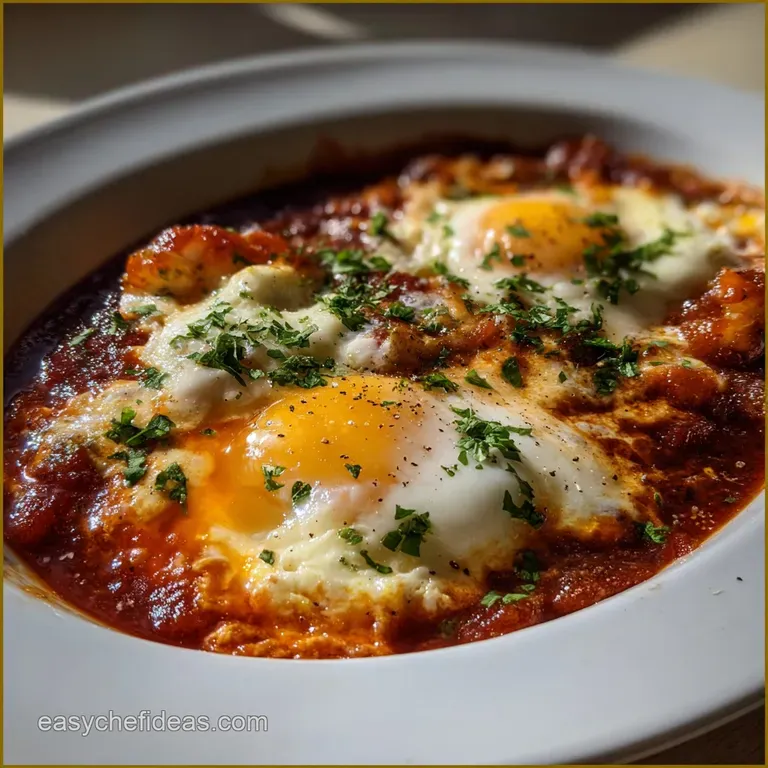
- The 30 Minute Classic: Eggs in Purgatory (Uova in Purgatorio)
- Mastering the Flavor: Why This Dish Tastes So Good
- Essential Ingredients and Smart Swaps
- How to Make Eggs in Purgatory (Uova in Purgatorio)
- Nutrition Information
- Top Tips for Success and Common Mistakes to Avoid
- Storing and Reheating Leftover Sauce
- Recipe FAQs
- 📝 Recipe Card
The 30 Minute Classic: Eggs in Purgatory (Uova in Purgatorio)
You know that feeling when you wake up craving something rich, spicy, and deeply satisfying, but you only have 30 minutes before your day explodes? Me too. Forget those weak, watery tomato dishes we are making real Eggs in Purgatory , or Uova in Purgatorio , the Italian answer to the perfect skillet breakfast.
This dish doesn’t just taste good; it smells like a Nonna’s kitchen on a Sunday morning. The garlic sizzles, the tomato sauce thickens into a fiery, fragrant ocean, and the moment you crack those eggs into the simmering red sea? Magic.
If you love dipping crusty bread into velvety, slightly spicy sauce and breaking into a runny yolk that coats everything in gold, this Eggs in Purgatory recipe is your new obsession.
I’ve made all the mistakes: adding too much water, rushing the reduction, and ending up with bland eggs swimming in thin soup. But I cracked the code, and I’m going to share the actual secrets to getting this Neapolitan classic right in just 30 minutes, keeping that perfect balance of spice, acidity, and richness.
Mastering the Flavor: Why This Dish Tastes So Good
This recipe relies on simple ingredients, which means quality matters. The science of Eggs in Purgatory is about evaporation and fat integration.
The Magic of Low and Slow Tomato Reduction
The biggest error people make when cooking Italian Eggs in Tomato Sauce is treating it like canned soup. When you first add your crushed tomatoes, the mixture is mostly water.
By simmering it uncovered for 15 to 20 minutes, you are reducing the liquid content significantly. The Science: Evaporation concentrates the natural sugars and acids, intensifying the tomato flavor and creating that thick, luscious sauce that’s essential for cradling the eggs.
You want the sauce thick enough to create little nests for the eggs, not so thin that the white spreads out into a flat sheet.
Achieving Perfectly Poached, Runny Yolks
The secret to perfectly poached eggs in this spicy skillet? STEAM. Once the eggs are nestled into the hot sauce, you must cover the pan. The Science: Covering the pan traps the steam rising from the simmering sauce.
This steam gently cooks the tops of the eggs (especially the white near the yolk) without drying out the yolks. The result is a fully set, protective white with a glorious, molten center, perfect for making those dippy Poached Eggs in Tomato Sauce .
Essential Ingredients and Smart Swaps
This recipe is intentionally lean, fitting our goal of a high impact, low-effort breakfast. We're aiming for about 9 core ingredients, maximizing flavor while hitting those nutritional benchmarks (437 kcal Calories, 16.9 g Protein).
| Original Ingredient | Best Substitute | Scientific Function & Honest Trade Off |
|---|---|---|
| Crushed Tomatoes (Canned) | Tomato Passata or Diced Tomatoes (Pureed) | Provides the necessary body and acidity. Diced tomatoes may require slightly longer simmering (5 7 extra minutes) to break down fully for a smooth sauce. |
| Extra Virgin Olive Oil | Butter (Unsalted) or Avocado Oil | The fat provides flavor and acts as a heat conductor for frying the aromatics. Butter adds richer dairy notes, which isn't traditional for Neapolitan cooking but creates depth. |
| Eggs (Large) | Duck Eggs | Offers a richer, slightly creamier yolk due to higher fat content. Duck eggs are larger and may require 1- 2 minutes longer steaming time to set the whites. |
| Garlic Cloves | Garlic Powder (1/2 tsp per 2 cloves) | Provides essential allium aroma. Powder works but lacks the fresh, pungent depth achieved when sautéing fresh garlic until fragrant. |
| Red Pepper Flakes (Pepperoncino) | Harissa Paste (1 tsp) | Delivers heat. Harissa adds complex, earthy, smoky notes (related to : Harissa Recipes ), transforming the profile from pure Italian spice to Mediterranean heat. |
| Fresh Basil | Dried Oregano (1 tsp) | Used for fresh, finishing aromatic contrast. Dried herbs should be added during the simmering process, not at the end, to release their flavor into the sauce. |
How to Make Eggs in Purgatory (Uova in Purgatorio)

The total time for this deliciousness is only about 30 minutes, start to finish. Prep is lightning fast maybe 5 minutes if you can chop garlic quickly.
Nutrition Information
| Nutrient | Amount |
|---|---|
| Calories | 437 kcal |
| Protein | 16.9 g |
| Fat | 33.98 g |
| Carbs | 18.85 g |
| Fiber | 3.3 g |
| Sugar | 10.3 g |
| Sodium | 650 mg |
Step 1: Building the Aromatic Tomato Foundation ( 5 minutes)
In a 10 inch skillet (cast iron or heavy bottomed is best!), heat 3 tablespoons of the best olive oil you have over medium heat. Add your finely chopped garlic and the red pepper flakes. Let it sizzle for about 30 seconds until the garlic is golden and smells sweet NOT burnt. This is the foundation of flavor for your Eggs in Purgatory . If you are looking for other fast egg meals, this is quicker than making The Best Homemade Eggslut Breakfast Sandwich Creamy Eggs Brioche .
Step 2: Achieving the Perfect Sauce Consistency (15– 20 minutes)
Pour in the canned crushed tomatoes. Stir in salt, pepper, and a tiny pinch of sugar (this balances the tomato acidity a crucial step!). Bring the sauce to a gentle simmer. Reduce the heat to medium low and let it bubble softly, uncovered, for 15 to 20 minutes.
You must let the sauce reduce! When it’s thick enough to cling to the back of a spoon, you’re ready. If you see it splattering too aggressively, turn the heat down slightly.
Step 3: Gently Poaching the Eggs (5– 8 minutes)
Use the back of a spoon to create two small wells (or four, if doubling the recipe) in the thick tomato sauce. These are the "nests." Gently crack an egg directly into each well. Season the eggs lightly with a pinch of salt and pepper.
Step 4: The Crucial Cover and Finish
Turn the heat down to low. This is key. Cover the skillet tightly with a lid. Let the eggs steam for 5 to 8 minutes. You are waiting for the whites to turn opaque and set, but the yolks should remain wobbly and vibrant.
If you prefer your yolks less runny, let it go for the full 8 minutes.
Remove the lid, tear some fresh basil or parsley over the top, and serve immediately with crusty bread. That’s how you nail authentic Eggs in Purgatory .
Top Tips for Success and Common Mistakes to Avoid
Making delicious Eggs in Purgatory is simple, but execution matters. Here are the pitfalls I fell into so you don't have to.
| Common Mistake | Root Cause | The Fix |
|---|---|---|
| The Sauce is Watery | Did not simmer long enough; too much residual water in the tomatoes. | Simmer uncovered for the full 20 minutes until the sauce reduces and darkens slightly. Consistency should be like thick gravy. |
| Eggs Stick to the Pan | Sauce was too thin or the heat was too high; not enough fat. | Ensure the skillet is coated well with oil initially. Once eggs are added, turn the heat to the lowest possible setting before covering to prevent scorching the bottom. |
| Yolks are Overcooked | Steamed for too long or heat was too high while covered. | Check the eggs starting at the 5 minute mark. If you see white starting to form a skin over the yolk, pull them immediately. The yolk should jiggle. |
| Lackluster Flavor | Not enough fat, acid, or spice integration. | Use high-quality olive oil. Taste the sauce before adding the eggs and adjust salt/spice. A small pinch of sugar helps brighten dull tomatoes. |
Why You Must Cover the Skillet
I know some recipes tell you to leave it uncovered, but if you do, the top of the egg white will be raw and slimy while the bottom is rubbery. Covering the skillet allows the trapped steam to gently cook the egg whites evenly from the top down, guaranteeing a velvety finish without overcooking that magical runny yolk.
Storing and Reheating Leftover Sauce
While I highly recommend eating Eggs in Purgatory fresh (especially since those runny yolks are the main event!), the sauce is excellent for storage.
Safe Storage Guidelines for Leftovers
If you have leftover tomato sauce, scoop it out of the skillet and into an airtight container. The sauce can be stored safely in the refrigerator for up to 4 days. If you've left the eggs in the sauce, they will continue to cook as they cool and store, meaning the yolks will solidify.
It's best to cook only the number of eggs you plan to eat immediately.
Can You Freeze Eggs in Purgatory?
You can absolutely freeze the tomato sauce! Freeze it in freezer safe containers for up to 3 months. Thaw overnight in the fridge, then gently reheat on the stove. When it’s simmering again, crack fresh eggs into the sauce and finish the dish.
The Essential Ingredient: Selecting the Best Bread
This isn't a suggestion; it's a requirement. You need something sturdy and crusty to wipe the pan clean. A good sourdough or a rustic, chewy Italian loaf (like ciabatta) is mandatory. The bread is the vehicle for soaking up the remaining spicy, rich tomato gold from your Eggs in Purgatory skillet. If you are looking for another spicy dish to dip your bread in, try the flavor profile of Sausage and Balls: Chefs Gourmet Recipe for Soft Yolk Eggs .

Recipe FAQs
How to make Eggs in Purgatory?
To make Eggs in Purgatory, you first simmer garlic and crushed red pepper in olive oil until fragrant, then add crushed tomatoes and simmer until the sauce thickens slightly. Next, create small wells in the sauce and crack the eggs directly into them, cover, and cook until the whites are set but the yolks are still runny.
How long does it take to cook Eggs in Purgatory?
Generally, this is a quick 30-minute meal from start to finish, fitting the definition of a fast classic. The sauce takes about 15-20 minutes to reduce, and the eggs themselves usually only need 5-8 minutes covered on low heat to reach the desired doneness.
Can I cook Eggs in Purgatory for just one person?
Yes, you can easily scale this recipe down for one person by using a very small skillet, perhaps 6 to 8 inches wide. Simply use half a can of tomatoes and one or two eggs, ensuring your sauce base covers the bottom of the pan evenly before cracking the eggs.
What is the correct way to cook the eggs in the sauce?
The key is gentle heat and covering the skillet to allow the steam to cook the tops of the egg whites. You should cook them on low to medium low heat until the whites are opaque; for reference on timing for yolk consistency, you can consult guides on How to Make Soft Boiled Eggs My Foolproof Method.
What does "Ontama Egg" mean, and is it related?
No, the Ontama egg technique is distinct from Eggs in Purgatory; Ontama refers to a specific Japanese method where an egg is cooked in hot water (often around 145°F/63°C) to create a creamy, custard like yolk.
Eggs in Purgatory relies on poaching the egg directly in a simmering, acidic tomato sauce for flavor infusion.
How do I know when the eggs are done cooking in the sauce?
You know they are done when the egg whites surrounding the yolk are fully opaque and firm to the touch, but the yolk itself still jiggles slightly beneath the surface. If you prefer fully set yolks, cover them slightly longer, similar to achieving a firm yolk in other preparations like How Long Do You Boil Eggs My Perfect Every Time Guide.
30 Minute Eggs In Purgatory

Ingredients:
Instructions:
Nutrition Facts:
| Calories | 437 kcal |
|---|---|
| Protein | 16.9 g |
| Fat | 33.98 g |
| Carbs | 18.85 g |
| Fiber | 3.3 g |
| Sugar | 10.3 g |
| Sodium | 650 mg |
