German Chocolate Cake: Silky and Traditional
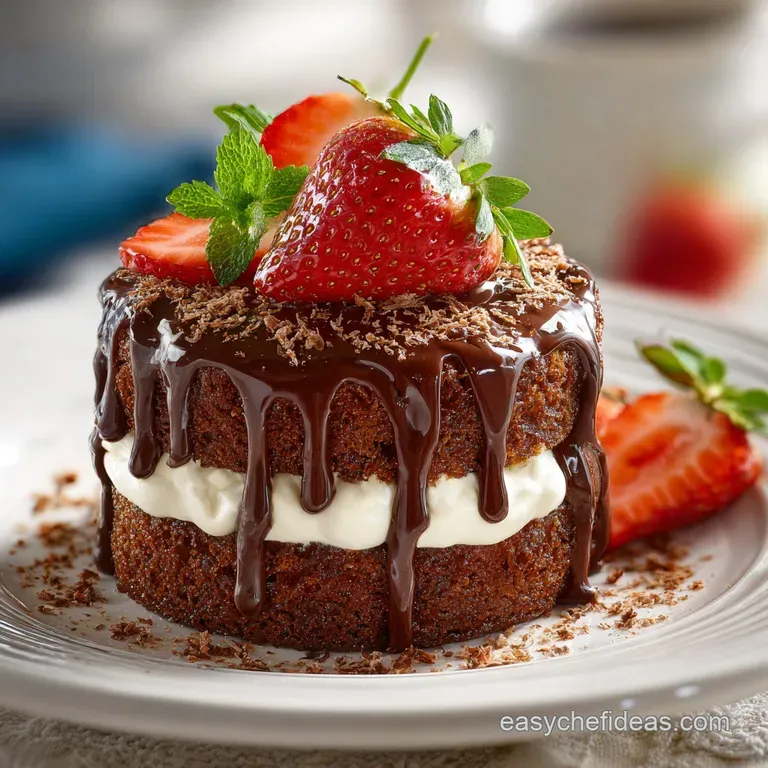
- Time: Active 30 minutes, Passive 35 minutes, Total 65 minutes
- Flavor/Texture Hook: Silky chocolate crumb with a crunchy, buttery toasted pecan frosting
- Perfect for: Milestone birthdays, holiday dessert tables, or impressive Sunday family dinners
- Why Traditional German Chocolate Cake Always Beats The Box
- Essential Timeline and Measurements for Baking Success
- Selecting Quality Elements for a Velvet Chocolate Crumb
- Selecting Your Elements
- The Professional Baker Tools You Actually Need
- Step By Step Guide to a Tall Layered Masterpiece
- Solving Common Baking Hurdles for Flawless Results
- Creative Ways to Personalize Your Chocolate Creation
- Scaling the Recipe for Any Group Size
- Kitchen Myths and Misconceptions
- Preserving That Fresh Baked Flavor for Later
- Perfect Complementary Sides to Serve With Your Cake
- Recipe FAQs
- 📝 Recipe Card
Why Traditional German Chocolate Cake Always Beats The Box
The first time I tried making this, it was a total disaster because I thought I could just use standard cocoa powder and a splash of milk. My kitchen smelled like a dream, but the cake itself was a dry, crumbly mess that literally fell apart the second I tried to stack the layers.
It looked like a chocolate sponge that had been through a mid life crisis. The frosting? That was a whole different story it was so thin it just slid right off the sides, leaving a sad puddle of pecans on the cake stand.
We've all been there, staring at a recipe and thinking, "Can I just skip the egg white folding part?" Trust me, you can't. That is the targeted fix for a heavy, dense cake. The magic of a real German Chocolate Cake lies in the aeration of those whites and the specific use of "sweet chocolate" rather than bitter dark varieties.
This isn't just a chocolate cake with coconut on top; it’s a specific engineering feat where the light cake meets a heavy, rich custard.
Once you see those egg whites transform into stiff, snowy peaks and feel the "lava like" consistency of a properly cooked frosting, you'll never go back to the boxed stuff. We are going for a crumb that is soft enough to melt but sturdy enough to hold that thick, buttery pecan topping.
It’s about finding that balance between the tang of buttermilk and the mellow sweetness of the Baker's chocolate. Let's get into why this specific method actually works every single time.
Essential Timeline and Measurements for Baking Success
Acid Base Lift: The buttermilk reacts instantly with the baking soda to create tiny carbon dioxide bubbles for a better rise.
Fat Suspension: Softened butter and granulated sugar create a stable emulsion that traps air during the three minute creaming process.
Protein Scaffolding: Beating egg whites separately creates a structural network that supports the weight of the melted chocolate without the cake sinking.
Starch Gelatinization: Sifting the flour removes clumps and ensures the starches hydrate evenly with the evaporated milk and buttermilk.
| Method | Time | Texture | Best For |
|---|---|---|---|
| Standard 9 inch Pans | 35 minutes | Tall, impressive layers | Showstopper celebrations |
| Sheet Cake (9x13) | 40 minutes | Denser, snack style | Potlucks and easy serving |
| Cupcake Format | 22 minutes | Light and airy bites | Parties and portion control |
Choosing the right format depends on your occasion, but the 9 inch round pans are the classic choice for a reason. They provide the perfect surface area for that iconic frosting to sit between each layer, ensuring you get coconut and pecans in every single forkful.
If you're short on time, the sheet cake version is more forgiving, but you lose that dramatic height that makes people go "wow" when you walk into the room.
Selecting Quality Elements for a Velvet Chocolate Crumb
When you're gathering your ingredients, don't just grab any chocolate bar. The Baker's Sweet Chocolate is the literal foundation of this recipe's history named after Sam German, who created the chocolate for the Baker's company.
It has a lower cocoa butter content and a specific sugar ratio that gives the cake its signature light brown hue and mellow flavor profile. If you use a 70% dark bar, the cake will be too bitter and the texture will turn out much drier than intended.
| Component | Science Role | Pro Secret |
|---|---|---|
| Sweet Chocolate | Flavor & Color | Melt in boiling water first to bloom the cocoa notes. |
| Full Fat Buttermilk | Tenderizer | Use room temperature liquid to prevent the butter from seizing. |
| Evaporated Milk | Richness | Provides a concentrated dairy fat without the water of regular milk. |
| Toasted Pecans | Structural Crunch | Toast them until fragrant to release natural oils for better flavor. |
The evaporated milk is the "secret sauce" of the frosting. It’s milk that has had about 60% of its water removed, making it much more stable when heated with egg yolks. This is what allows the frosting to reach that thick, spreadable consistency without turning into a runny mess.
And please, don't skip toasting the coconut. It changes the texture from "chewy string" to "crispy, nutty delight" in just five minutes under the broiler.
Selecting Your Elements
- 4 oz Baker's Sweet Chocolate: This is the heart of the dish. Why this? Provides the authentic mild sweetness and unique light crumb texture.
- 0.5 cup boiling water: Used to melt the chocolate.
- 1 cup unsalted butter: Make sure it is softened to room temperature. Why this? Allows for proper aeration during the creaming stage.
- 2 cups granulated sugar: For the cake batter.
- 4 large eggs: These must be separated into yolks and whites.
- 1 tsp vanilla extract: A high-quality extract adds depth.
- 2.5 cups all purpose flour: Sift this to ensure no lumps. Why this? Provides the necessary structure without being too heavy.
- 1 tsp baking soda: Our primary leavening agent.
- 0.5 tsp salt: To balance the intense sugar levels.
- 1 cup full fat buttermilk: The tang helps tenderize the gluten.
- 1 cup evaporated milk: For the decadent frosting.
- 1 cup granulated sugar: For the frosting mixture.
- 3 large egg yolks: Slightly beaten to thicken the custard.
- 0.5 cup unsalted butter: Cubed for the frosting.
- 1.33 cups sweetened shredded coconut: Toasted until golden.
- 1 cup chopped pecans: Toasted for maximum flavor.
| Original Ingredient | Substitute | Why It Works |
|---|---|---|
| Full fat Buttermilk | Plain Yogurt + Milk | Similar acidity levels to activate the baking soda. |
| Sweetened Coconut | Unsweetened Coconut | Reduces sugar; add 1 tbsp honey to the frosting to compensate. |
| Evaporated Milk | Heavy Cream | Provides similar fat but results in a richer, slightly heavier frosting. |
If you're looking for a slightly different profile, I've found that using a bit of coffee in place of the boiling water can really make the chocolate pop. For another variation on a classic, you might want to look at how different fats affect the crumb in a Victoria Sponge Cake if you're interested in the physics of sponge textures.
The Professional Baker Tools You Actually Need
You don't need a kitchen full of high tech gadgets, but three 9 inch round cake pans are non negotiable for the traditional look. If you only have two, you'll end up with layers that are too thick and might not bake through properly in the center.
A stand mixer is your best friend here because creaming butter and sugar for 4 minutes by hand is a workout nobody wants.
I also highly recommend using a heavy bottomed saucepan for the frosting. The custard contains a lot of sugar and egg yolks, both of which love to scorch if the heat isn't distributed evenly. A thin pot will give you "black specks" of burnt sugar in your frosting, which is definitely not the look we are going for.
Finally,, get a good silicone spatula for the folding process you need something flexible to scrape the bottom of the bowl without deflating all those beautiful air bubbles you worked so hard to create.
step-by-step Guide to a Tall Layered Masterpiece
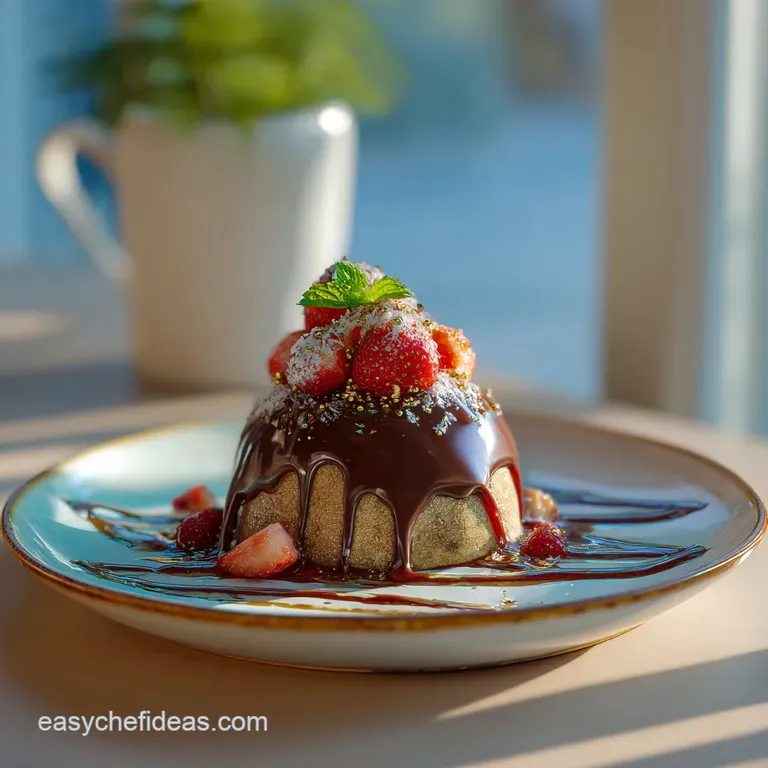
- Preheat your oven to 350°F (175°C). Grease and flour three 9 inch round cake pans and line the bottoms with parchment paper. Note: Parchment is vital for easy removal.
- Melt the sweet chocolate in 0.5 cup boiling water. Stir until smooth and set it aside to cool slightly.
- In your stand mixer, cream 1 cup softened butter and 2 cups granulated sugar until light, pale, and fluffy. This usually takes 3–4 minutes.
- Beat in the 4 egg yolks, one at a time, followed by the melted chocolate and 1 tsp vanilla extract.
- Sift together the flour, baking soda, and salt. Alternately add the flour mixture and buttermilk to the butter mixture, beating on low speed until just combined.
- In a separate clean bowl, beat the 4 egg whites until stiff peaks form. They should stand straight up when you lift the whisk.
- Gently fold the whites into the batter with a silicone spatula. Stop as soon as no white streaks remain.
- Divide batter evenly between the prepared pans. Bake for 30–35 minutes until a toothpick comes out clean.
- For the frosting: In a heavy saucepan, combine evaporated milk, 1 cup sugar, 3 yolks, and 0.5 cup cubed butter. Cook over medium heat, stirring constantly, until it reaches a thick, lava like consistency (about 12 minutes).
- Remove from heat and stir in vanilla, toasted coconut, and toasted pecans. Let it cool until it's thick enough to spread without running.
Chef's Tip: If your frosting seems too thin even after 12 minutes, keep cooking. The "lava like" stage is when the spoon leaves a clear trail on the bottom of the pan for a split second.
Solving Common Baking Hurdles for Flawless Results
Why Your Frosting Is Too Runny
This is the most common heartbreak with this cake. Usually, it happens because the heat was too low or you didn't stir long enough. The egg yolks need to reach a specific temperature to coagulate and thicken the milk.
If you pull it off the stove the moment it starts to bubble, it won't have the structural integrity to stay on the cake.
Why the Cake Layers Sunk
If your layers look like craters, you likely over mixed the batter after adding the flour, or your egg whites weren't beaten to a true stiff peak. When you fold the whites, you have to be gentle.
If you stir them in aggressively, you pop the air bubbles, and the cake loses the support it needs to stay risen while the heat sets the structure.
| Problem | Root Cause | Solution |
|---|---|---|
| Dry Crumb | Overbaked or too much flour | Pull cakes at 30 mins; measure flour by weight if possible. |
| Graining Frosting | Sugar didn't dissolve | Heat the milk and sugar slowly before adding yolks. |
| Lumpy Batter | Cold ingredients | Ensure buttermilk and eggs are room temp before starting. |
Common Mistakes Checklist
- ✓ Never skip lining the pans with parchment paper (this cake is sticky!).
- ✓ Ensure your egg white bowl is grease free (even a drop of yolk prevents peaking).
- ✓ Toast the pecans and coconut (it makes a massive flavor difference).
- ✓ Let the cake layers cool completely before frosting to prevent melting.
- ✓ Don't over beat the batter once the flour is added; keep it on low speed.
Creative Ways to Personalize Your Chocolate Creation
If you want to move away from the traditional 1950s style, there are plenty of ways to tweak this. Some people love a "Midnight" version where they use dark chocolate for the cake but keep the traditional frosting. It provides a much sharper contrast between the bitter cake and the sweet, buttery topping. If you're looking for that deeper flavor, you might enjoy reading about the Whiskey Chocolate Cake which uses spirits to enhance the cocoa notes.
For those who find the coconut pecan frosting a bit too sweet, I sometimes suggest adding a pinch of flaky sea salt to the frosting at the very end. This cuts through the sugar and brings out the nuttiness of the pecans.
You can also try a dairy-free swap by using coconut milk (the canned, full fat kind) in place of the evaporated milk and a high-quality vegan butter. The texture stays remarkably similar because coconut milk has a naturally high fat content.
Scaling the Recipe for Any Group Size
Scaling a three layer cake can be tricky. If you want to cut this in half for a smaller family gathering, I recommend using two 6 inch pans. You'll need to beat one egg and use exactly half of it to get the measurements right. Reduce the baking time by about 20% and start checking the center at the 25 minute mark.
When scaling up for a big party, don't just double the salt and spices they can become overwhelming. Use about 1.5x the amount of salt and soda if you're doubling the flour and sugar.
For the liquids, you can actually reduce them by about 10% in a double batch to ensure the batter doesn't become too heavy to rise. If you're doubling the frosting, work in two separate batches; a double sized batch of custard is very difficult to stir consistently and is much more likely to burn on the bottom of the pan.
Kitchen Myths and Misconceptions
One major myth is that this cake is German in origin. It actually has nothing to do with Germany! The name comes from Samuel German, an American who developed the "German's Sweet Chocolate" for Baker's Chocolate Company in 1852.
The recipe only became famous in the 1950s when a Dallas newspaper published it, and the name "German's" eventually lost its possessive "s," leading everyone to believe it was a European import.
Another misconception is that the frosting should be whipped like a buttercream. Traditional German Chocolate Cake frosting is a cooked custard. If you try to whip it with a mixer, you'll actually break the emulsion and end up with a greasy, separated mess. It should be thick, glossy, and stirred by hand.
Also, don't believe the "any chocolate will do" myth the sugar content in the sweet chocolate is specifically balanced with the buttermilk to create the unique texture of this cake.
Preserving That Fresh Baked Flavor for Later
Storage Guidelines: This cake is surprisingly hardy. Because of the high fat and moisture content in the frosting, it stays moist for quite a while. You can keep it on the counter in a cake dome for up to 2 days, or in the fridge for up to 5 days.
If you refrigerate it, just make sure to let it sit at room temperature for an hour before serving so the butter in the frosting can soften back up.
Freezing and Zero Waste: You can freeze the individual cake layers (unfrosted) by wrapping them tightly in plastic wrap and then foil. They will stay fresh for up to 3 months.
To use up any leftover frosting, try stirring it into your morning oatmeal or spreading it between two graham crackers for a quick "snack wich." If you have extra egg whites from making the frosting (since it uses extra yolks), save them for a healthy omelet or a small batch of meringues.
Perfect Complementary Sides to Serve With Your Cake
While this cake is a star on its own, it plays very well with others. A scoop of high-quality vanilla bean ice cream is the classic choice, as the cold creaminess balances the warm, nutty notes of the pecans.
If you want something a bit lighter, a dollop of unsweetened whipped cream with a tiny bit of orange zest can brighten up the heavy chocolate flavor.
For drinks, a strong dark roast coffee is the absolute best pairing. The bitterness of the coffee cuts right through the richness of the coconut custard. If you're serving this at a dinner party, a small glass of tawny port or a sweet sherry complements the toasted nuts beautifully.
Avoid overly sweet sodas or fruit juices, as they will compete with the cake's already complex sugar profile and leave you feeling a bit overwhelmed.
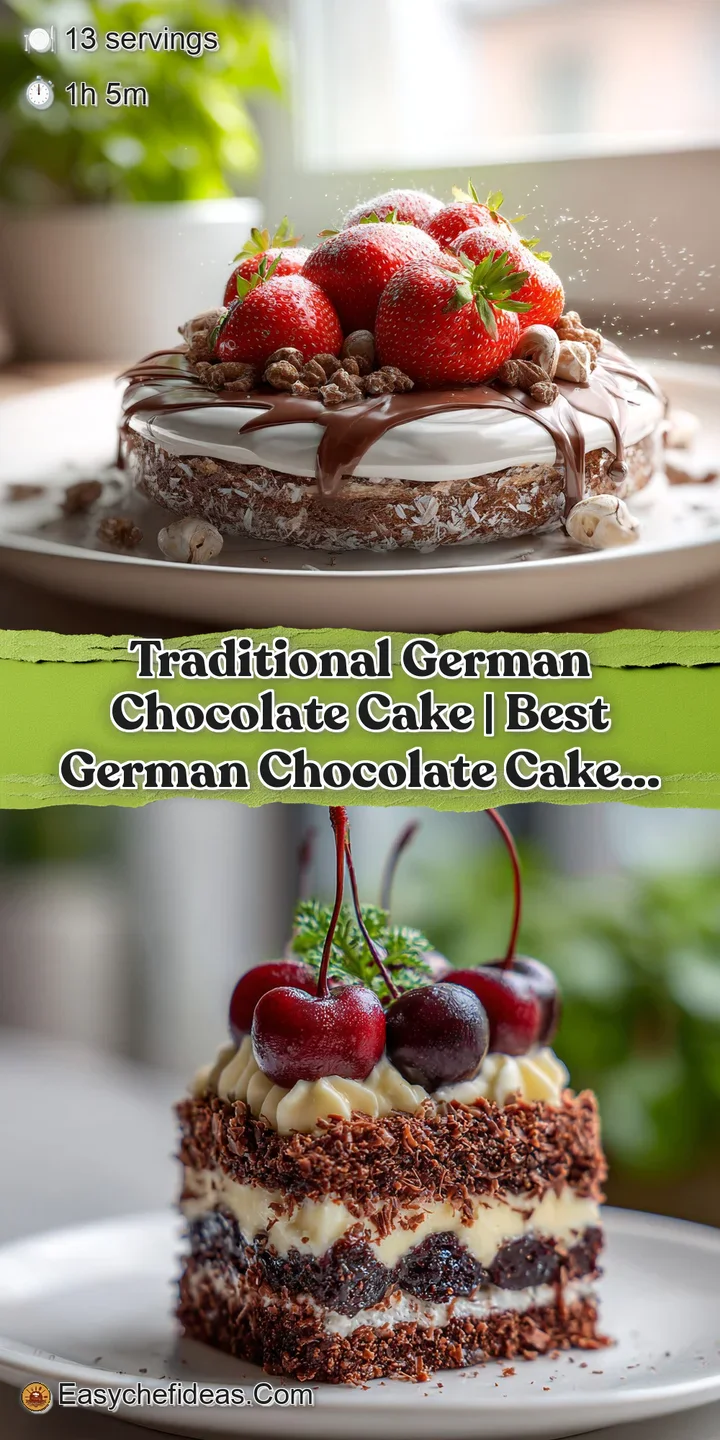
Recipe FAQs
What's the difference between a German chocolate cake and a regular chocolate cake?
It is defined by the frosting. Unlike standard chocolate cakes that use cocoa powder and ganache or buttercream, German chocolate cake features a signature cooked custard frosting filled with toasted coconut and pecans.
Which cake is best for diabetics?
No, this recipe is not suitable for diabetics. It relies on high amounts of granulated sugar in both the cake and the custard frosting, which can cause significant blood sugar spikes.
What is special about German chocolate cake?
The secret is the inclusion of sweetened baking chocolate. This ingredient, paired with the specific folding of beaten egg whites, creates a lighter crumb than most heavy chocolate cakes. If you enjoy the precise whipping technique used to build structure here, you can apply that same airy logic to our kefir sheet cake recipe.
Is German chocolate cake a thing in Germany?
No, this is a common misconception. The cake is actually named after an American baker named Samuel German, who developed a specific type of dark baking chocolate for the Baker's Chocolate Company, not after the country itself.
How to keep the cake layers from sticking to the pan?
Grease, flour, and line the bottoms with parchment paper. This specific cake batter is quite sticky, and skipping the parchment step often results in the layers breaking during removal.
How to fix the frosting if it looks too thin?
Continue cooking the mixture over medium heat. You must stir constantly until the custard reaches a thick, lava like consistency, which typically takes about 12 minutes to achieve.
How to ensure the egg whites reach stiff peaks?
Use a clean, grease free bowl and beat until the whites hold their shape. Even a tiny amount of residual fat or egg yolk will prevent the whites from aerating properly, which is essential for the cake's lift.
Traditional German Chocolate Cake
Ingredients:
Instructions:
Nutrition Facts:
| Calories | 679 kcal |
|---|---|
| Protein | 8.5 g |
| Fat | 38.6 g |
| Carbs | 78.4 g |
| Fiber | 2.1 g |
| Sugar | 58.2 g |
| Sodium | 204 mg |
