Heirloom Tomato Galette: Rustic Tart with Flaky Butter Pastry

- The Ultimate Summer Centerpiece: Rustic Heirloom Tomato Galette
- The Science of Summer Flavor: Why This Heirloom Tomato Galette Excels
- Essential Shopping List: Tomatoes, Pastry & Pantry Staples
- Step-by-Step Method for Baking Your Rustic Tomato Galette
- Troubleshooting and Expert Tips for the Perfect Rustic Heirloom Tomato Galette
- Make-Ahead Planning, Storage, and Reheating Your Galette
- Perfect Pairings for the Heirloom Tomato Galette
- Recipe FAQs
- 📝 Recipe Card
The Ultimate Summer Centerpiece: Rustic Heirloom Tomato Galette
When the farmers market is bursting with those ridiculously gorgeous, multicolored heirloom tomatoes, I know exactly what I’m making for dinner. Picture this: the intense, sweet tart aroma of warm tomatoes mingling with sharp Gruyère and fresh basil, wafting through your kitchen.
This galette offers that perfect combination of flaky, buttery crust and juicy, concentrated summer flavor.
You need a dish that looks totally impressive but takes almost zero fussy effort, right? That’s the magic of the galette it’s the perfect free form tart for when life is too hectic for structured baking.
It’s elegant enough for a garden party but forgiving enough for a Tuesday night when you just need something delicious and stress free.
But listen up, baking with tomatoes can be tricky business. I've had my share of soggy bottoms, which is a total disaster. I’m sharing my non-negotiable step-by-step process here, specifically designed to ensure your crust stays crisp, golden, and perfect every single time.
Let’s crack on and make this beautiful heirloom tomato galette recipe !
Decoding the Galette: What Makes This Tart Free Form and Flaky?
The simple beauty of the galette is that it’s supposed to be rustic. Unlike a quiche or a strict pie that requires a perfect edge and blind baking, the galette is simply a sheet of dough that you fold casually over the filling. It’s a French technique for the relaxed American baker, honestly.
This approach gives you maximum flake because you don't overwork the edges in a pan. The irregular folds create perfect, crisp pockets that protect the cheesy filling inside.
Why We Choose Heirloom Varieties for Superior Flavor and Texture
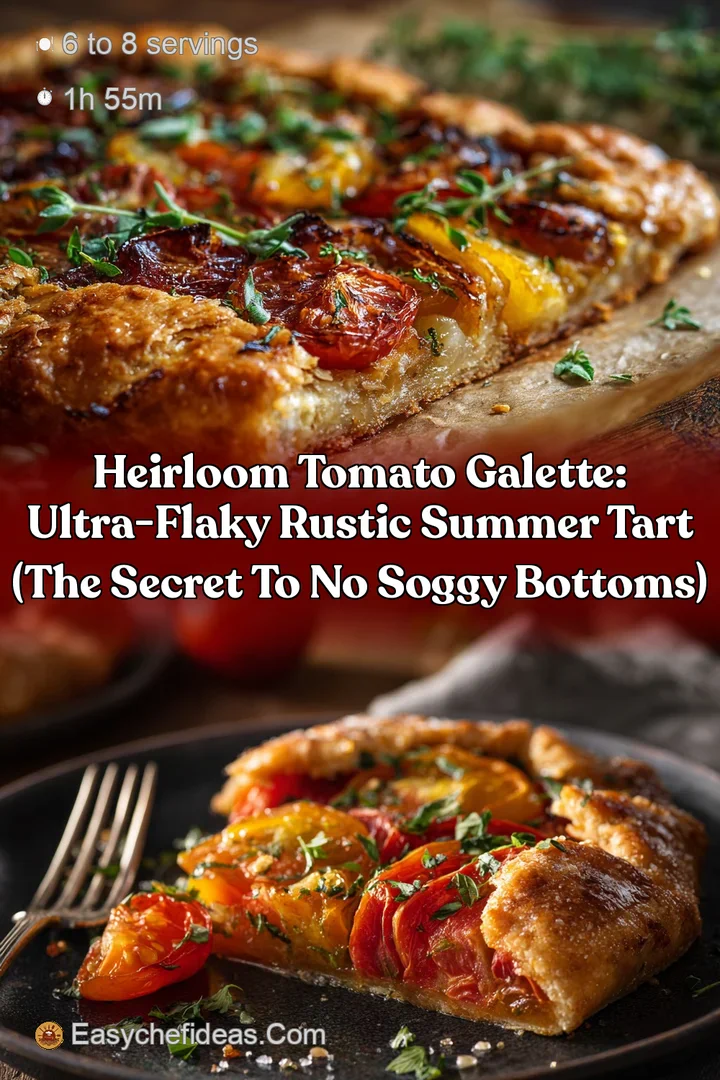
Choosing heirloom tomatoes isn't just about the pretty colors, though those striped green, deep red, and yellow varieties certainly make a splash. Heirloom varieties tend to have a much deeper, more complex flavor profile than standard supermarket slicers.
When baking, their texture holds up wonderfully, concentrating that beautiful flavor without turning mushy. If you want the absolute best summer tomato recipes , you must start with incredible produce; it really makes this heirloom tomato galette sing.
Difficulty Rating and Preparation Timeline
While the steps are easy, this recipe is a solid Medium difficulty because of the required chilling time and moisture management. You can’t rush the dough, and you absolutely cannot skip draining the tomatoes. Plan ahead, okay?
The Science of Summer Flavor: Why This Heirloom Tomato Galette Excels
Achieving the Perfect Crust: The Role of Cold Butter and Quick Handling
Flaky pastry is pure chemistry, friend. When you work extremely cold butter into the flour, those fat pockets stay intact. When they hit the hot oven, the water in the butter steams, creating those incredible layers we call flakes.
I once tried making pastry on a 90°F day without chilling the bowl, and the butter melted immediately total disaster, dough like putty. The secret is to work fast and ensure your kitchen tools, and even your hands, are cold.
Balancing Acidity and Umami: The Gruyère and Basil Dynamic
This galette needs more than just butter and tomatoes; it needs balance. Gruyère cheese is my absolute favorite here because it offers a nutty, slightly sharp flavor that cuts beautifully through the sweetness of the roasted tomatoes.
The basil, which we add after baking, provides a vibrant, aromatic freshness. Baking basil destroys its flavor and turns it black, so always save the good stuff for the finish.
Preventing a Soggy Bottom: The Secret to Moisture Control
This is the most important section, so pay attention! Tomatoes are mostly water, and that water is Kryptonite to a pastry crust. We have two key safeguards here: Salting the Tomatoes and The Moisture Barrier.
First, salting draws out excess liquid before baking. Second, the layer of Dijon mustard and Gruyère acts as a waterproofing agent, soaking up any rogue tomato juices that try to escape. Trust me, these steps are non-negotiable for a perfect base.
Essential Shopping List: Tomatoes, Pastry & Pantry Staples
Detailed Notes on Selecting the Best Heirloom Tomatoes
Go for a variety of shapes and sizes for maximum visual impact some small cherry heirlooms, some larger beefsteak varieties. They should feel heavy for their size and firm to the touch.
Don’t worry if they have a few spots or look a little weird; that’s what makes them special. Look for those deep jewel tones, which signal intense flavor.
Cheese Alternatives: Choosing Substitutes for Gruyère
Gruyère gives the best flavor, but if you can’t source it easily, you still have options. We need something sharp and easily meltable.
| Gruyère Substitute | Why it Works | Chef’s Note |
|---|---|---|
| Sharp Aged Provolone | Excellent melt, nutty flavor. | Shred thinly for best results. |
| Mature White Cheddar | Strong savory bite, readily available. | Ensure it is sharp and aged. |
| Goat Cheese (Chèvre) | Tangy and creamy, perfect with tomato. | Mix with a little Parmesan for better structure. |
Crafting the all-butter Pastry: Flour and Fat Ratios
I prefer all-butter pastry for flavor, but maybe you need a substitute, or you’re out of buttermilk (which isn't in this specific recipe, but sometimes people swap water for it!).
- No Ice Water? If you’re making dough in a rush and realize you’re out of ice cubes, use regular cold water plus that teaspoon of apple cider vinegar. The vinegar helps inhibit gluten development, making a more tender crust.
- Need a Flakier Crust? Substitute up to half the butter (4 Tbsp) with chilled vegetable shortening or lard. It makes the crust structurally stronger and incredibly flaky, though the flavor isn't quite as rich.
step-by-step Method for Baking Your Rustic Tomato Galette

Stage 1: Preparing and Chilling the Flaky Galette Dough
Start here, because chilling takes time. Mix your flour, salt, and cold, cubed butter quickly in a food processor or a bowl. Pulse or cut the butter until it looks like coarse sand with visible, pea-sized chunks of fat remaining.
Add the vinegar and then the ice water, one tablespoon at a time, mixing until the dough just comes together into a shaggy ball. Don't overmix it; that’s how you get tough crust. Pat it into a flat disc, wrap it tightly, and pop it into the fridge for at least one hour.
Stage 2: Slicing, Salting, and Draining the Tomatoes (Crucial Prep)
Slice all your gorgeous heirlooms about ⅛ inch thick. Arrange them on a wire rack set over a baking sheet, then sprinkle them generously with coarse salt.
Walk away for 15 minutes. When you return, you will see beads of moisture pooling underneath. This is the water you do not want in your galette. Pat them aggressively dry with paper towels before proceeding.
Chef’s Note: Draining the tomatoes is the single most important step for preventing a soggy bottom. Do not, under any circumstances, skip the salt and towel drying.
Stage 3: Assembly, Layering the Cheese, and Folding the Border
Preheat the oven to 400°F (200°C). Roll out your chilled dough into a rough 14 inch circle on parchment paper. Spread the Dijon mustard evenly across the dough, leaving a 2 inch border bare.
Next, spread the grated Gruyère and thyme over the mustard base. This layer is your moisture barrier and flavor bomb. When I make a rich base like this, it reminds me of prepping my Breakfast Toast: The Healthy, Quick Ricotta Roasted Tomato Recipe .
Carefully arrange your dried tomato slices over the cheese, slightly overlapping them in concentric circles. Fold the 2 inch edge of the pastry up and over the filling, creating rough, natural pleats.
Stage 4: Optimal Baking Temperatures and Doneness Checks
Whisk your egg wash ingredients and brush it liberally over the folded pastry border this gives you that beautiful, deep golden color. Transfer the entire baking sheet to the preheated oven.
Bake for 40 to 45 minutes. The crust should be a rich, deep golden brown and visibly flaky, while the tomatoes should look roasted and slightly caramelized at the edges. Let it cool on the pan for 10 minutes before sliding it onto a wire rack.
Drizzle with olive oil and scatter that vibrant fresh basil over the top right before serving.
Troubleshooting and Expert Tips for the Perfect Rustic Heirloom Tomato Galette
Handling Sticky Dough: When to Use the Freezer vs. More Flour
If your dough starts sticking as you roll it, your natural instinct is to grab more flour, right? Stop! Too much added flour makes the final crust tough and dry.
Instead, if the dough feels too warm or sticky, immediately transfer the sheet of dough (on the parchment paper) to the freezer for five minutes. This quickly chills the fat without altering the flour ratio.
Preventing Pastry Shrinkage in the Oven
Sometimes, even after proper initial chilling, pastry shrinks dramatically when exposed to heat. This usually means the gluten hasn't completely relaxed.
To prevent this, after assembling the galette and folding the edges, pop the entire tray back into the fridge for 10 to 15 minutes before brushing on the egg wash and baking. A final quick chill locks the shape in place.
Achieving Uniform Browning on the Crust
No one wants a patchy crust some pale spots, some burnt spots. The secret to uniform browning is two-fold: an even egg wash and oven rotation.
Ensure you generously brush the entire folded edge of the pastry with the egg wash. Then, halfway through the baking time (around the 20 minute mark), rotate the baking sheet 180 degrees. This ensures even exposure to heat.
make-ahead Planning, Storage, and Reheating Your Galette
Freezing Instructions for Unbaked and Baked Galettes
You bet this freezes well! For the best results, freeze the galette unbaked. Assemble the entire thing on the parchment lined baking sheet, then transfer the sheet directly to the freezer until solid. Once frozen, wrap the galette tightly in plastic wrap and foil.
To bake, unwrap the frozen galette, place it back on the tray, and bake straight from frozen at 400°F (200°C), adding about 15– 20 minutes to the total baking time.
How Long Can the Tomato Galette Last in the Refrigerator?
Leftovers are fantastic! Store any remaining slices tightly covered in the refrigerator. They will last safely for 3 to 4 days. Keep the fresh basil and oil dressing separate until you are ready to reheat.
Restoring Crispness: Best Reheating Methods
Do not microwave this. You’ll end up with a sad, chewy, damp mess. The only way to restore that gorgeous flakiness is through dry heat.
Reheat individual slices in a toaster oven or a standard oven at 300°F (150°C) for 10 to 15 minutes, or until the pastry is crisp again.
Perfect Pairings for the Heirloom Tomato Galette
This beautiful tomato galette is substantial enough to be a light lunch or dinner, but it also makes a stunning side dish.
Pairing it with a sharp, green salad is always a win. I love serving it next to a simple, bright meal like my Lemon Asparagus Couscous Salad with Tomatoes: Bright, Zesty Easy to keep the summer vibe going.
If you’re hosting a dinner party, the rich pastry and cheese work beautifully alongside simple roasted vegetables, perhaps before serving something substantial like my Sheet Pan Feta with Broccolini Tomato and Chickpea Healthy Veggie Dinner . The key is keeping the side light so the galette is the star.
Recipe FAQs
Why did the bottom of my galette turn out soggy?
Soggy bottoms are the most common pitfall when baking with juicy vegetables like tomatoes. The crucial step is to pre-salt and thoroughly drain your sliced tomatoes for at least 30 minutes before assembly, which draws out excess moisture.
Additionally, ensure you coat the pastry base completely with the Gruyère cheese or a thin layer of breadcrumbs to act as a protective moisture barrier.
Can I make this galette vegan or dairy-free?
Yes, you can substitute the all-butter pastry for a reliable vegetable shortening or olive oil-based vegan crust recipe. Replace the Gruyère with a high-quality vegan mozzarella shred or a generous layer of seasoned cashew based ricotta spread for richness.
Be mindful that vegan cheeses often melt differently, so adjust baking time accordingly if needed.
What is a good substitute for Gruyère cheese in this recipe?
Excellent alternatives to Gruyère include sharp white cheddar, aged provolone, or Swiss Emmental, all of which melt beautifully and offer nutty notes. For a brighter, saltier flavor profile, you could also use crumbled goat cheese or high-quality Feta, though they will not create the same blanket coverage as Gruyère.
My crust came out tough and hard to work with. What went wrong?
A tough crust usually results from overworking the dough, which rapidly develops the gluten and prevents flakiness. Ensure your butter and water are ice-cold, and try to handle the dough as little as possible, using quick bursts when mixing.
If your dough is too crumbly, add ice water a teaspoon at a time until it just barely comes together.
Is the pre-salting and draining of the tomatoes truly necessary?
Absolutely; this step is critical and non-negotiable for success in this recipe. Pre-salting draws out large amounts of moisture through osmosis, concentrating the tomato flavor while preventing the pastry from becoming waterlogged. Skip this step, and you significantly increase the risk of a doughy, underbaked base.
How should I store leftover galette, and can I freeze it?
Leftovers should be stored covered tightly in the refrigerator for up to three days, and reheated gently in a toaster oven to restore the crispness of the crust. Freezing the assembled, unbaked galette is possible; wrap it tightly in plastic and foil, then bake directly from frozen, adding about 15-20 minutes to the total baking time.
Can I use regular slicing tomatoes instead of heirloom varieties?
Yes, you can use regular beefsteak or Roma tomatoes, but be aware they may contain more water and lack the intense color variation of heirlooms. If using standard varieties, be extra diligent about the pre-salting and draining process, allowing the tomatoes extra time to weep out their moisture.
Select firm, ripe specimens for the best texture.
Rustic Heirloom Tomato Galette Recipe

Ingredients:
Instructions:
Nutrition Facts:
| Calories | 968 kcal |
|---|---|
| Protein | 45.9 g |
| Fat | 54.5 g |
| Carbs | 73.6 g |
