The Sunkissed Scoop Truly Easy Nochurn Mango Ice Cream
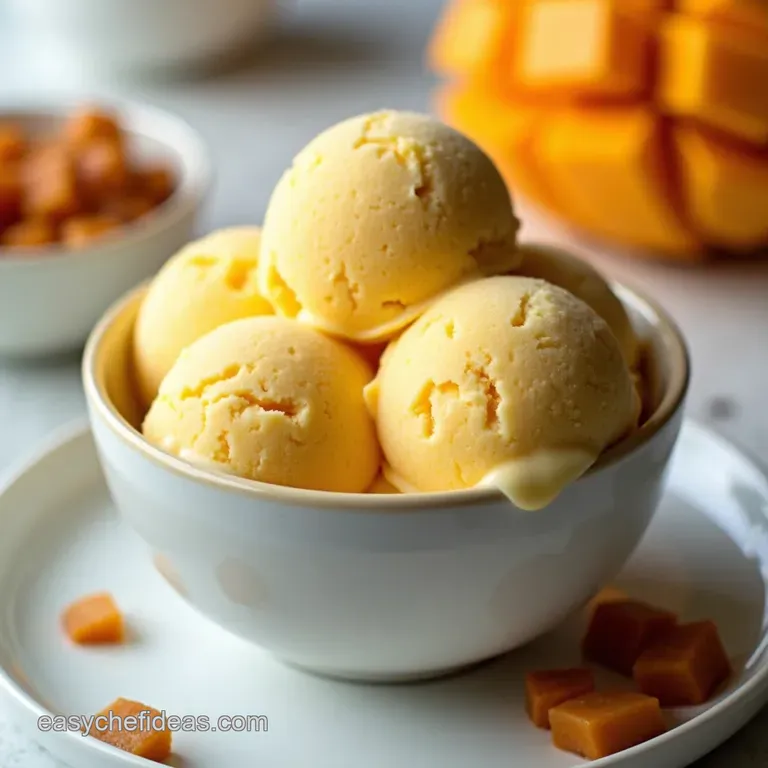
- Unlock the Secret to Ultimate Homemade Mango Ice Cream Bliss
- Why This No-Churn Method Reigns Supreme
- The Anatomy of Our Tropical Dream Base
- Crafting Your Frozen Masterpiece: A Simple Procedure
- Freezing Techniques for Superior Scoopability
- Elevate Your Scoop: Variations and Storage Secrets
- Troubleshooting Your Homemade Mango Ice Cream
- Frequently Asked Questions
- 📝 Recipe Card
Unlock the Secret to Ultimate Homemade Mango Ice Cream Bliss
There are few desserts that transport you instantly to a sun-drenched veranda quite like a perfect scoop of Mango Ice Cream . It’s creamy, intensely flavorful, and carries the unmistakable perfume of summer’s finest fruit.
Forget those grainy, overly icy store-bought versions; today, we are unlocking the recipe for a truly spectacular Homemade Mango Ice Cream that defies expectations. This isn't just a recipe; it’s your passport to tropical tranquility, and best of all, it requires minimal fuss.
We’re diving straight into the creamy depths of what makes this particular method shine, ensuring every batch of Mango Ice Cream Recipe Homemade you create is an absolute winner.
Why This No-Churn Method Reigns Supreme
When you search for the best ways to create frozen desserts, you often stumble upon complex custard bases requiring constant stirring over heat. While traditional ice cream has its merits, for sheer ease and reliability, the no-churn method triumphs, especially when dealing with such a delicate, sweet fruit like mango.
This approach simplifies the process dramatically, making it accessible even if you've never touched an ice cream maker before.
Capturing the Essence of Tropical Sunshine
The key to any great Mango Ice Cream Recipe is the fruit itself. Our goal is maximum flavor intensity. We achieve this by blending the ripest mango flesh we're aiming for the sweet, buttery notes of Ataulfo or Alphonso varieties with just a whisper of lime juice.
This tiny addition of acid is non-negotiable; it wakes up the mango flavor, preventing the final product from tasting dull or overly sweet. This blend of fruit, when frozen, creates the vibrant, signature swirl in our final creation, guaranteeing a memorable experience with every spoonful of this Mango Ice Cream viral sensation.
Zero Eggs, Maximum Creaminess Guaranteed
Many traditional recipes rely on egg yolks to provide richness and structure through emulsification. However, in this recipe, we sidestep that entire delicate cooking process. The structure and unbelievable creaminess that define this Homemade Mango Ice Cream come from the magical interaction between heavy whipping cream and sweetened condensed milk.
These two core components work tirelessly in the freezer to deliver a scoopable, non-icy texture that rivals anything churned for hours.
The Essential Guide to Perfect Ripe Mangoes
The success of this dessert hinges entirely on the quality of your fruit. You need mangoes that yield slightly to gentle pressure, similar to a perfectly ripe avocado. If you can find Alphonso or Kesar varieties, utilize them! If not, Ataulfo (often called Honey or Champagne mangoes) are fantastic substitutes.
The texture must be soft enough to puree into a glossy, lump free liquid, ensuring that the Mango Puree integrates seamlessly into the base without leaving hard, frozen chunks.
The Anatomy of Our Tropical Dream Base
Creating this luscious frozen delight requires assembling a short list of high impact ingredients. When you combine the core components correctly, you are essentially building the structure for a dessert that tastes far more complex than its ingredient list suggests.
This streamlined approach makes this the go-to choice when looking for a Mango Ice Cream Recipe With 2 Ingredients (though we’re adding a few more for perfection!).
Core Components for Richness
The foundation of our 4-ingredient Mango Ice Cream (if you count the two main structural elements) is built upon richness. We use two cups of very cold heavy whipping cream, which is whipped to incorporate maximum air volume, acting as our stabilizer.
Paired with a standard 14-ounce can of sweetened condensed milk, this combination provides the necessary sugar content and density to keep the mixture smooth and prevent large ice crystal formation as it freezes.
A teaspoon of vanilla extract and a tiny pinch of salt serve to amplify the sweetness and complement the tropical fruit profile beautifully.
Sourcing the Finest Fruit Pulp
While using fresh, perfect mangoes is ideal, sometimes seasonality or availability dictates a different path. high-quality frozen mango chunks work wonderfully, provided they are thawed just enough to blend but not so much that they lose their intense flavor concentration.
If using fresh, aim for about two cups of diced fruit, which will yield approximately one cup of concentrated puree after blending. Remember, this puree is where 90% of your finished flavor will come from.
Essential Equipment for Effortless Assembly
While we are avoiding the complexity of a traditional ice cream maker, a few tools are non-negotiable for achieving the right texture. A good electric hand mixer or a stand mixer with a whisk attachment is absolutely necessary for whipping the cream to stiff peaks anything less will result in soft, soupy cream.
A blender or food processor is needed to achieve that silky smooth Mango Puree , and a sturdy rubber spatula is essential for the gentle folding that follows.
If you happen to own a Cuisinart Ice Cream maker, this base can certainly be churned in it after whipping, but the no-churn method is our focus here.
Related Recipes Worth Trying
- The Ultimate Creamy Homemade Mango Ice Cream Recipe — Make the most lush Homemade Mango Ice Cream using a classic custard base for velvety texture This easy mango ice cream recipe is sunshine in a tub
- Foolproof Creamy Mango Ice Cream Recipe No Custard Needed — Make the best homemade mango ice cream without a machine This easy recipe delivers unbelievably creamy mango ice cream with just 4 ingredients Perfect for...
- Best Homemade Mango Ice Cream Recipe Easy NoChurn — Forget the watery tubs This easy mango ice cream recipe delivers luscious vibrant flavour without an ice cream machine Perfect summer treat
Crafting Your Frozen Masterpiece: A Simple Procedure
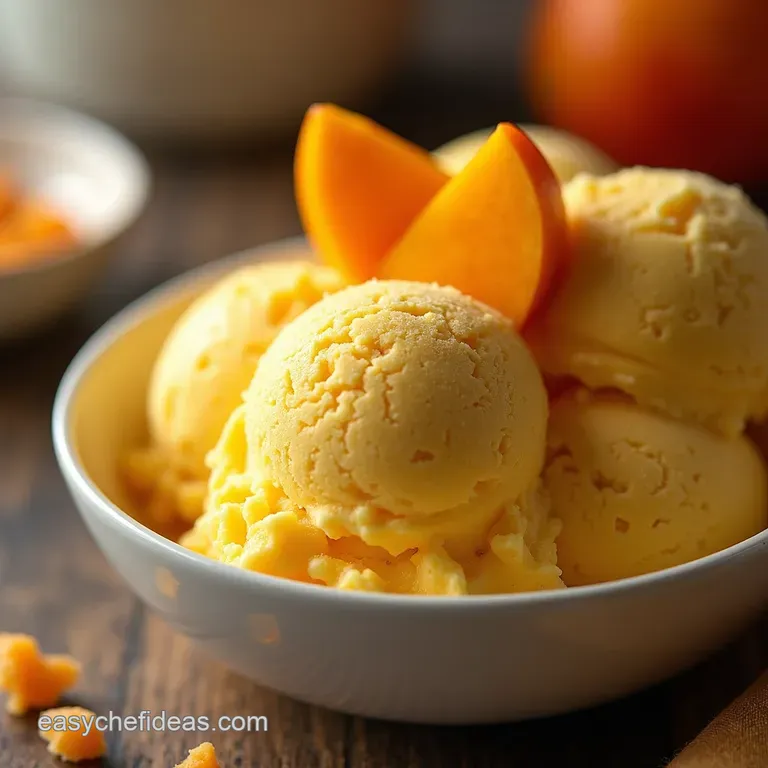
The active preparation time for this phenomenal dessert is remarkably short often under 25 minutes meaning you spend more time anticipating the reward than actually working for it. The magic happens when we combine air, sugar, and fruit pulp correctly.
First, tackle the fruit. Blitz your ripe mango chunks with one tablespoon of fresh lime juice until it achieves a liquid, uniform consistency. Taste it! If your fruit was slightly tart, now is the time to add a small spoonful of granulated sugar to balance it before proceeding.
Set this intensely flavorful mango mixture aside.
Next, focus on the base. Ensure your heavy cream is ice-cold; bonus points if you chill your mixing bowl and whisk attachment in the freezer for ten minutes prior. Begin whipping the cream on medium speed, gradually increasing to high.
You are looking for stiff, voluminous peaks the cream should stand straight up when the whisk is lifted. Do not overbeat into butter territory!
In a separate bowl, simply whisk together the entire can of sweetened condensed milk with the vanilla and salt. To begin merging the components, gently fold about one-third of the stiffly whipped cream into the condensed milk mixture. This process, known as "lightening the base," makes the remaining folding easier.
Once that first third is incorporated, carefully fold in the remaining two-thirds of the whipped cream. The goal is homogenous color without deflating the air you just whipped in; this air is what prevents the final Mango Vanilla Ice Cream from becoming a solid block of ice.
Freezing Techniques for Superior Scoopability
How you handle the mixture from the bowl to the freezer dictates the final texture. We aren't just dumping ingredients together; we are creating layers of flavor and texture.
Preparing the Sweetened Mango Swirl
Take your chosen freezer safe container a standard loaf pan works perfectly and pour in roughly half of your creamy base mixture. Now, take your reserved, bright yellow mango puree and drizzle generous spoonfuls over the surface.
Using a butter knife or a thin skewer, gently drag it through the mixture a few times to create a beautiful, natural swirl pattern. Avoid over mixing, as you want distinct veins of intense mango flavor against the pale, creamy background.
Whipping the Cloud Like Base
As detailed above, the aeration step is vital. The air incorporated into the heavy cream acts as a buffer against the ice crystals that naturally form during freezing. The more stable air pockets you have, the softer and creamier your finished product will be, leading to superior scoopability straight from the freezer.
Folding Techniques for Uniform Texture
When introducing the whipped cream to the condensed milk mixture, always use a large spatula and employ a figure eight or gentle scoop and-fold motion, working from the bottom up. This minimizes the loss of volume.
A well folded base ensures that every bite has the perfect blend of sweet cream and fruit, whether you’re enjoying a simple bowl or experimenting with a 4-ingredient Mango Ice Cream base.
The Final Deep Freeze Timeline
Once the base is layered and swirled in the pan, it needs to be sealed against the harshest enemy of frozen desserts: freezer air. Cover the surface directly with plastic wrap, pressing out any air bubbles, and then secure the lid or cover the entire pan with foil.
Freeze for a minimum of six hours, though overnight is strongly recommended for the firmest set. This deep freeze ensures that the structure holds up beautifully when you later attempt to scoop it out.
Elevate Your Scoop: Variations and Storage Secrets
Once you have mastered the primary technique for this Mango Ice Cream Recipe , the door opens to endless customization. The base is so robust that it welcomes bold additions beautifully.
Flavor Enhancements: Spice and Citrus Twists
To transition this classic Mango Vanilla Ice Cream into something truly exotic, consider adding subtle spices during the final stage of folding. A half teaspoon of ground cardamom or a tiny grating of fresh ginger infused into the condensed milk before mixing can provide a warming counterpoint to the cool, sweet fruit.
Alternatively, for an extra bright note, fold in finely chopped candied ginger at the very end for textural surprise.
Optimal Storage Methods to Prevent Freezer Burn
The enemy of leftovers is exposure to fluctuating temperatures and air. Always ensure your container is sealed tightly. If you plan on keeping your Homemade Mango Ice Cream for more than two weeks, consider transferring it from its initial loaf pan to a smaller, shallower, airtight container.
The key preventative step remains pressing a sheet of plastic wrap directly onto the surface of the ice cream before closing the lid; this barrier drastically reduces surface evaporation and crystal formation.
Serving Suggestions Beyond the Bowl
While eating it straight from the tub is certainly encouraged, serving this dessert elevates the experience. Consider pairing it with a crisp butter cookie or a shortbread biscuit for textural contrast.
For a beautiful presentation, roll scoops lightly in toasted, unsweetened coconut flakes or drizzle with a reduction made from brown sugar and a dash of dark rum a nod to the tropical origins of the fruit.
Troubleshooting Your Homemade Mango Ice Cream
Even the simplest recipes can sometimes present minor hurdles. Here is how to address common issues when learning How To Make Mango Ice Cream At Home .
Flavor Enhancements: Spice and Citrus Twists
If your final product tastes too sweet, it’s almost always due to the mangoes not being ripe enough. The fix? Gently re-puree a small amount of mango with a touch more lime juice and swirl it into the softened ice cream before refreezing.
Conversely, if it tastes flat, it needs a tiny pinch more salt or another few drops of lime juice, which should be folded in carefully.
Optimal Storage Methods to Prevent Freezer Burn
Freezer burn manifests as dry, discolored patches on the surface. This occurs when moisture sublimates (turns directly to gas) due to temperature fluctuations. If you see small patches, gently scrape them off before serving.
To prevent this entirely, ensure your freezer is set consistently below 0° F (- 18° C) and keep your ice cream towards the back, not near the door where temperatures fluctuate most wildly.
Serving Suggestions Beyond the Bowl
If your Mango Ice Cream has frozen rock solid (often a side effect of using less condensed milk), don't panic! Let it sit on the counter for a full 10 to 15 minutes before attempting to scoop.
This slight warming period allows the fats and incorporated air to soften just enough to achieve that coveted, easy-to-handle scoopable consistency, ready to be enjoyed as the ultimate summer treat.
Frequently Asked Questions
Can I really make this Mango Ice Cream without an ice cream machine?
Absolutely! This recipe is specifically designed as a "no-churn" delight, which means you don't need any fancy machinery. The magic comes from whipping the heavy cream stiffly and using sweetened condensed milk, which keeps the mixture smooth and creamy even without constant churning.
It’s the perfect cheat code for a lazy summer afternoon!
My cream isn't whipping up properly. What’s gone wrong?
Ah, the classic cream conundrum! The most likely culprit is temperature. Ensure both your heavy cream and your mixing bowl (and whisk attachment) are absolutely ice-cold chilling them in the freezer for ten minutes beforehand often does the trick.
If the room is too warm, the fat globules struggle to bind, leaving you with runny liquid instead of stiff peaks.
What kind of mangoes are best for the brightest flavour in this Mango Ice Cream?
For a truly knockout flavour, you want the ripest, sweetest mangoes you can find think Alphonso, Ataulfo (honey mangoes), or Keitt varieties if you’re in the UK or US. They have that deep, buttery flavour that holds up well against the cream.
Make sure they are soft to the touch before you even think about peeling them!
How long will this homemade ice cream last in the freezer?
Because this recipe has no stabilizers or commercial additives, it’s best eaten within two weeks for optimal texture. Always press plastic wrap directly onto the surface before sealing the container; this traps less air and is your best defense against dreaded freezer burn and ice crystals.
Can I add a little alcoholic kick to this for an adult treat?
You certainly can! A tablespoon or two of a white rum or Cointreau stirred into the condensed milk base before folding in the whipped cream works wonders. The alcohol slightly lowers the freezing point, which can even make your final scoop a tiny bit softer and easier to serve straight from the freezer.
My puree seems too thick/thin how can I adjust the texture before freezing?
The puree should be smooth but slightly thicker than apple sauce. If it’s too thin, simply pop it in a saucepan over low heat and simmer gently for about 5 minutes to reduce the water content. If it’s too thick, add a teaspoon of water or lime juice until you achieve that perfect, scoopable consistency.
Nochurn Mango Dream Ice Cream
Ingredients:
Instructions:
Nutrition Facts:
| Calories | 273 kcal |
|---|---|
| Protein | 1.5 g |
| Fat | 5.7 g |
| Carbs | 13.4 g |
| Fiber | 0.7 g |
| Sodium | 95 mg |
