The Ultimate German Chocolate Cake a Southerninspired Layered Classic
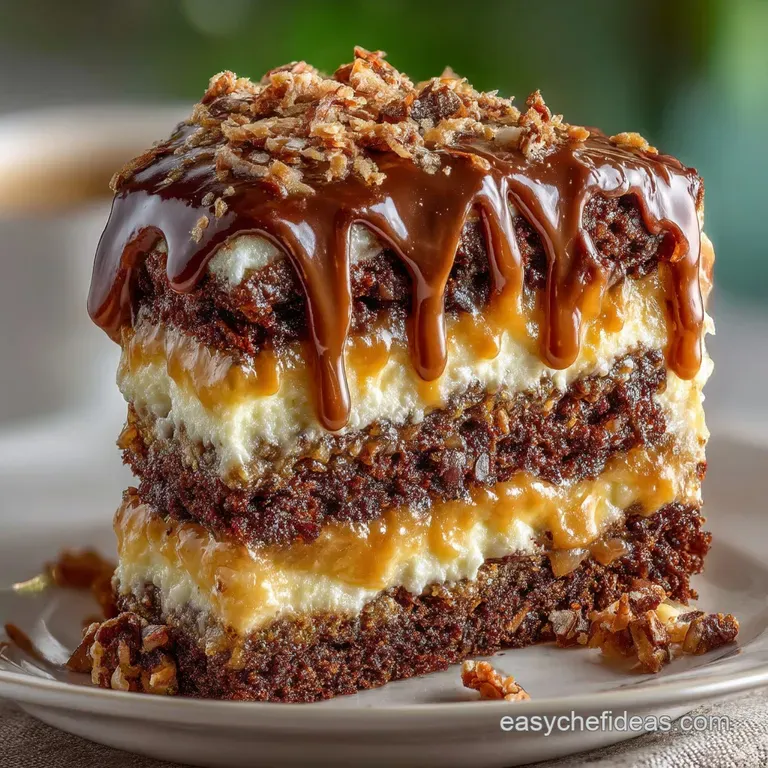
- Beyond the Fuss: Unlocking the Secret to Perfect German Chocolate Cake
- All Components Required: Mastering the Cake and Custard Ingredients
- Baking the Perfect Chocolate Cake Rounds
- Cooking the Decadent Coconut-Pecan Custard Filling
- Assembly and Presentation: Finishing Your German Chocolate Cake
- Troubleshooting and Expert Baking Insights
- Storage, Serving, and Make-Ahead Strategies
- Creative Twists: Variations on the Traditional German Chocolate Cake
- Recipe FAQs
- 📝 Recipe Card
Beyond the Fuss: Unlocking the Secret to Perfect German Chocolate Cake
The classic German Chocolate Cake is a magnificent centerpiece, often reserved for birthdays and special celebrations, but it shouldn't be intimidating. While the requirement for a multi layered sponge and a cooked custard filling elevates this treat above the standard weeknight brownie, mastering this dessert is entirely within the grasp of the dedicated home baker.
My goal with this detailed guide is to walk you through every critical step, ensuring you achieve a cake that is rich, deeply chocolatey, and features that iconic, gooey coconut pecan filling without fail.
Forget dry layers and grainy custards this is the definitive classic german chocolate cake recipe you'll turn to again and again.
Is German Chocolate Cake Actually German? Debunking the History
Before we dive into the mixing bowls, let’s clear up a common misconception that often confuses bakers. Despite its name, German Chocolate Cake is not a product of Germany. Its lineage is purely American, tracing back to 1852 when an American baker named Samuel German developed a specific type of dark baking chocolate for the Baker's Chocolate Company.
The original recipe utilizing "Baker's German's Sweet Chocolate" was popularized over a century later in a Dallas newspaper and became a national sensation. So, while the name is misleading, the resulting German Chocolate Cake itself is a perfect fusion of deep chocolate flavour and Southern style nutty caramel custard.
Why This Recipe Stands Out: The Moistness Factor
What distinguishes a truly spectacular layer cake from a merely acceptable one is the crumb specifically, its tenderness and moisture retention. Our technique for this homemade german chocolate cake maximizes both.
We utilize buttermilk, which reacts beautifully with the baking soda to create lift and imparts a subtle tanginess that keeps the cake from tasting overly sweet. Crucially, we bloom the 4 oz of unsweetened baking chocolate in boiling water.
This process enhances the cocoa flavour dramatically while adding a liquid component that ensures the resulting sponge is incredibly moist, standing up perfectly to the thick, generous layer of the famous german chocolate cake filling .
Tools and Timelines: Planning Your Layer Cake Project
While this is a medium-to-hard difficulty bake, success comes down to preparation. For equipment, you absolutely need a heavy bottomed saucepan for the custard (this prevents scorching), a stand mixer for efficiently creaming the cake batter, and three 9 inch round cake pans for even layering.
Plan for a significant time investment: approximately 45 minutes of active prep time (measuring, mixing, and toasting nuts), 55 minutes of cook time, and a critical minimum of 2 hours for cooling.
Rushing the cooling or setting process will compromise the final structure, so budget for about 3 hours and 40 minutes of total active and passive time before the final assembly.
All Components Required: Mastering the Cake and Custard Ingredients
Successfully executing this recipe means treating the cake layers and the german chocolate cake filling as two separate but equally important projects. Attention to ingredient quality and preparation is paramount here.
The Dark Side: Choosing the Best Cocoa for Rich Flavor
For the cake base, we rely on 4 oz (115g) of high-quality unsweetened baking chocolate, ideally 70% cocoa or higher. This chocolate is melted directly into 1 cup of boiling water the blooming step which unlocks its depth and richness.
The remaining dry german chocolate cake ingredients for the layers include 2 ½ cups of sifted all-purpose flour, 2 cups of sugar, baking soda, and salt. Sifting the flour is non-negotiable; it ensures the lightest possible texture.
Custard Chemistry: Understanding Key Dairy Ratios
The heart of this recipe is the cooked custard, which functions as both the german chocolate cake frosting and filling. The base relies entirely on 1 can (12 oz) of evaporated milk, not to be confused with sweetened condensed milk.
Evaporated milk provides the necessary richness and viscosity without adding excessive sugar. Combined with 1 cup of granulated sugar, 4 tablespoons of butter, and 3 rich egg yolks, this mixture forms a beautiful caramel base when cooked gently.
Toasted Nuts and Flakes: Preparing the Pecan Coconut Mix
A crucial step often overlooked in making homemade german chocolate cake is properly preparing the additions. We call for 1 ½ cups of sweetened flaked coconut and 1 cup of pecans. Always toast the pecans lightly in a dry pan until fragrant (about five minutes).
This deepens their nutty flavour significantly, providing a crucial contrast to the sweetness of the coconut. Toasting takes a couple of minutes but adds complexity that elevates the final dish.
Dairy Breakdown: Achieving the Moistest Chocolate Sponge
The remaining dairy for the sponge is vital for achieving that famous moisture. You will need ½ cup (one stick) of softened, unsalted butter, and 1 cup of full fat buttermilk, both at room temperature.
This combination, along with four large egg yolks mixed into the creamed butter and sugar, creates the rich emulsion required for a tender cake.
Baking the Perfect Chocolate Cake Rounds
Start by preparing your pans: grease, flour, and line the bottoms of your three 9 inch pans with parchment paper circles. This is the insurance policy against sticking. Once the batter is fully mixed remembering to alternate the dry flour mixture and the buttermilk, followed by the cooled melted chocolate divide the batter evenly among the prepared pans.
Bake at 350°F (175°C) for just 28 to 32 minutes. The layers are thin, so they bake quickly. Overbaking is the fastest route to a dry cake.
Cooking the Decadent Coconut Pecan Custard Filling
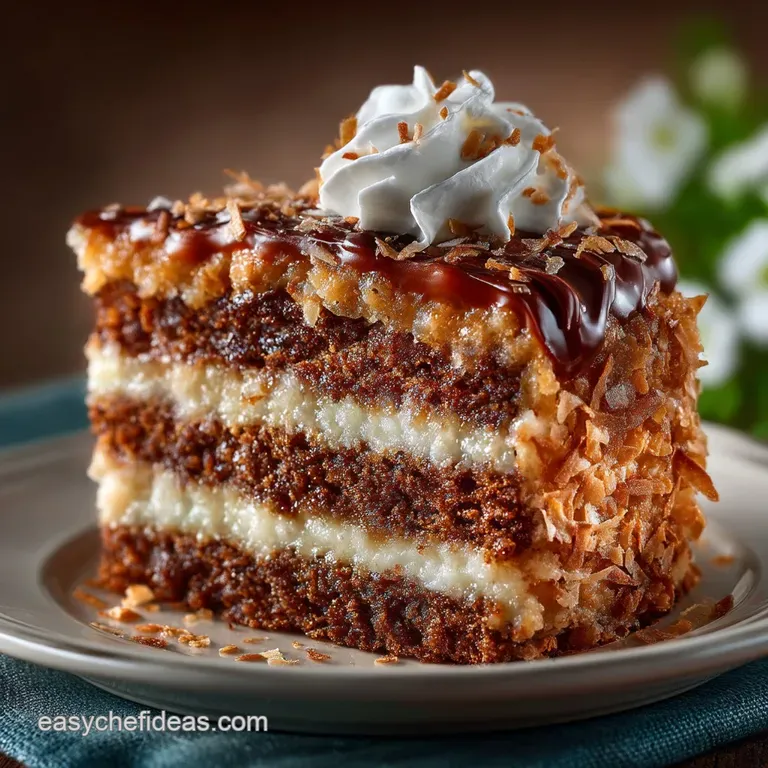
This is the stage requiring patience, but it’s what sets a good German Chocolate Cake apart. In your heavy bottomed saucepan, whisk together the evaporated milk, sugar, butter, and the three reserved egg yolks.
Cook this mixture over medium low heat, stirring constantly with a rubber spatula or whisk. The key word here is constantly . You must avoid allowing the yolks to seize or the sugar to scorch on the bottom.
After about 10– 15 minutes, the mixture will thicken significantly and should visibly coat the back of a spoon. Once this consistency is achieved, remove it from the heat immediately, stir in the vanilla, toasted coconut, and pecans, and then let the mixture cool completely.
The german chocolate cake filling will firm up further as it cools, achieving that characteristic gooey, spreadable texture.
Related Recipes Worth Trying
- The Definitive German Chocolate Cake Super Moist Layers Custard Filling — The ultimate German Chocolate Cake recipe for a proper showstopper This delivers a rich moist buttermilk sponge with the bestever coconutpecan custard...
- Cherry Dump Cake Recipe The Easiest 5Minute Cobbler with Cake Mix — This cherry dump cake with cake mix is foolproof Get that perfect buttery crisp topping with zero mixing A superb comforting pudding that feels like an easy...
- The Sweet Roll Revival Strawberry Shortcake Sushi Rolls — Create showstopping Dessert Sushi Rolls using the classic flavours of strawberry shortcake These simple sweet maki are perfect for parties Get the recipe
Assembly and Presentation: Finishing Your German Chocolate Cake
With your cake layers completely cool and your custard filling set, you are ready for the final, satisfying stage of this comprehensive german chocolate cake recipe .
The Reverse Creaming Method: Ensuring a Tender Crumb
While our recipe utilizes a standard creaming method (butter and sugar first), the principle of creating air and controlling gluten development is essential. By creaming the softened butter and sugar until the mixture is light and fluffy (about 3– 4 minutes), you incorporate necessary air pockets.
Adding the egg yolks one at a time ensures a strong emulsion. When combining the wet and dry ingredients in subsequent steps, mix only until the flour streaks disappear. This deliberate under mixing is the secret to a beautifully tender crumb texture.
Temperature Checks: Knowing When Your Cake is Done
Trust the visual and tactile cues when baking. The cake rounds are finished when they pull slightly away from the edges of the pan and a wooden skewer inserted into the centre comes out clean. Because the layers are dark, relying solely on colour is not enough. Be diligent with your 28 32 minute bake time.
Cooling Protocol: Preventing Layer Shrinkage
As soon as the cakes come out of the oven, allow them to rest in the pans for precisely 10 minutes. This allows the hot internal structure to stabilize. Then, invert them onto a wire cooling rack to cool completely.
Attempting to frost or stack warm layers will melt the german chocolate cake icing and cause the layers to slide and collapse. They must be stone cold before assembly.
Tempering Technique: Avoiding Scrambled Eggs in Your Frosting
While we didn't temper the yolks separately, the low-and-slow heating process when cooking the custard serves the same purpose to safely cook the egg protein. By maintaining medium low heat and stirring without interruption, you gently raise the temperature of the 3 egg yolks, thickening the mixture without allowing localized high heat to scramble them.
The ideal temperature range is 160 170°F (71 77°C).
Stirring and Setting: Achieving the Ideal Custard Consistency
The consistency of your german chocolate cake filling is crucial. After cooking for 10– 15 minutes until it thickly coats a spoon, the mixture must be allowed to cool completely at room temperature.
Do not refrigerate it immediately; cooling slowly helps it reach that perfect gooey yet-stable texture.
Leveling Layers: Stacking for Stability
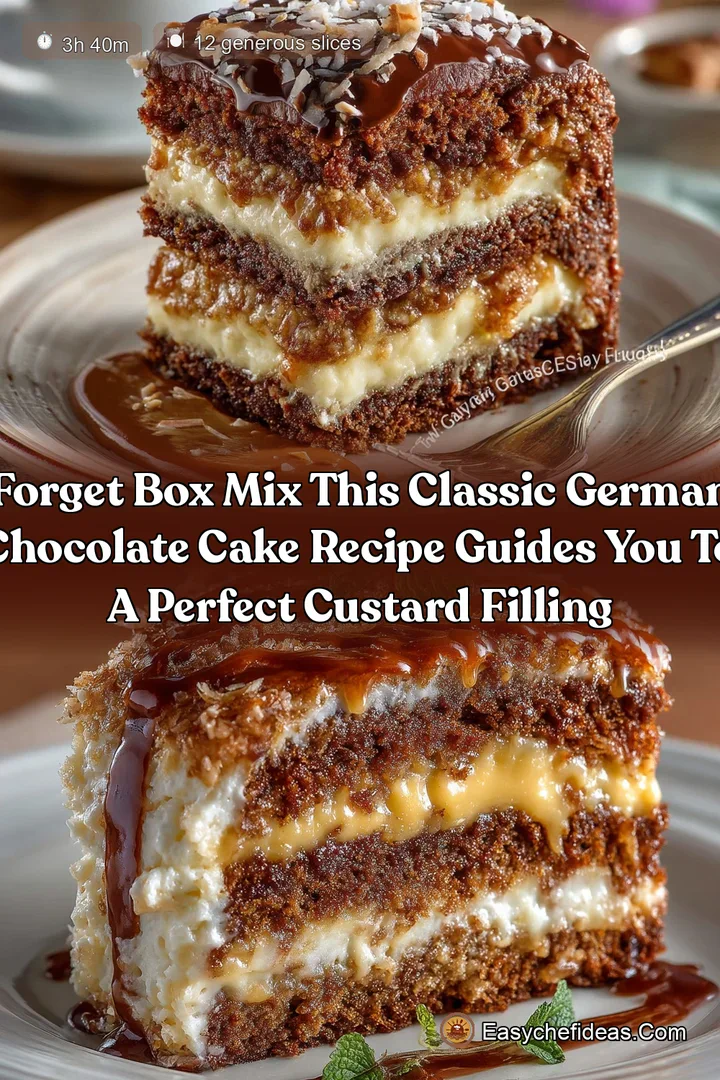
If your cake layers have domed, use a long serrated knife to carefully level the tops before assembly. Place your first layer down, spread half of the cooled coconut pecan filling evenly, stack the second layer, and repeat with the remaining filling. The final cake layer goes on top.
Since the traditional German Chocolate Cake uses this custard solely as a filling, the sides are typically left unfrosted, highlighting the beautiful layered structure.
Troubleshooting and Expert Baking Insights
The most common issues with this easy german chocolate cake recipe often stem from improper temperatures or over agitation. Always ensure your butter, eggs, and buttermilk are at true room temperature (around 70°F).
Cold ingredients do not emulsify properly, leading to a denser, less tender final product. When making the custard, if you start seeing small white pieces forming, you've curdled the yolks.
While you can sometimes strain the mixture through a fine mesh sieve to catch the clumps, prevention through constant stirring is always better. Finally, remember the golden rule of baking: do not overmix the cake batter once the wet and dry ingredients meet. This develops gluten, leading to a tough, sad layer cake.
Storage, Serving, and make-ahead Strategies
Due to the cooked custard filling, which contains eggs and dairy, this cake must be refrigerated. Once assembled, chill the cake for at least 1 hour to allow the layers to settle and the filling to fully set, ensuring clean slices.
Stored properly in an airtight container in the refrigerator, the German Chocolate Cake will stay delicious for 3 4 days. Serve slices at room temperature, paired perhaps with a tart raspberry or cherry coulis to cut through the richness.
Creative Twists: Variations on the Traditional German Chocolate Cake
While the classic german chocolate cake recipe is perfect as is, a few simple tweaks can personalize this famous dessert.
The Cake Sank! Why Layer Cakes Fail (and How to Fix Them)
A collapsed cake usually signals one of two problems: overmixing the batter, or the cake was removed from the oven before it was fully set. If you suspect your batter has too much gluten development (it looks elastic), try letting it rest for 15 minutes before baking to allow the gluten strands to relax slightly.
If the issue is temperature, ensure your oven thermometer is accurate and avoid opening the door during the critical final 10 minutes of baking.
Humidity Hacks: Adjusting Batter in Different Climates
In highly humid environments, flour absorbs more moisture, potentially resulting in a stickier batter. If you live in a very wet climate, consider reducing the buttermilk slightly (by 1 2 tablespoons) or adding an extra tablespoon of flour to the dry mix to ensure the correct batter consistency.
Shelf Life Secrets: Storing German Chocolate Cake Properly
Because the german chocolate cake filling is dairy and egg-based, storage is critical. Always keep the finished cake covered tightly in the refrigerator. If you are storing leftovers, cover the cut edge with a piece of plastic wrap to prevent the exposed cake from drying out.
Freezer Friendly? Prepping Components Ahead of Time
The chocolate cake layers themselves are highly freezer friendly. Once fully cooled, wrap them tightly in plastic wrap and then foil. They can be frozen for up to two months. The coconut pecan custard filling, however, is best made fresh or stored in the refrigerator for only one day before assembly.
Turning Layers into Cupcakes or Sheet Cake
This versatile easy german chocolate cake recipe batter converts beautifully into other formats. For cupcakes, fill liners two-thirds full and bake for a reduced time of 20– 22 minutes. You can then spoon or pipe the warm custard filling on top once they cool.
Adding a Boozy Kick: Rum or Bourbon Infusion
For an adult twist, you can introduce a subtle boozy layer. After removing the coconut pecan filling from the heat, stir in 1 tablespoon of high-quality Bourbon or dark rum along with the vanilla extract.
This adds a warm, smoky depth that complements the deep caramel notes of the cooked german chocolate cake icing beautifully.
Recipe FAQs
Why is my German Chocolate Cake filling lumpy or too runny? It feels like a right sticky wicket!
Ah, the custard filling is often the trickiest bit! Lumps usually mean the heat was too high and the egg yolks scrambled a culinary disaster! Ensure you use low heat and stir constantly with a heavy wooden spoon or whisk.
If it's too runny after cooling, it simply needed a bit more time simmering to properly thicken and coat the back of your spoon (reaching about 170°F or 77°C).
Does this classic German Chocolate Cake actually come from Germany?
Despite the name, this cake is about as German as a Cornish pasty! It was named after an American, Samuel German, who developed a specific type of dark baking chocolate for Baker’s Chocolate back in the 1850s.
It’s actually a classic Southern American layer cake, popularised stateside in the mid-20th century, perfect for when you need something absolutely smashing.
How long can I keep this gorgeous cake, and does it need to go in the fridge?
Because the coconut pecan filling is a cooked custard made with milk and eggs, this cake must be kept refrigerated. Store it covered or in an airtight container for up to 4 days you don't want any air drying out those wonderful layers.
For the best flavour and texture, let individual slices warm up slightly at room temperature for about 30 minutes before serving.
Can I make the cake layers or the filling ahead of time to save a bit of fuss?
Absolutely, planning ahead is awfully smart! The cake layers can be baked, cooled, wrapped tightly in cling film, and stored at room temperature for a day or even frozen for several weeks.
The custard filling can also be prepared 24 hours in advance and chilled; just be sure to allow it to soften slightly at room temperature for easier spreading before you commence assembly.
Is it okay to swap condensed milk for evaporated milk in the custard recipe?
Good heavens, please don't! This is a common mistake. Evaporated milk is unsweetened and crucial for the slow cooking process that creates the caramel custard base. Condensed milk is heavily pre-sweetened and much thicker; swapping it in would result in an overly sweet, sticky confection that would never set properly, ruining the texture entirely.
Classic German Chocolate Layer Cake
Ingredients:
Instructions:
Nutrition Facts:
| Calories | 587 kcal |
|---|---|
| Protein | 6.1 g |
| Fat | 30.3 g |
| Carbs | 34.5 g |
| Fiber | 3.1 g |
| Sodium | 2389 mg |
