The Cast Iron King Authentic Southern Skillet Cornbread
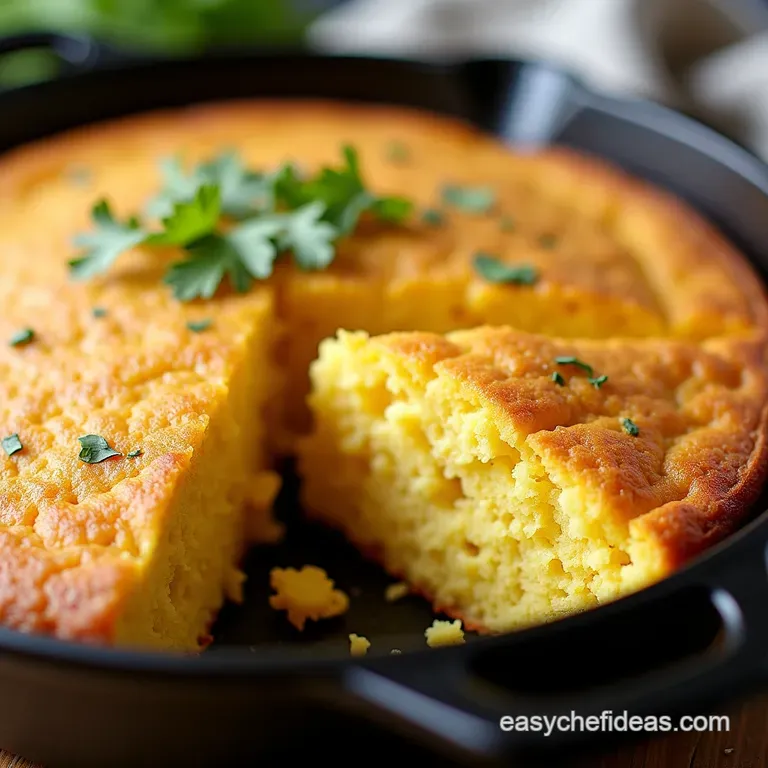
- The Cast Iron King: Mastering Authentic Southern Skillet Cornbread
- Assembling Your Southern Cornbread Components
- Decoding the Core Ingredients: Cornmeal Choices Matter
- The Transformation: Step-by-Step Skillet Baking Guide
- Crucial Pre-Bake Rituals for Optimal Flavor Release
- Elevating Your Cornbread: Variations and Pairings
- Recipe FAQs
- 📝 Recipe Card
The Cast Iron King: Mastering Authentic Southern Skillet Cornbread
Right then! Nothing quite hits the spot like a proper slice of Southern Cornbread crisp on the edges, beautifully crumbly inside, and just begging to soak up some stew or chili. This isn't one of those overly sweet cake like versions; we’re going for the authentic, savoury, skillet style experience.
Step away from the boxed mixes! This recipe delivers the quintessential Southern Cornbread experience: a golden, crusty exterior achieved by preheating the skillet with bacon fat (or butter), and a wonderfully moist, slightly crumbly interior thanks to the balance of cornmeal and flour.
It’s the perfect accompaniment to Sunday dinner, BBQ pulled pork, or a hearty bowl of collard greens. Savoury, comforting, and utterly delicious it tastes like grandma’s kitchen!
This specific Southern Cornbread Recipe is surprisingly easy, demanding only about 10 minutes of active prep time before heading into the heat.
Why This Isn't Your Granny’s Cakey Version
When many folks outside the deep South encounter cornbread, they often meet a product that leans heavily on sugar and white flour, resulting in something closer to a sweet muffin. That’s perfectly fine for some contexts, but the hallmark of Authentic Southern Cornbread is its unapologetic reliance on cornmeal, minimal flour, and a distinct lack of sugar, allowing the flavour of the corn itself to shine through.
This Savory Cornbread Recipe aims for that traditional, slightly tangy profile, which makes it the ideal counterpart to rich, salty dishes, proving itself far superior when used to mop up sauces or form the base for a glorious Southern Cornbread Dressing Recipe .
Defining True, Savory Southern Cornbread Excellence
The excellence of this bread lies in its texture and flavour balance. We are aiming for a delicate crumb structure that yields easily when pressed, yet holds together enough to be handled.
Flavour wise, the tang provided by the buttermilk cuts through the richness of the fat, offering a complexity that plain milk simply cannot replicate. This is the Best Southern Cornbread because every component works in concert to enhance the inherent sweetness of the cornmeal without adding extraneous sweetness.
The Essential Skillet Strategy: Achieving That Perfect Crust
If you want to know How to Make Southern Cornbread that rivals what you find in the finest Southern diners, you must use cast iron. A 10 inch cast iron skillet is non-negotiable here.
The magic happens not just when the batter hits the heat, but when the batter hits fat that has been preheated with the skillet in a 425° F ( 220° C) oven.
This intense, immediate heat transfer is what causes the bottom and sides of the batter to instantly sear, creating that coveted, deeply browned, crackly crust that contrasts beautifully with the softer interior. This is the secret behind any fantastic Skillet Cornbread Recipe .
A Quick Note on Texture: Crumbly vs. Dense
The texture hinges on two factors: the ratio of cornmeal to flour, and how aggressively you mix. For a crumbly, tender result, we opt for an equal 1:1 ratio of fine yellow cornmeal to all-purpose flour. Too much flour introduces too much gluten potential, leading to toughness.
On top of that,, because this Cornbread Recipe Buttermilk relies on a chemical leavening reaction, overmixing the batter after combining wet and dry ingredients will knock the air out, resulting in a dense, rubbery product rather than the light, yielding crumb we desire for this Easy Homemade Cornbread .
Assembling Your Southern Cornbread Components
Creating this staple bread is straightforward once you understand the role of each component. We are combining simple pantry staples, but precision in measurement, especially with the leavening agents, ensures a perfect rise and texture.
For a standard batch yielding 8 generous wedges, we utilize 1 cup of fine yellow cornmeal alongside 1 cup of all-purpose flour. The leavening system requires 1 teaspoon of baking powder and ½ teaspoon of baking soda, the latter being crucial for reacting with the acidic buttermilk.
For moisture and richness, we incorporate 2 large eggs and 2 tablespoons of melted unsalted butter into the liquid mixture.
Decoding the Core Ingredients: Cornmeal Choices Matter
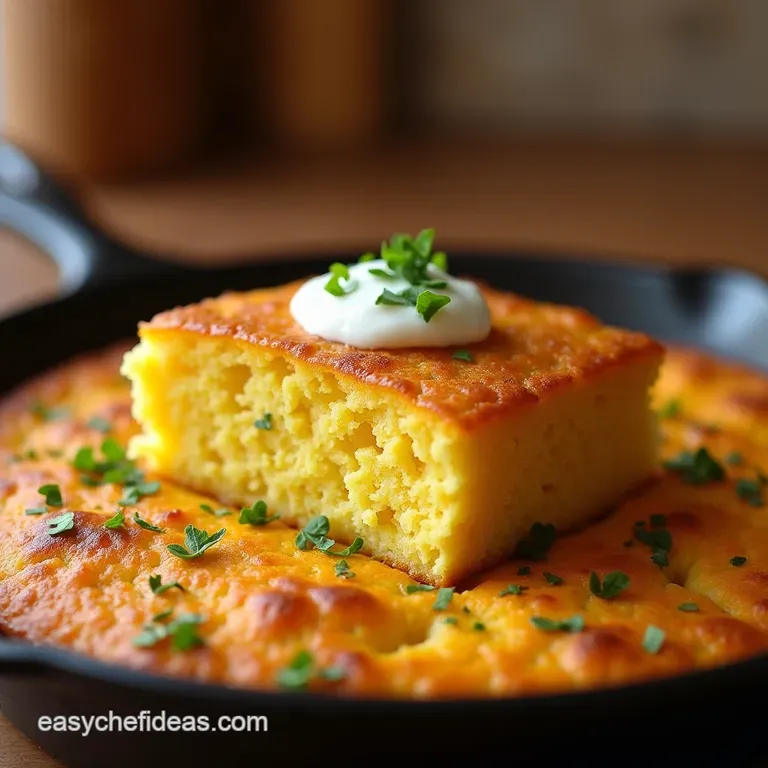
The foundation of this recipe is the cornmeal itself. It is vital to use fine yellow cornmeal . Coarser grinds, often labelled as "cornmeal for polenta" or "coarse ground," will result in a gritty, uneven texture that simply won't absorb moisture correctly.
We want that smooth, consistent base that defines the Southern Cornbread standard. The flour is present primarily to provide just enough structure so the bread doesn't completely disintegrate when sliced, but it should always take a backseat to the cornmeal.
The Necessary Wet Components and Their Roles
Buttermilk is the true star of the liquid components. It’s not just for moisture; its acidity activates the baking soda, providing a powerful lift and contributing that signature subtle tang that balances the richness.
The eggs offer necessary emulsification and structure, while the small addition of melted butter ensures the final crumb isn't dry, contributing to the overall richness we look for in a quality bake.
Ratios for Success: Dry Ingredients Breakdown
When measuring the dry ingredients the 1 cup cornmeal, 1 cup flour, baking powder, baking soda, ¾ teaspoon salt, and ¼ teaspoon black pepper ensure you are leveling your cups and whisking thoroughly.
A good whisking here distributes the salt and leaveners evenly, preventing pockets of overly salty batter or uneven rising. This measured approach is what separates a good bake from consistently great results.
What If I Don't Have Buttermilk? Smart Substitutions
If you find yourself without the key acidic ingredient, don't panic. While nothing beats genuine buttermilk, you can create a reliable substitute. Measure out 1 cup of regular whole milk and stir in 1 tablespoon of white vinegar or fresh lemon juice. Let this mixture stand untouched for about five minutes.
You’ll notice it starts to look slightly curdled this mimics the acidity of buttermilk well enough to activate the soda and ensure a good rise in your Easy Homemade Cornbread .
Essential Gear for the Perfect Bake
While general mixing bowls and whisks suffice for the batter, the cooking vessel demands attention. You absolutely need a 10 inch cast iron skillet. This heavy, heat retaining pan distributes the high heat evenly and holds the temperature necessary for that instant sear upon contact, delivering the unparalleled crust essential for an Authentic Southern Cornbread .
Related Recipes Worth Trying
- Best Sweet Cornbread Recipe Tender Buttery From Scratch — Ditch the dry stuff This easy sweet cornbread recipe yields a wonderfully moist tender bake perfect for chili night Learn the hot skillet trick
- Sweet and Moist Honey Cornbread Recipe Easy Cast Iron Bake — Forget dry cornbread This easy Honey Cornbread Recipe bakes up sweet unbelievably moist and perfectly golden ideal for your next Sunday dinner Get the...
- The Best UltraMoist Buttermilk Cornbread Recipe — Stop making dry cornbread Learn how to make the best moist cornbread with buttermilkits easy tender and ready in under 45 minutes
The Transformation: step-by-step Skillet Baking Guide
The actual assembly process moves quickly, designed to keep the batter cold until it hits the searing heat of the pre-seasoned skillet. We begin by placing the empty cast iron skillet inside the oven while it preheats to 425° F ( 220° C).
While the oven does its work, combine your dry mixture in one bowl and your wet ingredients (eggs, buttermilk, melted butter) in another. Once the oven has fully preheated aim for at least 15 minutes so the iron is blazing hot the real work begins.
Crucial Pre-Bake Rituals for Optimal Flavor Release
The steps immediately preceding pouring the batter are the most critical moments in achieving the best texture and flavour profile for this Southern Cornbread Recipe .
Heating the Fat: The Secret to a Crispy Bottom
Using heavy oven mitts, carefully remove the screaming hot skillet from the oven. Immediately drop 3 tablespoons of bacon drippings (or butter) into the hot skillet. Swirl it around quickly until the bottom and lower sides are completely coated.
This fat needs to be shimmering hot, maybe even showing a wisp of smoke, before the next step. This step is crucial for developing the signature crust.
Mixing Technique: Gentle Folding Prevents Toughness
Return the skillet with the hot fat to the oven briefly while you finish the batter. Now, pour the liquid mixture into the dry ingredients. Using a wooden spoon or spatula, gently fold the components together until just combined.
I cannot stress this enough: stop mixing the moment you no longer see streaks of dry flour. A few small lumps are not just acceptable; they are a sign you respected the batter and prevented toughness.
Baking Time and Temperature Verification
Quickly pour the entire, slightly lumpy batter directly into the hot, fat-coated skillet. You should hear an immediate, satisfying sizzle that’s the sound of the crust forming! Immediately return the skillet to the 425° F oven. Bake for 20 to 25 minutes.
Do not be tempted to check before the 20-minute mark, as the sudden temperature drop can cause your bread to settle prematurely.
The Moment of Truth: How to Know When It's Done
The cornbread is ready when the edges are pulling slightly away from the skillet sides and the top has achieved a deep, golden brown hue. The definitive test is inserting a clean toothpick into the center; if it emerges clean or with just a few moist crumbs attached, your Skillet Cornbread Recipe is a success.
Elevating Your Cornbread: Variations and Pairings
While perfection lies in simplicity, there are numerous ways to customize this base recipe. For those who like a kick, folding in ½ cup of sharp cheddar cheese and one finely diced pickled jalapeño right before baking adds fantastic depth.
If you prefer a slightly earthier, moister texture, gently swirling in ½ cup of mashed cooked sweet potato creates a wonderful variation often seen in regional variations of Southern Cornbread .
What To Serve Alongside Your Savory Southern Cornbread
The primary purpose of this bread is to complement hearty, savory meals. It is the mandatory partner for slow simmered collard greens, soaking up that flavourful "pot liquor." It is equally vital alongside a steaming bowl of chili or perhaps shredded BBQ pork.
For a simpler approach, a generous smear of salted butter melting into the warm cracks is often all the accompaniment it needs. If you’re looking for a sweeter contrast, a drizzle of dark Tupelo honey works wonders.
Freezing and Reheating Tips for Later Enjoyment
Should you have leftovers which is unlikely if you follow this Southern Cornbread Recipe to the letter it freezes beautifully. Allow the bread to cool completely, wrap tightly in plastic wrap followed by foil, and freeze for up to three months.
To reheat, remove the wrapping and warm slices in a 350° F oven for about 10 minutes. For a restored crispy crust, you can even reheat a slice directly in a dry, hot cast iron skillet for 2- 3 minutes per side.
Troubleshooting Common Cornbread Baking Errors
If your bread turns out dense, you likely overmixed the batter or failed to preheat the skillet and fat adequately. A pale crust points directly back to a skillet that wasn't hot enough when the batter was introduced.
If the center sinks after removing it from the oven, it was pulled out prematurely; the structure hadn't fully set yet. Stick to the timing and temperature guidelines, respect the gentle mixing, and you will consistently achieve the superior, crumbly texture required for true Authentic Southern Cornbread .
Recipe FAQs
Why is my Southern Cornbread coming out tough instead of crumbly?
That usually happens because of overmixing! Once you combine the wet and dry ingredients, you need to stop stirring as soon as they are just incorporated; a few lumps are your friends here.
Overmixing develops the gluten in the flour, leading to a chewy texture rather than the beautifully tender, crumbly bite you’re after.
What's the trick to getting that super crispy, golden edge on the Southern Cornbread?
The absolute secret sauce (or fat, in this case!) is getting that cast iron skillet screaming hot before you pour in the batter. You need to preheat the skillet in the oven with the bacon drippings or butter for a good 15 minutes.
When the batter hits that sizzling, hot fat, it instantly sears the bottom and sides, giving you that satisfying crackle.
Can I make this without buttermilk? I only have regular milk in the fridge.
While buttermilk is crucial for authentic flavour and lift (it reacts perfectly with the baking soda), you can make a decent substitute in a pinch. Simply take one cup of whole milk and stir in one tablespoon of white vinegar or lemon juice, letting it sit for about five minutes to curdle slightly before using it in the recipe.
I prefer my cornbread a bit sweeter can I adjust this savoury Southern Cornbread recipe?
This version is deliberately savoury, as is tradition, but you can easily swing it slightly sweeter without ruining the structure. Try adding 1 or 2 tablespoons of honey or maple syrup directly into the wet ingredients, or fold in some shredded sweet potato as detailed in the variations section for a natural boost.
How do I store leftover cornbread and keep it tasting fresh for a few days?
Once cooled, store leftovers tightly wrapped at room temperature for up to two days; it’s best eaten the day it's made, mind you! If you need it to last longer, you can freeze individual slices wrapped tightly in plastic wrap and foil for up to three months.
Reheat gently in a toaster oven to revive that lovely crust.
Authentic Skillet Southern Cornbread
Ingredients:
Instructions:
Nutrition Facts:
| Calories | 489 kcal |
|---|---|
| Protein | 6.9 g |
| Fat | 16.5 g |
| Carbs | 34.1 g |
| Fiber | 5.3 g |
| Sodium | 3715 mg |
