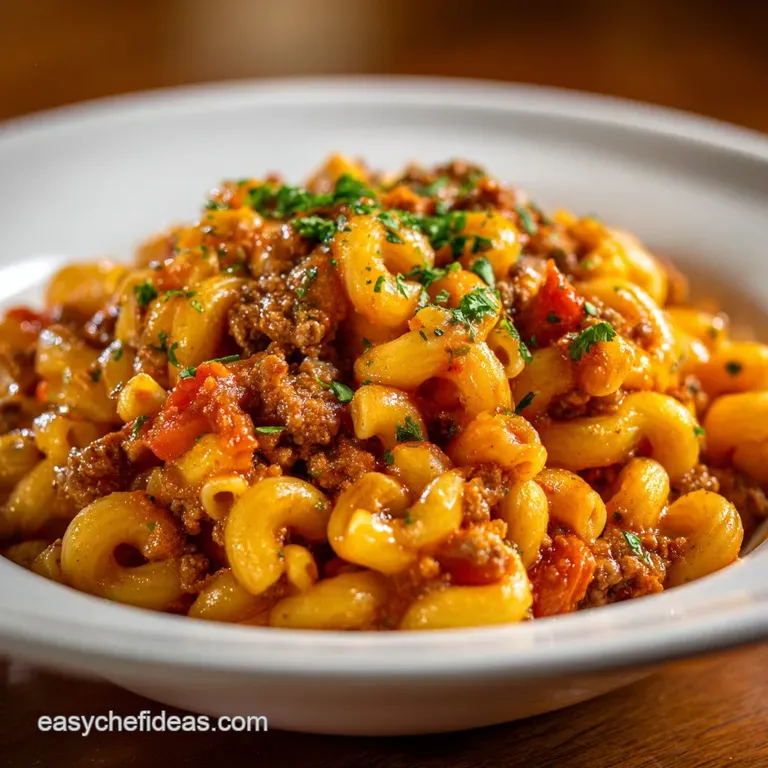
Hearty American Goulash Recipe
- Time: Active 15 minutes, Passive 30 minutes, Total 45 minutes
- Flavor/Texture Hook: Velvety tomato sauce with savory beef
- Perfect for: Busy weeknights, budget-friendly meal prep, or feeding a crowd
- Building Layers of Comfort in Classic American Goulash
- The Starch Bond Emulsification Principle
- Essential Specs for Your Next Family Feast
- The Pantry Elements for Deep Beefy Flavor
- Tools to Achieve One Pot Simmering Success
- Layering Flavors Step by Step for Success
- Mastering the Texture and Avoiding Common Mush
- Adapting Your Pot for Different Dietary Needs
- Keeping Your Leftovers Fresh and Flavorful
- Perfect Pairings to Nourish Your Whole Community
- Very High in Sodium
- Recipe FAQs
- 📝 Recipe Card
Building Layers of Comfort in Classic American Goulash
The first thing you notice isn't the sight of the pot, but the sound. It’s that heavy, rhythmic thud of the wooden spoon hitting the bottom of a Dutch oven, followed by the aggressive sizzle of 2 lbs ground beef hitting hot metal.
I remember standing in my grandmother's kitchen, the windows fogged up from the steam, while the scent of smoked paprika and sautéing onions filled every corner of the house. It wasn't just a meal; it was a signal that the day’s work was done and it was time to nourish our spirits together.
We often mistake this dish for its Hungarian cousin, but this version is purely about the American home cook’s ingenuity. It’s about taking humble pantry staples elbow macaroni, canned tomatoes, and ground meat and transforming them into something that feels like a warm hug.
My secret over the years has been learning that you can't just throw everything in at once. You have to build it. You have to let that beef brown until it’s nearly crispy, let the garlic perfume the oil, and let the tomato paste caramelize until it’s a deep, dark brick red.
This recipe is designed to be approachable but deeply flavorful. We aren't cutting corners here; we're maximizing the potential of every single ingredient. By the time you drop that dry macaroni into the bubbling, savory broth, the foundation is so strong that the pasta absorbs the soul of the sauce rather than just boiling in water.
It’s a simple shift in technique that makes a massive difference in the final bowl.
The Starch Bond Emulsification Principle
Amylopectin Release: As the dry macaroni cooks directly in the sauce, it releases starches that act as a natural thickener, binding the tomato fats and beef juices into a velvety coating. This creates a cohesive sauce that clings to the pasta rather than pooling at the bottom of the bowl.
| Cook Method | Time | Texture | Best For |
|---|---|---|---|
| Stovetop | 45 mins | Al dente pasta, thick sauce | Quick weeknight hunger |
| Slow Cooker | 6 hours | Very soft pasta, infused flavor | Set and forget mornings |
| Instant Pot | 25 mins | Firm texture, high pressure | Last minute dinner |
When choosing your method, consider how much time you have for the flavors to marry. While the stovetop is my go to for that perfect "al dente" finish, the slow cooker method excels at breaking down the connective tissues in the beef if you happen to use a leaner or tougher grind.
Just remember that if you go the slow cooker route, wait to add the macaroni until the last 30 minutes so it doesn't turn into a sad, mushy paste.
Essential Specs for Your Next Family Feast
Before we start browning that beef, let's look at the hard numbers. Precision in the early stages ensures that you don't end up with a greasy mess or a dry pot. I’ve found that using an 80/20 beef blend gives just enough fat to sauté the vegetables without needing extra oil, but you’ll want to drain about 75% of it after browning to keep the sauce clean.
Component Analysis
| Ingredient | Science Role | Pro Secret |
|---|---|---|
| 2 lbs ground beef | Primary protein and fat source | Brown it in a single layer without stirring for 4 mins to maximize the Maillard reaction |
| 2 tbsp tomato paste | Umami booster and thickener | Fry it in the beef fat until it smells like roasted tomatoes to remove the metallic "can" taste |
| 2 cups elbow macaroni | Starch delivery system | Add it dry; the sauce's acidity prevents it from overcooking as quickly as water would |
Chef's Tip: To deepen the color and flavor profile, add a teaspoon of instant espresso powder along with the smoked paprika. You won't taste coffee, but the beef will taste twice as "beefy."
The Pantry Elements for Deep Beefy Flavor
- 2 lbs ground beef (80/20 blend):Why this? The fat carries flavor and prevents the meat from drying during the simmer.
- Substitute: Ground turkey or plant based crumbles (add 1 tbsp olive oil if using these).
- 1 large yellow onion, finely diced:Why this? Provides a sweet, aromatic base once caramelized.
- Substitute: White onion or 2 medium shallots.
- 1 large green bell pepper, diced:Why this? Adds a necessary earthy bitterness to balance the sweet tomatoes.
- Substitute: Red bell pepper for a sweeter profile.
- 4 cloves garlic, minced:Why this? Essential for that punchy, savory backbone.
- Substitute: 1 tsp garlic powder (but fresh is much better here).
- 30 oz tomato sauce:Why this? Creates the smooth, consistent body of the goulash.
- Substitute: Crushed tomatoes for a chunkier texture.
- 29 oz diced tomatoes, undrained:Why this? The juice adds acidity while the chunks provide texture.
- Substitute: Fire roasted diced tomatoes for extra smokiness.
- 3 cups low sodium beef broth:Why this? Controls salt levels while providing the liquid needed to cook the pasta.
- Substitute: Vegetable broth or water with a bouillon cube.
- 2 tbsp tomato paste:Why this? Concentrates the tomato flavor and thickens the sauce.
- Substitute: Extra diced tomatoes simmered longer.
- 2 tbsp Worcestershire sauce:Why this? Adds fermented depth and vinegary brightness.
- Substitute: Balsamic vinegar or 1 tbsp steak sauce.
- 1 tbsp soy sauce:Why this? The secret "umami" ingredient that replaces plain salt with complexity.
- Substitute: Liquid aminos or a pinch of extra salt.
- 2 cups dry elbow macaroni:Why this? The classic shape that holds onto the sauce inside the curves.
- Substitute: Penne or rotini.
- 1 tbsp Italian seasoning:Why this? A balanced blend of oregano, thyme, and rosemary.
- Substitute: 1 tsp each of dried oregano and basil.
- 2 tsp smoked paprika:Why this? Gives that signature "American Goulash" wood fired scent.
- Substitute: Sweet paprika or a dash of liquid smoke.
- 1 tsp kosher salt:Why this? Enhances all other flavors without being overwhelming.
- Substitute: Sea salt (use slightly less).
- 0.5 tsp black pepper:Why this? Adds a subtle, lingering heat.
- Substitute: White pepper for a more floral heat.
- 2 bay leaves:Why this? Infuses the broth with a subtle herbal tea like aroma.
- Substitute: A sprig of fresh thyme.
Tools to Achieve One Pot Simmering Success
You don't need a professional kitchen, but a heavy bottomed pot is non negotiable. I prefer a 6 quart enameled cast iron Dutch oven because it holds heat beautifully and prevents the bottom from scorching. If you use a thin stainless steel pot, you’ll need to stir much more frequently once the macaroni is added.
A sharp chef's knife makes quick work of the onion and bell pepper. For the beef, a sturdy wooden spatula is better than a metal one for scraping up those brown bits the fond—which is where the magic lives.
If you’re planning to scale this up for a neighborhood gathering, make sure your pot is large enough to allow the pasta to expand; those 2 cups of dry macaroni will nearly triple in size!
| Feature | Fresh Aromatics | Shortcut Powders |
|---|---|---|
| Flavor Depth | Complex, sweet, and pungent | One dimensional and salty |
| Texture | Adds pleasant "bite" | Dissolves completely |
| Aroma | Fills the house while cooking | Minimal scent |
Layering Flavors step-by-step for Success
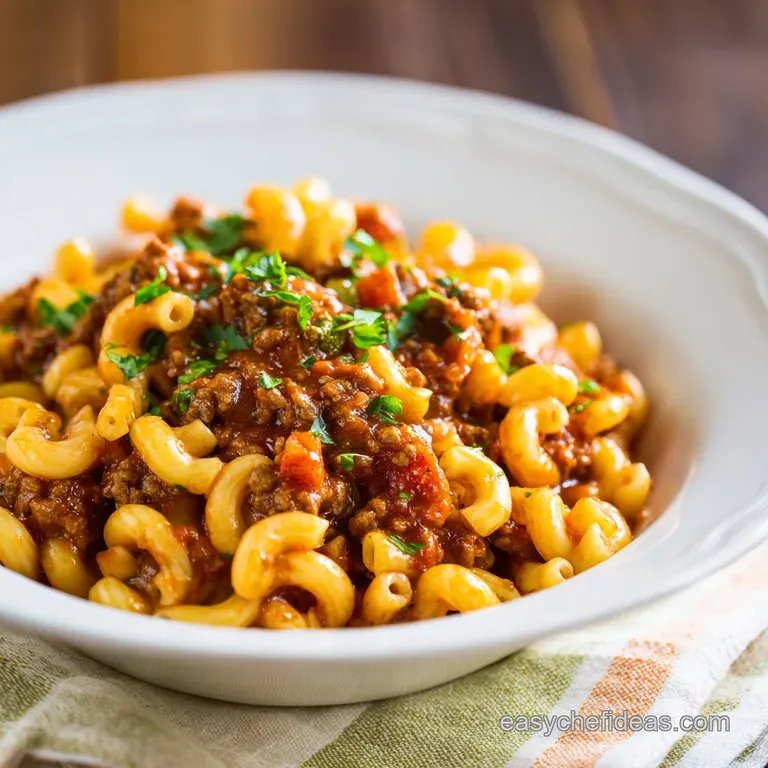
- Brown the beef. Place the 2 lbs ground beef in the pot over medium high heat. Note: Don't stir immediately; let a crust form for 3-4 minutes to develop flavor.
- Sauté the vegetables. Add the diced yellow onion and green bell pepper to the beef. Cook 5 mins until onions are translucent and shimmering.
- Add the garlic. Stir in the 4 cloves of minced garlic. Note: Cook for only 60 seconds to avoid burning the delicate oils.
- Incorporate the paste. Move the meat to the sides and add 2 tbsp tomato paste to the center. Fry for 2 mins until it turns a dark rust color.
- Deglaze the pot. Pour in the 2 tbsp Worcestershire sauce and 1 tbsp soy sauce. Note: Scrape the bottom of the pot to release all the savory brown bits.
- Build the sauce. Stir in 30 oz tomato sauce, 29 oz diced tomatoes (with juice), 3 cups beef broth, and all the dry seasonings. Bring to a gentle, rolling boil.
- Simmer the base. Reduce heat to low and cover. Cook for 15 mins until the flavors are unified and the aroma is heavy.
- Add the pasta. Stir in the 2 cups dry elbow macaroni and the 2 bay leaves. Note: Ensure the pasta is fully submerged in the liquid.
- The final cook. Cover and simmer for 10-12 mins. Cook until macaroni is tender but still has a slight bounce.
- Rest and serve. Remove from heat and let sit for 5 mins. Note: The sauce will thicken significantly during this resting phase.
Mastering the Texture and Avoiding Common Mush
The most common heartbreak with American Goulash is the "mush factor." Because the pasta cooks in an acidic environment (tomatoes), it takes a bit longer than it would in plain water, but once it crosses the finish line, it can turn soft quickly.
If your sauce feels too thick before the pasta is done, don't be afraid to splash in an extra half cup of broth.
Why Your Sauce Is Watery
If your goulash looks more like a soup than a hearty stew, it's usually because the heat was too low. The macaroni needs a steady simmer to release its starch. If you find yourself here, remove the lid for the last 5 minutes of cooking to allow some of the liquid to evaporate and the sugars to concentrate.
Why Your Pasta Is Crunchy
This usually happens if the macaroni isn't fully submerged or if the pot wasn't covered tightly enough. The steam trapped inside the pot is just as important as the liquid itself. Give it a good stir, add a splash of warm water, and put the lid back on for another 3 minutes.
| Problem | Root Cause | Solution |
|---|---|---|
| Greasy surface | Didn't drain beef fat | Skim excess oil from the top with a large spoon or paper towel |
| Bitter aftertaste | Burned the garlic or spices | Add a teaspoon of sugar to balance the bitterness |
| Bland flavor | Under seasoned at the start | Stir in an extra tablespoon of Worcestershire or a pinch of salt |
Common Mistakes Checklist ✓ Always drain at least 75% of the beef fat before adding tomatoes to prevent a greasy film. ✓ Never boil the pasta separately; you lose the starch that makes the sauce velvety.
✓ Don't skip the "bloom" phase for the paprika it needs heat to release its smoky oils. ✓ Remove the bay leaves before serving; they are for infusion, not for eating. ✓ Use low sodium broth so you can control the final saltiness yourself.
Adapting Your Pot for Different Dietary Needs
When you need to feed a larger group, this recipe scales beautifully. For a double batch, you don't necessarily need to double the salt or the spices start with 1.5x the amount and adjust at the end. However, you must double the liquid and the pasta exactly.
If you're cutting the recipe in half, use a smaller pot to ensure the liquid level is high enough to cover the macaroni.
Scaling for a CrowdFor 12 people: Use 4 lbs of beef and a 10 quart pot. Keep the simmer time the same, but expect the browning phase to take about 5 minutes longer due to the volume of meat. For 2 people: Use 1 lb of beef and 1 cup of macaroni.
Use a small Dutch oven or a deep skillet with a tight lid.
If you are looking for a way to add a fresh contrast to this heavy, savory dish, you might consider how a bright sauce can change the profile. While not traditional, a drizzle of something like a Traditional Chimichurri Sauce recipe over the top can provide a hit of acidity and fresh herbs that cuts right through the richness of the beef.
Dietary TwistsLower Carb: Replace the macaroni with 2 heads of chopped cauliflower. Reduce the beef broth to 1 cup, as the cauliflower will release its own moisture. dairy-free: This recipe is naturally dairy-free!
If you want a "creamy" finish without dairy, stir in 1/2 cup of full fat coconut milk at the very end. It adds a silky texture without a strong coconut flavor.
Keeping Your Leftovers Fresh and Flavorful
American Goulash is the king of leftovers. As it sits in the fridge, the macaroni continues to absorb the sauce, which makes it even tastier but also much thicker.
- Storage: Keep in an airtight container in the fridge for up to 4 days.
- Freezing: You can freeze this for up to 3 months. However, be aware that the pasta will be much softer once thawed. For the best frozen results, freeze the sauce base without the pasta, then add fresh macaroni when you reheat it.
- Reheating: Since the pasta drinks up the sauce, add 2-3 tablespoons of water or broth per serving before microwaving or heating on the stovetop. This restores the velvety texture.
- Zero Waste: Have a half cup of leftover goulash? Stuff it into a bell pepper, top with cheese, and bake it for a "Goulash Stuffed Pepper" lunch. Or, thin it out with more broth to turn it into a hearty minestrone style soup.
Perfect Pairings to Nourish Your Whole Community
Because this is such a "heavy" dish, I always look for sides that offer a crisp, fresh snap. A simple green salad is great, but if you want something more substantial for a dinner party, The Chicken Cobb recipe offers a fantastic blueprint for a salad that has enough protein and variety to stand alongside the goulash without being overshadowed.
Decision Shortcut: What should I add? If you want a spicier kick, add 1/2 teaspoon of red pepper flakes during the spice bloom. If you want it richer, stir in 1 cup of shredded sharp cheddar cheese just before serving.
If you want it fresher, top with a mountain of chopped flat leaf parsley and a squeeze of lemon juice.
Debunking the "Water Boil" Theory Some people insist on boiling the macaroni in a separate pot of water and then stirring it in. This is a mistake. When you cook the pasta in the sauce, the starch molecules swell and trap the flavor of the tomatoes and beef.
If you boil it in water, you’re just diluting the experience. Trust the one pot method; it’s less cleanup and more flavor.
The "Tomato Paste" Myth Many think tomato paste is just for thickening. While it does that, its real job is providing "fond" and caramelized sugars. If you don't fry it in the fat before adding the liquid, you lose out on the deep, savory notes that define a truly great goulash.
Don't just stir it in; fry it until it smells like heaven.
This dish is about the community we build around the table. It’s a recipe that has traveled through generations, evolving with every kitchen it enters. Whether you follow this to the letter or add your own family’s secret twist, the goal is the same: to nourish the people you love with something hearty, honest, and undeniably comforting.

Very High in Sodium
1480 mg mg of sodium per serving (64% % of daily value)
The American Heart Association recommends limiting sodium intake to about 2,300mg per day for most adults. This recipe is significantly higher than that recommendation.
Tips to Reduce Sodium in this Recipe
-
Broth Swap-30%
Replace the 3 cups of low-sodium beef broth with no-sodium beef broth. This simple swap can significantly cut down on the sodium content.
-
Tomato Choice-20%
Opt for no-salt added tomato sauce and diced tomatoes. Canned tomatoes are often a hidden source of sodium.
-
Salt Reduction-25%
Reduce or eliminate the added kosher salt (1 tsp). Taste the dish after cooking and add a tiny pinch only if absolutely needed. Let the other flavors shine!
-
Sauce Control-20%
Reduce the amount of Worcestershire sauce and soy sauce by half, or replace with low-sodium alternatives to significantly decrease sodium intake.
-
Spice It Up
Enhance the flavor with other herbs and spices like garlic powder, onion powder, dried oregano, or a pinch of red pepper flakes to compensate for the reduced salt without adding sodium.
Recipe FAQs
What is the difference between goulash and American goulash?
Yes, they are distinctly different dishes. Traditional Hungarian Goulash (gulyás) is a soupy beef stew heavily seasoned with paprika, often served with noodles or bread on the side.
What is American goulash made of?
It is primarily ground beef, elbow macaroni, and a tomato based sauce. It relies on pantry staples like canned tomatoes, beef broth, onions, and robust seasonings like smoked paprika for its flavor.
What sauce do you use for goulash?
You build the sauce directly in the pot using tomato paste and canned tomatoes. You should fry the tomato paste until it darkens to maximize umami, which is a key technique if you enjoyed controlling fat ratios in our savory sauces.
Where does American goulash come from?
It originated in the United States, evolving from Hungarian immigrant cooking traditions. American cooks adapted the original stew by substituting tougher cuts of beef with readily available ground meat and using macaroni as the starch filler.
Should I cook the macaroni separately from the sauce?
No, never boil the macaroni separately. Cooking the pasta directly in the sauce releases essential starches that naturally thicken the sauce, binding it to the noodles for a cohesive texture.
How do I prevent my American Goulash from becoming too greasy?
Drain at least 75% of the rendered beef fat after browning the meat. This ensures the sauce base stays rich with flavor but isn't overpowered by excess grease floating on top.
Can I use dried herbs instead of fresh ones?
Yes, dried herbs are standard for this recipe. Use dried Italian seasoning and smoked paprika; when blooming them in the hot fat, you are applying the same technique used to activate flavors in many vinaigrettes.
Hearty American Goulash Recipe
Ingredients:
Instructions:
Nutrition Facts:
| Calories | 648 kcal |
|---|---|
| Protein | 38.5 g |
| Fat | 26.8 g |
| Carbs | 62.4 g |
| Fiber | 5.8 g |
| Sugar | 11.2 g |
| Sodium | 1480 mg |
